
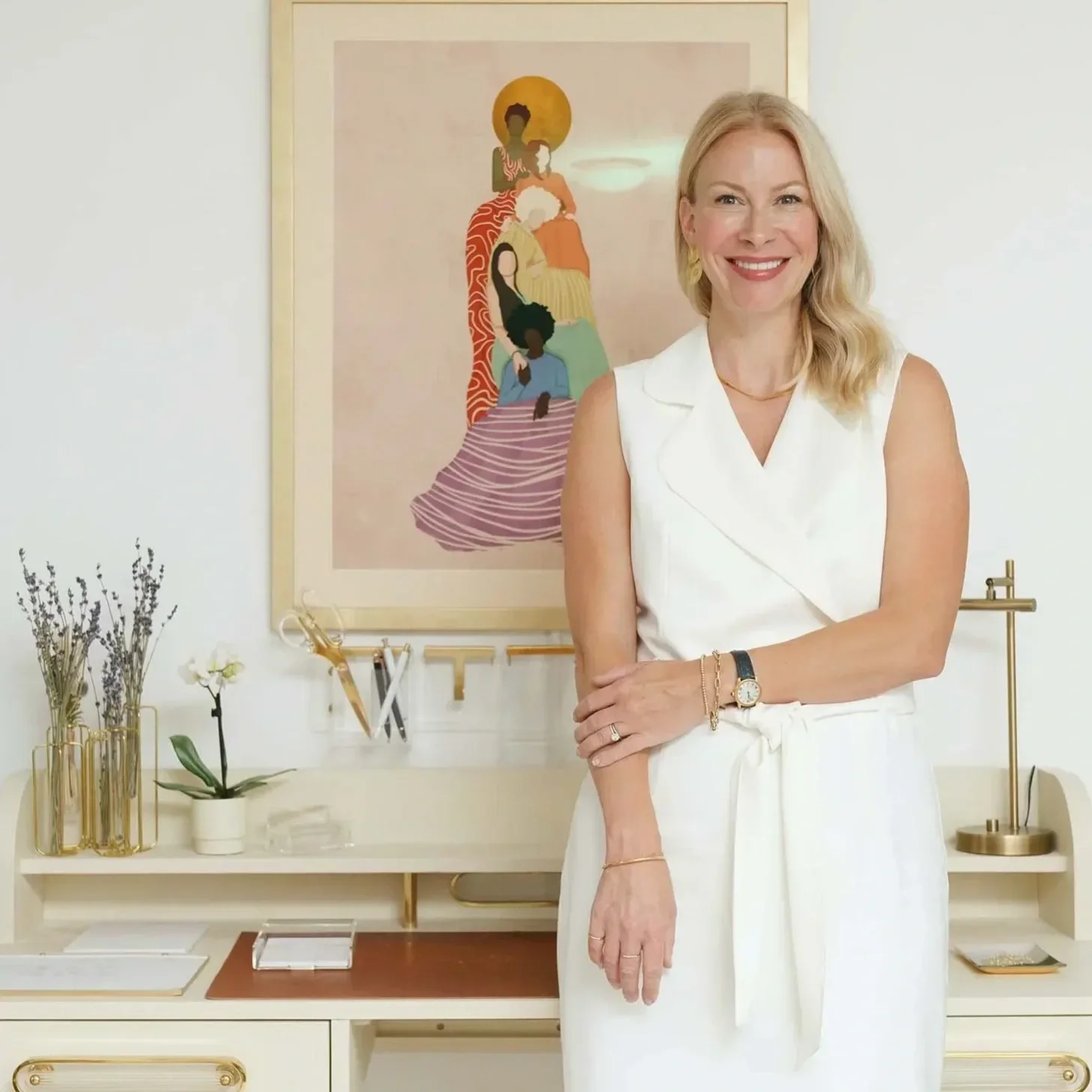
listen to this episode:
Tune in and subscribe on your favorite platform: Apple Podcasts | Spotify | YouTube | Amazon | GoodPods | Castbox | iHeart Radio | overcast | pocketcasts
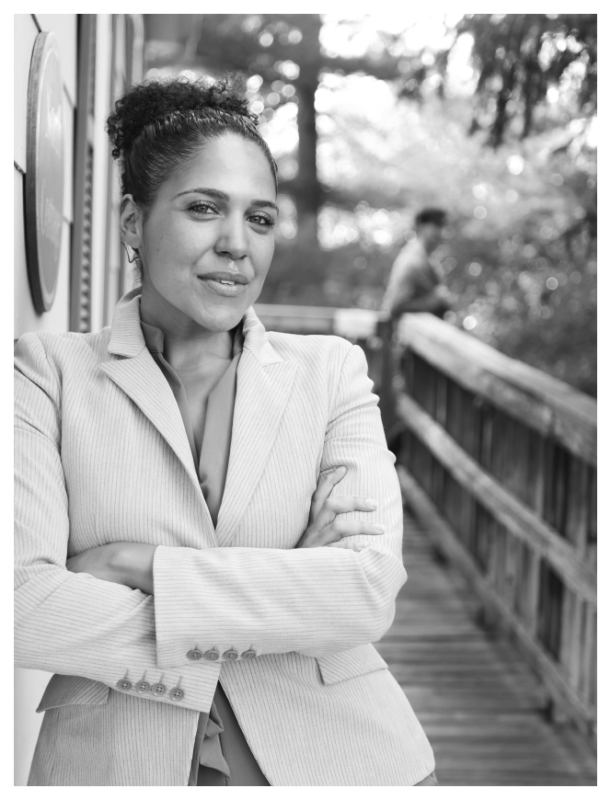
what’s really stopping you from finding love??! today’s guest is dr. molly burrets— a clinical psychologist and adjunct professor in the department of marriage and family Therapy at the university of southern california. her areas of expertise include couples therapy and women’s issues.
in this episode, we discuss the unhealthy patterns that are holding you back from finding your soulmate and what you need to know to have a healthy, life-long relationship.
we talk about:
how your life love can reflect the family dynamics you had growing up
self-biases and how those can impact your relationships
finding a life partner + common mistakes people make along the way
why people stay in unhealthy relationships (even when they know it’s unhealthy!)
figuring out what you’re looking for in a partner (do opposites really attract?!)
narcissism, gaslighting, and ‘therapy speak’ in romantic relationships
‘pick me energy’ + how it can affect relationships long-term
stigma around being single as a woman in your late 20s and 30s
the ‘let them’ theory + if that actually works in relationships
pros and cons to the ‘dating to marry’ approach
gen z’s dating patterns + if gen z is dating less than other generations
a piece of dating advice everyone in gen z should know
mentioned:
SHOP GUEST RECOMMENDATIONS: https://amzn.to/3A69GOC
About She Persisted
She Persisted is THE Gen Z mental health podcast. In each episode, Sadie brings you authentic, accessible, relatable conversations about every aspect of mental wellness. Expect evidence-based, Gen Z-approved resources, coping skills (lots of DBT), insights, and education in each piece of content you consume. She Persisted offers you a safe space to feel validated and understood in your struggle while encouraging you to take ownership of your journey and build your life worth living.
a note: this is an automated transcription so please ignore any accidental misspellings!
Sadie: [00:00:00] Welcome to She Persisted, the Gen Z Mental Health Podcast. I'm your host, Sadie Sutton. Let's get into it.
Dr. Burrets: I wanna start with the number one thing not to do when you're picking a partner.
what I wanna tell women is that
If you are thinking that your partner is a narcissist,
if you wanna have a lifelong relationship
if you're dating someone and you're working so hard to make it work but you're not seeing the other person is doing the same thing,
there are some situations in life where you can't change a person. And they're not going to change their behavior because of you.
And it's those situations that I'm like,
Sadie: Hello. Hello and welcome back to She Persisted. Let's be honest, dating right now feels pretty much impossible. If you've ever thought, why do I keep attracting the same kind of people?
Am I doing something wrong? This episode is for you Today, I am joined by Dr. Molly Burrets. A clinical psychologist and adjunct professor in uscs, department of Marriage and Family Therapy. Her specialties include couples therapy and women's issues, and she is breaking down [00:01:00] the hidden patterns that might be preventing you from finding and keeping healthy relationships.
We talk about how family dynamics growing up can shape your dating life.
Why we stay in relationships that aren't working, and how to actually figure out what you want in a partner. We also unpack some of the busiest tiktoks in the dating sphere right now, like narcissists, gaslighting therapy, speak the Let Them Theory, and even whether Gen Z is actually dating less than other generations, and if that's a bad thing.
So by the end of this conversation, you'll understand not just how to attract a healthy relationship, but how to build one that lasts. So let's dive in.
Thank you so much for joining me on. She Persisted. I'm so excited to have you here to talk about all things relationships. I think we're gonna touch on a lot of things that people have either firsthand experienced, tried, seen online. , We're gonna debunk some things. We're gonna talk about some best practices because as I say on the podcast all the time, the like, end all be all.
One thing we need in our life is relationships and healthy relationships. , And if we can do [00:02:00] that effectively and not have that be another source of stress and drama in our lives, I think we're, we're doing things right. So thank you so much for joining me.
Dr. Burrets: I'm thrilled to be here. Thanks for having me.
Sadie: If we could start with a little bit of background. How did you decide to get into psychology Good on this track, become interested in relationships because there's obviously so many directions you can go. We have so many experts and professors on the podcast. So what drew you to relationships and to this area specifically?
Dr. Burrets: Yeah. Well, I'm from a really big family and my family has a lot of love and also a lot of chaos. Mm. My sort of strength in life always have been that I really enjoy school. I'm really good at school, and it made sense to me at the time, you know, from as young as in high school, to try to understand the dynamics in my family and the relationships in my family and the dysfunction in my family.
By applying my academic learning to it. Mm-hmm. , So I have [00:03:00] always sort of tried to understand my own life, my own family, and my own upbringing through the academic lens, which is why I became a clinical psychologist. Yeah. And probably not surprisingly, as someone who came from a chaotic family, in my twenties and early thirties, I had a lot of dysfunctional romantic relationships.
I had a lot of chaos in, in my life. And I think people always think, you know, I specialize in couples therapy. People always think that couples therapists have perfect relationships. And while I'm in a very healthy, wonderful marriage now, it took a long time to get there and I was a therapist throughout this whole time.
So it took some time to, you know, apply my academic learning really to myself and do the healing that I needed to do to have a good relationship. And I like to say that a lot of what I learned, I learned the hard way.
Sadie: Yeah, you mentioned something there that I was like, wait a minute. This is not necessarily common universal knowledge and if you are in like a [00:04:00] first serious relationship or, or just starting to like really date people in a more serious way.
It might not be something you're aware of, but you should be, which is that our romantic relationships and our love life can reflect different dynamics and patterns that you experienced growing up, which like. Some people, they're like, oh yeah, duh. Of course. Others like, why on earth would those two things be connected?
Mm-hmm. Can you explain that of why that might be something that comes up for people? There's like so many different theories and explanations, but like why is that even a thing?
Dr. Burrets: Yeah. Well, between the ages of zero and five, our brain does the most growing it does in our lifetime. I mean, the amount of growing that the brain does between zero and five, far, far out Exceeds the amount of growing that it does between say, five and 30. Mm-hmm. Okay. So this is called a really critical window of time and the brain is doing a lot of learning, based on what they're experiencing and what they're seeing about [00:05:00] templates for relationships. And typically the relationships that we have with our primary caregivers.
For some people that's a mom and a dad, but not for all people. But the relationships there, they form a template. And as we become older. We unconsciously seek out what is familiar to us. Hmm. So actually, even if something has been a painful experience, the fact that it is familiar is what will draw us to that experience.
And we often find ourselves in relationships with people who have traits or who the pattern mirrors that which we experienced as young children. And I know that that was certainly the case for me.
Sadie: Yeah, I, I think it's helpful to just like, accept it as truth that even though we like to think that we're doing what's best for ourselves, a lot of the ways that we're wired are really ineffective and just understanding, okay, as humans, we are wired to not change and [00:06:00] conserve energy, even though both those things are good for us and also we are so, so, so loss aversive.
and resisting change. We have so much research on that, even if it's painful or uncomfortable, we'll stay instead of experiencing something new. Similarly, if we have something we don't want to lose, we see it as more valuable than this other thing. Even if objectively, that's not remotely the case whatsoever.
And so understanding that, like the way you're perceiving the situation. It might not be accurate and not just because you like, feel a certain way about it, but literally you're wired to keep these things and not change them, and you're not wrong for like experiencing it that way, but it's something to be aware of as far as a bias when we're thinking about these things that are so, so, so important.
Like our relationships. Mm-hmm.
Dr. Burrets: And some of the most important biases we have are the ones that we have about ourselves.
Sadie: Mm-hmm.
Dr. Burrets: So we tell ourselves, or we believe we have these core beliefs about ourselves based on our [00:07:00] experiences that are not actually true. You know? And for me, one of mine was. I have to get someone to choose me because nobody is just gonna choose me on their own.
I have to work really hard and try really hard to experience somebody loving me. And you know, when I really was able to challenge and confront that belief and start acting in a way that was more focused on me choosing. Who I wanted as a partner versus getting chosen by someone my whole life really started to transform.
Sadie: Yeah. And it would be great if there is like one universal of those for all of them. We could all be aware of it, but it's so different and through all of the therapy and all the self-reflection and, and working on how are these beliefs showing up for me, like that core belief that was impacting everything and everyone in my life was, I don't deserve love.
Love can be there, but it's conditional.
Mm-hmm.
And understanding that those biases, even if they're about yourself, are impacting like all [00:08:00] these external factors. And so I'm curious how that shows up in relationships because even as we talk about them, it's like, well, it's a belief about me. Mm-hmm. Like the other person doesn't hold it.
But it does have a really huge impact on how you're approaching dating, how you show up in relationships if you are even putting yourself out there. So how do those potentially. Not true or maladaptive or ineffective beliefs impact our, love lives, our romantic relationships. Those connections.
Dr. Burrets: Well, let me tell the listeners how it looked for me.
Yeah. And then hopefully they'll be able to apply that to their own lives because it's different for everyone. Yeah. But here was my situation. I have incredibly loving parents. Mm-hmm. Incredibly loving parents, and because they had very difficult lives themselves as children and as adults. Their primary motivation was to set me up and my siblings to have a life that was better and different than theirs.
And so they focused on creating [00:09:00] opportunity for us, and this really worked, look at me sitting here. I'm a clinical psychologist. I have the highest degree that one can attain in the most developed country in the world, right? Yeah. So my parents really did the thing, you know, and I'm so grateful to them for that.
What an act of love. But in prioritizing, creating opportunities for us, what ended up happening in our house is that there were a lot of factors competing for their resources. And I'm talking about things like time, attention, Food, energy, energy, availability. And my parents were working really, really hard.
And this is what happens when there is systemic oppression, right? Like when people need to be focused on getting food on the table, parents have to put a lot of time and energy into making that happen. And my parents absolutely did.
Yeah.
And , we also had other family members in our realm that needed a lot of care, that had problems.
And my parents were. Putting a lot of attention and energy into [00:10:00] the care of other people, and so I just didn't have the experience of having really available caregivers.
Sadie: Mm-hmm.
Dr. Burrets: What I had were parents who were very loving, vocal about how much they love me, did things that showed that they love me. Right.
By creating opportunity for me. Emotionally, I wasn't able to really find them. I didn't have access to them. They had other priorities. That meant that I didn't just get time with my parents, I didn't get attention, you know? And I developed this belief that people can really, really love you and. Not be available for you, and so you have to do things to get people's attention that love you.
For me, it was achievement. I decided I'm gonna be the kid in the family that's going to. Do everything, achieve everything. Class president, valedictorian, you know, full scholarship to college, get a PhD. All these [00:11:00] things. Things that still motivate my life toward achievement. And if I do all these things, then I'll get attention, right?
Sadie: Mm-hmm.
Dr. Burrets: And that was one of my coping strategies as an adult. In my twenties, I found myself in a series of relationships where I was with someone who said that they loved me, who on the surface, it seemed like they loved me, and it seemed like a good relationship, but for one reason or another, I never really had.
Access to that person, whether it was that they had a commitment problem and didn't know that they wanted to marry me, despite being together for a long time, telling me they loved me more than they loved anyone else in their life, and it was the best relationship they had ever been in. But I don't know if I wanna marry you.
Yeah.
So these people who, on the surface it looked like everything was good. It looked like I had love, but I was behind the scenes working overtime, trying to get picked, trying to get chosen by these [00:12:00] people who couldn't actually be available for me, for the kind of relationship that I wanted. And that's how this has played out for me in my lifetime.
And it took a lot of effort and energy and healing too. Turn around this experience.
Sadie: Mm-hmm. So if we're aware of beliefs that might be impacting how we're approaching this or what we're looking for in relationships, if we're able to not necessarily overcome because it's a lifelong journey and those experiences can be so.
Pivotal and influential for the rest of our lives. But if we're like, okay, I'm aware of this, I'm doing the internal work, what is the external and probably internal as well process look like for finding a partner.
Mm-hmm. Mate,
selection, like you mentioned earlier, before we began, how do we approach that?
Mm-hmm. And we're all doing this for the first time. Everyone would like a, a set of rules and a playbook, but I think a lot of it instead is trial and error. And I'm sure both through the research and experience and your career [00:13:00] like. We're going about this wrong, especially in these early days in your teens, your twenties.
How should we be approaching this to be effective, to be aware of these lived experiences that might be influencing things, but also have the end result that we want, which is a relationship where you feel seen and heard and understood and supported and have all those needs met in a really healthy way.
Dr. Burrets: Yeah, that's a great question. I wanna start with the number one thing not to do when you're picking a partner. Okay. And the number one thing not to do. Is make your choice based on the feeling of falling in love.
Sadie: Hmm.
Dr. Burrets: Now, I'm not telling you that you should settle for a partner that you're not in love with.
Please don't get it twisted. Okay. But. The feeling of falling in love affects our neurotransmitters in the brain in the same way that cocaine does. Okay? So you are in a clouded state of judgment, okay? And [00:14:00] that feeling. Is really important and wonderful to have in the beginning of a relationship, especially, and if it's important to you, I don't want you to make it unimportant, but what I want you to do is make it not the only thing.
Okay. Because if you wanna have a relationship, a lifelong relationship, then you have to be thinking about a long life.
Sadie: Mm-hmm.
Dr. Burrets: Who are you going to be and what is going to be important to you in 10, 20, 30, 40, 50 years? The feeling of falling in love is really, really important at the beginning, and we wanna always be able to come back to that feeling, but I can promise you it's not going to be the number one most important thing to you when you have a toddler and an infant and a full-time job and you're trying to figure out the business.
Of making a life work.
Yeah.
Okay. The [00:15:00] things that are going to be meaningful to you, and I think they're different person to person, but what a lot of people need and want to have are things like commitment. Someone with excellent character integrity, someone who knows how to go through hard things and stay loyal and focused.
Mm-hmm. Someone with grit and resilience. Someone who is going to be an excellent caregiver. And I also tell people, don't marry anyone that you wouldn't go into business with. Because marriage and life is a business and you find yourself being teammates with that person. So if you can't trust that person with decision making, with money, with executive planning, .
Why would you marry that person? Mm-hmm. Because that's what your life is going to be. It's not going to be going on dates and falling in love and getting ice cream together for the rest of your life.
Sadie: Yeah.
Dr. Burrets: those will end up little beautiful experiences that dot your life, but they're not the [00:16:00] stuff of life.
Sadie: Mm-hmm.
Dr. Burrets: And so you have to give yourself time beyond the falling in love phase. To experience a person and who they are with sort of better judgment. Mm-hmm. And make sure that they have the, character and the quality and the traits that you're looking for to sustain a long term relationship.
Sadie: Yeah. I mean, as you lay out those things that are important to consider and prioritize, it's so fascinating because I don't think anyone is entering or staying in a relationship.
Because it doesn't work, right? Mm-hmm. Like you, you want it to work. Mm-hmm. You think it will work, and yet we struggle to objectively look for those traits. Think about what this will be like down the line, and either end relationships based on that not being compatible or. Selecting people, choosing people, seeking out people that are compatible with those goals and values.
And so I'm curious what your thoughts on there if people, I think they want the best for themselves. Yeah. [00:17:00] They want stability. They want a future, and yet that doesn't happen mm-hmm. In so many relationships. Mm-hmm. And not just like, oh, this is different than I thought it would be. But then people will stay in these relationships.
Yeah. For years and years and years. Why isn't it so simple and objective to be like, okay, here's what I want, and this isn't it. So not moving forward.
Dr. Burrets: Well, first things first, people have to take a look at themselves and accurately determine whether they embody all of the relationship traits that they're looking for in another person.
Sadie: Hmm.
Dr. Burrets: We're often looking at what does the other person have? What can they bring to my life? But if you don't have those traits yourself. Something is gonna get caught up. Okay. Yeah. And you're gonna experience problems in the relationship, so don't automatically just go to the other person and decide that something is wrong with them.
Mm-hmm. You have to engage in a lot of self-inquiry and find out, Hmm, this is what I'm looking for in a partner. Here are 50 things I'm looking for. Write down your list and then ask yourself. [00:18:00] How many of those things do I have and how many am I missing? And you need to fill in the blanks to set yourself up, right?
But another reason why we stay in relationships where it's not always there it's called the sunk cost fallacy. We have invested something into the relationship and we think I have to stay in it because look at all that I've invested in it, and I'll lose all of this. We're so
Sadie: loss averse.
Dr. Burrets: Yes, I will lose all of this if I end this relationship, but what you're not thinking about is how much more will you have lost? Five years from now, if you stay in the wrong relationship for more time mm-hmm. You will have lost more. You know, there's an expression that says the further you go on the wrong train, the more it costs to get home.
Sadie: I was literally, as you were, I was like, I saw someone's post this online and I could not remember what the phrase was. Yeah. But it was like the journey back. Yes. Yes.
Dr. Burrets: [00:19:00] And I also think with this mentality that. Particularly women have, we are taught that you are not valuable or worthwhile until you are married.
And being married is the sign that you're an adult. Being married, being chosen is the sign that you have arrived. Right? We get this. Brainwashing from a very, very young age. And then on top of it, the biological clock starts ticking for women. Yeah. And they start thinking, I don't have the agency or freedom to end this relationship because I'm too old, or I've put too much into it, or too much time has gone by.
But what I wanna tell women is that if you don't advocate for yourself now and make choices that are good for you now. They don't get easier to make later. Mm-hmm. They get harder. The longer you are with someone, the more you have invested. Once you have changed your life to be with them, moved into a different place, [00:20:00] gotten married, spent money on a wedding, had children combined finances, it just gets harder.
So do yourself a favor and if you know that it's not right, right now. Take the leap of faith, start a new chapter for yourself. Otherwise, 10 years from now, you're gonna be in a lawyer's office paying thousands of dollars to get divorced and wiping your kids' tears away. So do it for yourself. Now, if you know deep down, and you do know deep down if it's the right thing for you,
Sadie: you being really clear on what you're looking for, what you hope for in a relationship, to avoid all the heartache and struggle of.
Being set on a path that's harder to shift later on in life. Is there a one that is a combination of all those traits? Is it an opposites to attract situation? Are you looking for that complete compatibility and making sure those traits are something that you internally have? and bring to the table.
How does that work as far as, [00:21:00] are you looking for the exact traits different, and is there that perfect person or do you settle on some things?
Dr. Burrets: There is definitely not a perfect person. I can tell you I've worked with hundreds, maybe thousands of couples. Many of them, the majority of them who when they got married, they thought that each other was the one.
Yeah. And now they're in my office for couples therapy. Okay. There's no such thing as the one. What there is is the one you choose, there's the one that you choose, and you have to continue choosing them over and over and over again, and. Ideally, you wanna make a good choice. Mm-hmm. But no matter how good your choice is, you will face adversity in your relationship.
I cannot think of any marriage I've ever known, friends, family, anyone that if they were together for long enough, there wasn't a time where they were questioning did I do the right thing? Okay. Marriage to [00:22:00] me is the commitment to stay with your partner and work it through even when you don't feel like it, even when it feels like it's too hard.
Right. That is very different from in the dating phase, forcing yourself to stay with someone who you know is not the right fit for you.
Sadie: Mm-hmm.
Dr. Burrets: Marriage is about going through hard things together and continuing to look at each other and say, I continue to choose you.
Yeah.
And there's no. Exact one.
There's no perfect way to predict a relationship and how good somebody's gonna be for you. The best that you can do is to make a values informed decision to try to be the person that you would wanna be in relationship with. Mm-hmm.
Sadie: And
Dr. Burrets: to try to choose a person who embodies the traits and the values that you're looking for, and then make.
A go of it. Mm-hmm. And stay committed to one another. Continue to do self-growth. Continue to do self-inquiry, [00:23:00] but you're not going to find a path that. frees you from relationship trouble.
Yeah.
If you're with someone long enough, you're going to have conflict. You're going to have disagreements, you're going to find out where you're misaligned.
Sadie: Mm-hmm.
Dr. Burrets: And then you're gonna have to make some choices about what you're gonna do about that.
Sadie: Yeah. I, I love how you clarified there. At one point you're choosing and committing and doing the work versus at what point you are being really discerning about is this compatible. We're not doing a hundred percent commitment because that is not the stage of the relationship that you're at.
And I think. That can be confusing and hard. Mm-hmm. Because I think as a society, and even in relationships, we do value that commitment, that is the sign that you care about one. Another, you are committed, you want it to work. And so I think that that nuance and that balance of choosing in the earlier stages.
To not be committed to serve both people, as effectively as possible. And then later down the [00:24:00] line, that being that defining trait and character that allows you both to thrive.
Dr. Burrets: Yeah, and I think it's really important for people to remember that if you're working really hard on a relationship and you're highly committed.
You wanna be doing that with someone who is the same way.
Yeah.
Right. So if you're dating someone and you're finding that you're working so, so hard to make it work
Sadie: mm-hmm.
Dr. Burrets: But you're not seeing that the other person is doing the same thing, you cannot take on. 100% responsibility for the relationship and expect to get the result you want.
Sadie: Yeah.
Dr. Burrets: It requires both people.
Sadie: Mm-hmm. I have a couple of questions for you about things that I think are, are more Gen Z, relevant and have probably changed the. Kind of dating environment, relationships as a whole and, and shifted things. And so I'm curious especially, , from a clinical context, how you navigate these things with couples and in sessions.
The first one that I think everyone has experienced at some point [00:25:00] is this like. Pseudo psychology language becoming super, super enmeshed in dating culture and relationships. I think it's hilarious when we think about it from a research perspective, like the percentage of the population that has narcissistic personality disorder versus the number of people that say they've dated a narcissist or have a narcissist as a family or friend.
It's like, it's not possible. Like the, there's no way. Mm-hmm. And so I'm, I'm curious how that. Impacts relationships. When people are throwing out these labels or dynamics like gaslighting or narcissist or you're toxic, , these types of things which hold a lot of weight, they can be really hurtful and have huge implications.
How does that impact relationships, dynamics, dating all of the things?
Dr. Burrets: Well, first of all. I think Gen Z is the best generation. I think they're the most evolved generation, which is as, as it should be on great podcast. That's as it should be. As time goes on, people pass the baton and you pass off what you've learned and you give it to someone who then learns more and takes it [00:26:00] further.
And I think Gen Z has done that. And I love how Gen Z has immersed itself into mental health culture, and that's, it's so much more accessible than it was, and so much less stigma than there used to be. Like. Yeah. Go Gen Z. I'm grateful to Gen Z for that. I'm also grateful to Gen Z for the fact that I can wear sneakers all the time.
Yes, I don't have to wear high heels anymore in my life. Gen Z is the best. I love it. I
Sadie: love
Dr. Burrets: it. so I think this really awesome thing has happened that Gen Z has brought mental health culture forward and less stigmatized. And also there is a way that it is overdone, which can become problematic.
Yeah.
So, you know not everyone who has narcissistic traits. Yeah. Is a narcissist. Okay. Someone getting a diagnosis of being a narcissist requires that they have quite an extensive list of symptoms displayed for a long period of time across a number of different [00:27:00] types of situations. Yes. Significantly impairing their life.
Yes. Yeah, exactly. So it's not about a guy who is a terrible boyfriend in one relationship, right? That does not make one a narcissist. It depends what's going on long-term and over the course of their life and in lots of other relationships and how much distress it's creating. Anyway, I think. It's important to know that certain traits are narcissistic and all of us have a degree of narcissism.
Yeah. Narcissism is a way that we stay alive and survive. Yeah. By caring about ourselves and focusing on ourselves., But it's not the same as being a narcissist.
Sadie: Mm-hmm.
Dr. Burrets: Also. I think this is getting a lot of traction, but it's really true that someone disagreeing with your perspective is not the same as gaslighting.
Okay. So throwing out your gaslighting me when someone is trying to get you to see their point of view is really [00:28:00] counterproductive. Yeah. Okay. What gaslighting is, is when you confront them with bad behavior, and I'm talking abusive behavior, emotionally abusive behavior, verbally abusive behavior, physically abusive behavior, when that person denies that behavior and turns it around on you and makes you feel that you are the crazy one for bringing it up, or that you are actually the one that has the problem.
Mm-hmm. Okay. That's what gaslighting is. Gaslighting is not. Defending oneself in an argument or saying another point of view that is totally in, , disagreement with your point of view. Yeah. And it's really hurtful to accuse someone of gaslighting you. , Another thing that's not gaslighting is when someone doesn't validate you.
Mm. every in an argument wants to be told. I totally see your point of view. Yeah. You know, that's very validating. But when someone [00:29:00] says, I don't see it like that at all. The way I see it is what happened is da dah. That's not gaslighting. When someone is simply trying to explain their perspective that is different than what yours is.
That's just a disagreement.
Yeah. Yeah.
Okay, so these are some of the ways that the words and the terminology are getting overused and generalized. That ends up kind of making the actual experience or word as powerful as it should be when it needs to actually really be used.
Sadie: Yeah. It becomes really diluted.
Normalized because it's applied to context that are normal, even though the definition or concept is very abnormal. Yes, we touched on this a bit, but I think it also relates to how we speak to people in relationships. If you're someone who is using those terms with your partner or talking to your friends in, in ways that apply those labels, self sabotaging the relationship. Coping with things in a really ineffective way.
I don't think those are things that [00:30:00] we intentionally wanna do. And I'm curious how that shows up, especially, in those early stages of relationships where you don't have the experience to recognize those patterns or those signals. , And, and how to work through those with a partner, especially if they bring it up.
Mm-hmm. It's like you keep calling me a narcissist. My therapist says I'm not a narcissist. Mm-hmm. How do we move forward? Like how do you navigate those dynamics where you're the one being ineffective and not bringing your best self to the table? Mm-hmm.
Dr. Burrets: Well, I just don't think that you should be making those judgements.
Unless you are a trained mental health professional Yeah. Or you have consulted with a trained mental health professional and chat, GBT does not count, you know? , So. If you are thinking that your partner is a narcissist, first of all, telling them that they are a narcissist is going to do absolutely nothing for you except potentially put you in danger because a narcissist being told that they're a narcissist is going to become a rage [00:31:00] machine.
Yeah.
Okay. So if you really think that your partner is a narcissist, you should be bringing that to. A mentor, someone wiser, someone with experience, you know, somebody who is more qualified to guide you, because being in relationship with a narcissist is an extremely dangerous thing. Mm-hmm. I'm really not kidding.
As a woman, it is a very dangerous thing to be in a relationship with a narcissist. Mm-hmm. It is very dangerous. Emotionally, it can be very dangerous physically. So if you're thinking that about your partner, you need to get help, you need to get guidance. Mm-hmm. And you need to get out of that relationship.
Sadie: Mm-hmm.
Dr. Burrets: So by the way, if you're telling your partner you're a narcissist and you're not leaving him. You're part of the problem.
Yeah.
Because that is a very serious accusation, and narcissists can be very dangerous people.
Sadie: Mm-hmm.
Dr. Burrets: So you need to check yourself, you know, if you think that something is [00:32:00] toxic.
Then you also have to take accountability for your role in the toxic behavior. Mm-hmm. So , a cycle cannot be toxic without two participating partners. Mm. Okay. Even if your only role is that you continue to tolerate it, then you are also part of the toxic cycle. Mm-hmm. So you can't just say to your partner, you're toxic, you're toxic.
Without also turning around the mirror and looking at what am I doing that is contributing to this toxic cycle?
Yeah.
So again, if you are in a position to really believe that something is toxic. You should be seeking out help and figuring out what you're going to do about it rather than just blaming it all on your partner and putting it on them.
Mm-hmm. When they are unlikely to see what it is you're talking about or take accountability for it. I've never had a couple come into my office and had one person say, you're toxic, and the other person say. You're right. Yeah. So sorry about that. That I'm very toxic. My bad. I'm [00:33:00] very to, you know what I mean?
Yeah. It's never happened. Yeah. Yeah. So it's just not an effective way to call out a problem.
Sadie: Yeah.
Gen Z loves a good energy phrase. We have main character energy. Mm-hmm. We have pick me energy. Mm-hmm. can definitely fact check me here. Has pick me energy been a thing or is this just a Gen Z kind of experience?
And what are your thoughts on how that shows up in the dating world and then relationships long term? Yeah,
Dr. Burrets: I definitely hear a lot of millennials talking about me energy too. I think it's given a label to an experience that many of us have had.
Yeah.
And. What I don't like about it is I don't like how judgmental it is because somebody who has pick me energy, someone like me in my twenties, is someone who is yearning for and desperate to be chosen and desperate to be loved.
Mm-hmm. And no wonder we wanna [00:34:00] be picked. Everything in our culture, in our world tells us that as women, you have to be picked. In order to be seen as valuable and worthy. And I mean, especially, thank God we're not in this phase anymore. But like, I remember being like, you know, in my mid thirties and unmarried and like, have people have that sort of talk around me, like, what's wrong with her?
She's, pretty, and she's smart. Why isn't she married? Like the, the undertone was, there must be something wrong with her. Yeah. You know.
Sadie: I saw a, a TikTok clip from another podcast where someone called in and was like. Our whole friend group is married or in significant relationships, or one friend is single, what do we do?
And the podcast host was like, you gotta get them in. Or like, here's how you get them coupled up and in a relationship and there was a lot of aversive responses. Mm-hmm. Being like, why is being singled at day? Why do they have to do anything? Why do they have to be okay if they're fine with it?
And you guys are in your, like, why would that be the response that they have to be in a relationship just like you [00:35:00] are? And I think it's An interesting inverse of that dynamic. Yeah. And also really fascinating in how we're placing value on individuals. Yeah. And then within relationships.
Yeah. And. I just thought that was crazy and I'd love your thoughts on that, if you have any Opinions. 'cause it was really interesting and I think that's a dynamic that people go through as they get further into their twenties is like, oh, all my friends are in relationships and I'm not.
Dr. Burrets: Yeah. And
Sadie: it brings up those internal beliefs that we mentioned Yeah.
You can struggle with.
Dr. Burrets: Yeah. All this is is what's called internalized misogyny.
Sadie: Hmm.
Dr. Burrets: So, you know, misogyny is sort of the. You know, broadly it's the hatred of women, but we are also taught to hate aspects of ourselves. And when that happens, that's called internalized misogyny and eating disorders happen because of internalized misogyny.
We're taught to hate something about ourselves that makes us feminine.
Sadie: Yeah,
Dr. Burrets: and pick me girl. That phrase I think is a result of internalized misogyny. It's labeling women. [00:36:00] For simply wanting something that the culture has told them is important and then they're acting in a way to get it and it's labeling them negatively.
Yeah, so
I like, I wanna draw attention to women and encourage them like. Be the chooser. Yeah. Rather than the one trying to be chosen. But at the same time, we have to empower women to do the choosing, not label them and criticize and make them feel bad because they're not in that place of empowerment yet.
Sadie: Yes, a hundred percent. I love that. I wanna talk about another online popular piece of relationship advice, which is the Let them theory, you just let others do their thing. What are your thoughts on that as a couple's therapist, as a relationship expert? Is it how we should be? Hmm. Blanket approach. Hmm.
Especially these like intimate, very important relationships to us. Is that what we should be be doing in our day-to-day lives?
Dr. Burrets: Look, I think there's a time and a [00:37:00] place. I think the theory definitely has legs and it's useful in a lot of situations. Yeah. But like most things in life,
yeah.
It's not that black and white.
Mm-hmm. as a couple's therapist, you know, a lot of my time is spent helping people engage in conflict resolution. Mm-hmm. The Let Them Theory doesn't have a ton of space for that. Yeah. And I just encourage people before you accept that a need won't be met and you go off and you decide what to do about it yourself.
How about have a conversation with your partner to see if the need can be met. So you can say something like, , you know. When you don't text me for a couple days and I don't hear from you, it makes me feel like I'm not a priority and, I'm just a person that I would like more contact in between our dates.
Yeah.
And then that person has the opportunity to either change their behavior because they want you to feel like you are a priority and they're glad to get that feedback. And it's like, oh. Texting is like, so not important to me. But now that I know that [00:38:00] it's important to you, like I can, I can throw you a text.
'cause you definitely, it's definitely a gif. Yeah. I you the cup
Sadie: pong on
Dr. Burrets: my messages. Yeah. Yeah. Like, you are important to me and so I want you to feel that way.
Yeah.
Easy, easy peasy. You don't just have to be like, oh, he doesn't text me. Let him, and it, you know? Yeah. You can ask for your need to be met. You wanna do it in a way that is focused on yourself, not them.
So when you do this, I feel. You know, like I'm not a priority instead of, you never make me a priority. Yeah. You never text me, you never da, da, da. That's just blame and criticism, right? Yeah. That does. That automatically puts your partner in a state of defensiveness. You're not gonna get what you want, but if you can be vulnerable and say.
This is what I experienced. This is what I need, and this is how it would make me feel to get it. I would really feel like I was important to you. You know? Yeah. So try to get your needs met, but then there are some situations in life where you can't change a person. You're not in control of a [00:39:00] person, and they're not going to change their behavior because of you.
And it's those situations that I'm like, thank you, Mel Robbins. Let them, because all you can do is have control over how you respond and what you're going to do. Yeah. And continuing to spend your energy trying to get someone to change. Who doesn't wanna change and who isn't gonna change is just letting a very short life pass you by.
Sadie: Yeah. Love some DBT non-attachment. Mm-hmm. In certain contexts. I think you mentioned earlier also how important choosing the person making that commitment is, and I think. Accepting these things where your needs aren't met and it does cause an emotional response or you're not feeling seen, heard, understood, whatever it is.
Puts a lot of the burden of the relationship on one person to do the work, to not have a reaction versus like you're saying, can I at least try and problem solve this? Can we try and do this together? And if this isn't something that can be worked through, okay, what can I do? Yes, but if. [00:40:00] You're approaching every single thing in relationship is how can I change myself to make this work versus how can we both together find a happy medium that's effective?
Mm-hmm. I think that would be so incredibly isolating and exhausting and miserable. Mm-hmm. To approach a lifelong relationship in that way.
Dr. Burrets: And unfulfilling. Yeah. Unsatisfying. Yeah.
Sadie: Yeah. A hundred percent. Another thing that I see people talking about, especially depending on what their values are, is like dating to date and dating to marry.
Hmm. And I'm curious what your thoughts are on that as a concept. Do you recommend that people just approach relationships with neither of those intentions and see how it goes? Do you think that you should be like very type A intellectualizing I'm dating to marry, here's my list. Are we compatible or do we move on?
Like what are your thoughts on that concept and. Even just putting that much pressure mm-hmm. On this aspect of your life, because we talked about like achievement and setting good goals for ourselves. It'd be wild if you're like, I'm just gonna educate myself, but not be [00:41:00] like, I'm gonna be a college graduate.
Like, you are aware of the outcomes, so you work towards it. So I can see the there in both. And I'm curious as, a clinician, is it just. Creating more issues and putting too many expectations on something that has to be organic. Or can it be effective for people to have clarity on what they're looking for?
Dr. Burrets: I think that's the big thing, is know what you want. Yeah. Right. There doesn't have to be some big set of rules about it, but I think you owe it to yourself and also the people that you're engaging with. Mm-hmm. To know what you're looking for. Yeah. If you're looking for a good time. Yeah. You know? The other person deserves to know that because what if they're not just looking for a good time?
Sadie: Mm-hmm.
Dr. Burrets: We, we are an interconnected society and it's not just about what's best for us.
Yeah.
Now I think it's helpful for us to know what we're looking for, because then we can have appropriate standards and, and put them in place for what it is we're looking for. But don't we also owe it to the people that we're [00:42:00] engaging with?
Like when I was dating and wanted to get married, I didn't want to. State, a guy that was just looking to hook up. Yeah. And he needed to be able to know that and say that to me. Yeah. You know? , So I think we owe it to ourselves and to others to know what we're looking for. And it is true when you're looking for something specific, it does change how you show up in the experience.
Sadie: For sure. No, it's like applying to a full-time role and being like, I'm part-time, two hours a day, please. In the bit. Absolutely not, right? Like, that's not how this works. And so I think those expectations upfront, and also I imagine if you are looking for that longer term commitment, how the person responds to that, if you can communicate it, is very telling and effective.
Mm-hmm. As just an exercise to do, to practice that dynamic. The last thing that I wanted to ask you, . Is about Gen Z, not dating. Mm-hmm. Gen Z is dating less than previous. Generations both in like younger teenage first date type of vibes, but also in serious relationships in college and in their twenties.
And there are some positive outcomes, like I [00:43:00] think teen pregnancy rates are lower. Mm-hmm. , So. There's a lot of theories about why that is. Is it good or bad? What are your thoughts? , As someone who's focusing on relationships, is it a negative that we're not having this practice and being in these dynamics and not putting ourselves out there?
Like, what do you think about that dynamic and should Gen Z be doing something differently? Hmm.
Dr. Burrets: I think Gen Z needs to keep doing Gen Z. You know, we're not gonna change a cultural phenomenon just because people who are older think it should be different. Yeah. And I don't even think it should be different.
I think that there, it's probably really complex how Gen Z has arrived at this. Yeah. But like Gen Z, you guys literally do not know a world where people. Primarily communicated face-to-face or on the phone.
Yeah.
Right. And so what you have learned to need and how to function in relationships is very, very different than, for example, me.
Yeah. Right. And you guys are dealing with an entirely different economy structure, [00:44:00] an entirely different political system, and you're making choices accordingly. I think we just need to trust young people that they're doing what is best for them and it's all gonna play out. Mm-hmm. We don't have enough information yet to know where this is gonna go.
Are people just gonna marry later in life maybe? Or are people gonna decide? Being single is really, and having that independence is what makes me happy. Are, are people gonna keep buying houses with their friends? Yeah, because that's what's happening a lot now is like, I can't afford to buy a house, so I'm just gonna buy a house with friends if I wanna have the American dream.
The American dream looks different these days. Yeah. You know, I think the big thing is like really trusting in young people that they are wise, they're making the best choices for them. We will see how this all plays out, and however we got here, we. Did whatever we were doing to get us here. Yeah. You know, it was, it's people before you that made the choices that lined you up and gave you this world that's [00:45:00] being handed to you that honestly is very broken and damaged.
Yeah. And you guys are in a position to be trying to make the best out of a bad deal. That's what I really think. And so I just trust Gen Z and young people to do them. They're doing it well
Sadie: if you trust the process, but also could equip Gen Z with a piece of mm-hmm. Wisdom or nugget or something to keep in mind.
Mm-hmm. As they are navigating relationships to be so scary and overwhelming and knew. What do you wish people knew as they're navigating these experiences?
Dr. Burrets: I do wish that Gen Z had more experience talking to each other face to face. Yeah. Yes. You know, I know I have a niece who is, 22 and whenever. she wants to talk to me about something that seems important.
You know, I'll always go to call her and she'll just text me and say, can we just text? And it'll be about like something really. Deep. Yeah. And like vulnerable and emotional and she just wants to text about it and I totally get it. Yeah. That's the way that it's done. But I also [00:46:00] like really want people to learn how to talk to each other, not through a screen.
Yeah. Because something is lost and we are losing the way that we connect with each other when there is. Imagine if there were a screen between the two of us. Yeah. It changes the dynamic
Sadie: a hundred percent. We'll have to do a Zoom interview for part two and compare and contrast and be like, Hey guys, we did the research.
Yeah. We'll let you know.
Dr. Burrets: Yeah.
Sadie: If people want to continue to follow along with your work, keep up with all the amazing things you're doing, where can they do that?
Dr. Burrets: I'd love for them to follow me on Instagram. My handle is at Dr. Molly Burett, which is D-R-M-O-L-L-Y-B-U-R-R-E-T-S. And if you do that, then you'll get all the information about the launch of my podcast, which is coming out in the next couple of months, and I'd love people to listen to that.
Sadie: Amazing. I will go ahead and put a link to all that in the show notes. Thank you so much for joining me. I'm so glad we got to do this.
Dr. Burrets: Thanks for having me, Sadie.
Sadie: I hope you guys loved that conversation as much as I did. It made [00:47:00] something that felt so abstract and overwhelming. Feel very tangible and doable, and understand what you're bringing to the table and how to do that in an effective way. Dating and relationships can really bring up so much self doubt.
But as Dr. Burrets explained, it's not about being broken or unlovable. It's about understanding your patterns and learning what healthy relationships actually look like. So if there's one thing you remember from this episode, I hope it's that your past doesn't have to define your future.
Once you recognize those blind spots, you can choose differently, and that is where the real change starts. So if this episode resonates with you, it would mean the world to me. If you leave review on Apple Podcast or Spotify, it helps more people find the show and. Listen to these episodes, which I have so much fun creating for you.
And if you send me a screenshot on Instagram at at She Persisted podcast, you'll be entered into this month's coffee giveaway to win a gift card to get a coffee on me. So, make sure to do that. Also answer the q and a on Spotify [00:48:00] below this episode. Tell me your biggest relationship takeaway. I love reading your reflections and weaving them into future topics and things that I talk about on the podcast in the future.
All of Dr. Burrets’ links and resources are in the show notes or@sheresistpodcast.com. Thank you guys so much for listening
If you enjoyed this episode of She Persisted, make sure to leave a review, subscribe, and share with a friend or family member. Follow along at at She Persisted podcast on TikTok, Instagram, YouTube and more for bonus content. Thanks for listening and keep persisting.
© 2020 She Persisted LLC. This podcast is copyrighted subject matter owned by She Persisted LLC and She Persisted LLC reserves all rights in and to the podcast. Any use without She Persisted LLC’s express prior written consent is prohibited.












do you want to start therapy but are worried about what your parents might think? are your parents making you try therapy but you don’t know what to expect? whether therapy is your idea or theirs, this episode breaks down why dialectical behavioral therapy (dbt) can help families navigate even the most challenging mental health issues (content warning for brief mentions of SH).
today’s guest is dr. jill rathus— a world-renowned authority on dbt. she co-developed dialectical behavior therapy for adolescents and families alongside dr. alec miller and dr. marsha linehan and is the co-author of several of the leading texts on this subject, including the widely used dbt skills manual for adolescents.
in this episode, dr. rathus shares her expertise on a number of teen mental health topics, including how to tell if a teen is dealing with mental health issues and what steps a family can take to help.