

listen to this episode:
Tune in and subscribe on your favorite platform: Apple Podcasts | Spotify | YouTube | Amazon | GoodPods | Castbox | iHeart Radio | overcast | pocketcasts
if you’ve ever wondered if you need therapy, or are just “being dramatic”, this episode is for YOU! in this solo episode, i’m unpacking the two key signs that you should get help for your mental health.
by the end of this episode, you’ll know how to spot the red flags that your mental health could use some professional care, and why acting sooner rather than later can change your life.
i talk about:
what i’ve learned from researching people with depression
two ways to figure out if you need help for your mental health
if your emotions are “normal” or leading you to burnout
deciding what you can handle on your own with your mental health
the most obvious sign your mental health is struggling
how my journey with suicidal depression changed my opinion on asking for help
my advice for if you’re currently struggling in silence
three questions to ask yourself if you’re wondering whether to get help
mentioned:
SHOP GUEST RECOMMENDATIONS: https://amzn.to/3A69GOC
About She Persisted
She Persisted is THE Gen Z mental health podcast. In each episode, Sadie brings you authentic, accessible, relatable conversations about every aspect of mental wellness. Expect evidence-based, Gen Z-approved resources, coping skills (lots of DBT), insights, and education in each piece of content you consume. She Persisted offers you a safe space to feel validated and understood in your struggle while encouraging you to take ownership of your journey and build your life worth living.
a note: this is an automated transcription so please ignore any accidental misspellings!
Sadie: [00:00:00] Feeling anxious doesn't mean that we have anxiety. Feeling sad doesn't mean that we're depressed, but there is a point where it becomes something that you shouldn't have to handle on your own. Mental health isn't so much about what you feel, it's about how much it's costing you.
you don't want to wait to learn how to swim until you're drowning
You don't need to hit rock bottom to deserve support and help
therapy isn't proof that something is wrong. It's proof that you're paying attention.
I want you to remember that needing help does not mean that you failed. It means that you noticed.
Welcome to She Persisted, the Gen Z Mental Health Podcast. I'm your host, Sadie Sutton. Let's get into it.
If you've ever wondered, do I need therapy for this or am I just being overdramatic?
This episode is for you. just like physical health, mental health has warning signs. The problem is, is that we're not taught what to look for and why.
So in case you didn't know my full-time job since graduating from the University of Pennsylvania is depression research, and a really big part of that job is diagnosing people with depression and anxiety. Every single week
I interview
people about the [00:01:00] experiences they're having, the feelings they're navigating and help make that differentiation of is this a normal challenge that we navigate as part of being human, or is this clinically significant depression?
All of this to say, the more that I talk to people navigating mental health challenges, and the more that I navigate my mental health outside of my intensive treatment journey when I was really in crisis mode, the more I understand how much of these experiences are just part of life and where that line is drawn when it comes to this is impacting my life. This is too much for me to handle on my own. I need support. I need help. I need to talk to a professional, versus I can ride the wave of this challenge on my own, and I can lean on my own coping skills and my own tools and my own resources to navigate this challenge.
So all of us experience things like anxiety, sadness, fear, grief. But that alone doesn't [00:02:00] mean that we have depression or anxiety.
Where the line in the sand is drawn is two questions. Is it distressing and is it impairing? So distress is, this feels bad, this is uncomfortable. I don't wanna live my life like this, and. not all distress is bad, just like emotions aren't bad.
A certain amount of distress allows us to perform at our best and be engaged in life enough to have buy-in into the outcome.
Impairment is this is impacting the way I function. This is getting in the way of living my life the way I want to. Things like relationships, school work, hobbies.
Is your day-to-day life impacted by these emotions and by your mental health
and so mental health isn't so much about what you feel. It's about how much it's costing you.
So let's talk about distress. The internal signal that something isn't right, something isn't going as it should. Something [00:03:00] is different from how we're normally functioning. And while a lot of us, I think have that internal feeling when something is distressing, it's not something that we're taught to pay attention to or really be tuned in on.
And a go towards those things to help ourselves grow and push ourselves out of our comfort zone, and B, know when to ask for help or take a step back or lean on our community and resources because something isn't sustainable.
So when I think about distress, it's different from discomfort. It is very clearly not sustainable. I can only feel this way for so many minutes or so many hours or so many days before it just becomes too much. I think about myself, kind of like white knuckling and forcing myself through these experiences.
Like it's not something that I'm navigating effectively or overcoming a challenge. It's like I am barely making it through and this needs to stop or something's gonna give Also that feeling of, I am burning out. I can only do this for so much longer, but I also don't know how to stop burning out. And if you've struggled with your [00:04:00] mental health before, I think those thoughts and feelings will be pretty familiar.
Like, I'm feeling this way, I don't know how to change it, but I know I can't continue going on this way for much longer because I cannot bear the pain or the suffering, or the overwhelm or the unknown, or the discomfort or whatever it is. Fill in the blank.
and what's so important to remember about distress and about that feeling of, I can't keep doing this, is that it's different for everyone and it will change throughout your life. My level of distress that I could tolerate was wildly different when I was in intensive mental health care and at rock bottom Suicidally severely depressed as a teenager versus what my level of distress is that I'm willing to tolerate As an adult living their own life independently with stable mental health. For me, it's like a couple hours before I'm like, alright, we're gonna do something to change this emotion. We're gonna shift this feeling. I'm going to adjust the situations I'm putting myself in so I feel differently. Versus when I was at rock bottom, I would just continue to [00:05:00] dig myself into a deeper hole of hopelessness and despair and sadness and isolation and overwhelm.
So there's not a universal level of distress. Or a point where it becomes too much. It's gonna be different for everyone, and you also get to set that for yourself. So for one person, it might be having one panic attack where they're like, this is more than I can handle. I cannot continue to have these. I need support.
I need help. I need something to help me navigate this experience for someone else that might be having panic attacks every single day for years. And it's only after a decade of that being their life that they're like, I don't wanna continue on for the next 50 years of my life, being someone who has panic attacks every single day for a decade.
So the level of distress that you can tolerate. Is different. And you also get to set that for yourself. And I really want you to remember here that you don't need to hit rock bottom to deserve support and resources and help the level of distress that you allow yourself to tolerate can change I find that my mental health [00:06:00] is at its best when the distress that I allow myself to tolerate is pretty minimal. Like I will allow myself to feel a little bit lower for a couple of hours before I try and shift that emotion versus waiting until I have feelings of depression most of the day, nearly every day for at least two weeks, which is what the clinical cutoff is for depression
same thing. If I feel anxious about something, I will notice that, and I'll be like, this is distressing and uncomfortable and I don't like it. But then I will intentionally try and expose myself to that thing in a way that feels doable. I'll tolerate that distress. I'll work through it before it becomes debilitating to prevent myself from avoiding things and worrying most of the time.
for several months on end. Which is the cutoff for clinically significant anxiety. So feeling like something is uncomfortable and painful and not sustainable is the first thing we need to pay attention to when it comes to our mental health. And we also get to decide when it's too much. We can decide that the first few warning signs of distress or when we ask for [00:07:00] help and look for support, or we can get to the point where we're truly at rock bottom and cannot take this anymore before we reach out.
And so, while we look for that distress and those intense feelings, when we're diagnosing these mental health challenges, we don't have to let them get to that point to accept help or to ask for help.
So if distress is the internal signal, impairment is the external signal.
Only we know when something is distressing and only, we know what our limit is of how much of that we can tolerate. Impairment is much more easily observable and, a much clearer line in the sand.
So impairment. If we take this really clinical word and explain it at face value, it's when your mental health is interfering with how you wanna live your life. And that could be your daily routines, it could be your sleep, it could be your relationships, it could be your hobbies.
And when we diagnose mental health challenges, at least depression, we only look for one of those. And it could be as something as simple as, I used to play an instrument and I don't anymore, or I couldn't get [00:08:00] out of bed for three weeks.
So if you're like, okay, I understand that definition, but I don't really know if that applies to my life. I'm not in bed for three weeks straight. I don't play an instrument. What are you talking about? these might sound a bit more familiar, skipping class or work that you care about withdrawing from your friendships or relationships not being able to concentrate even when you're trying to avoiding things because they're causing more anxiety or stress or daily functioning, feeling harder than it should.
This is where I think it's really helpful to draw a parallel between mental health and physical health. So if you had a fever that wouldn't break, you wouldn't keep going, you would stop, you would rest, you would stay home, you would recharge, you would take medicine, you would sleep more, you would try and restore your health back to its original state.
And mental health works the same way. If you have something that won't give, if you have a fever, that won't break. If the feeling isn't shifting and changing, you don't keep powering through. You try and rest and restore and recharge [00:09:00] and go back to your original emotional state
rather than expecting something to change while continuing to operate in your same routine.
And I think it's also helpful to think about the things that are being impaired by your mental health as if they were a physical health issue. Like if you had a ear infection that was so bad that you missed hanging out with your friends, that would be a sign that maybe probably you should see a doctor.
Or if you had a stomach ache that was so bad that it kept you in bed and you missed
a week of classes, you would probably see a doctor. If you were in so much pain from a headache that you couldn't sleep for nights in a row, you would probably see a doctor. So comparing these mental health symptoms to physical health symptoms and asking yourself, is this a point where I would ask for help or seek care or try and do something differently, is also a sign that it's time to do the same for your mental health.
And this is where we're going to pivot a bit because we've talked about what makes emotions and mental illnesses different. There are overlays, there are parallels. People with anxiety [00:10:00] feel anxious. People with depression feel sad, down, depressed. But just because you feel anxious doesn't mean you have anxiety.
And just because you feel sad down or depressed doesn't mean you have depression. But like we talked about with distress and with impairment, you get to decide what your threshold is and you get to decide when you ask for help and when you accept support
I think a lot of us think about therapy from that distress impairment standpoint. Like if I can no longer possibly. Live this way. That's when I'll accept help. If every single aspect of my life that makes it worth living is no longer there, that's when I'll get support. And it doesn't have to be that way.
Therapy doesn't just have to be crisis care or intervention in the last rock bottom moment. A lot of it is skill building, not just problem fixing. and if there was one thing I learned from my mental health journey. Only really truly accepting help. Once I was suicidally depressed, had been hospitalized four times, exhausted my local resources, had literally no [00:11:00] will to live. Waiting until things are unbearable and so painful and so distressing, makes it so much harder to dig yourself out of that hole.
I had to rewire so many years of harmful belief systems. I had to. Teach myself not only how to not be sad, but how to be happy. I had to build a life worth living versus, coping with emotions while still living my life.
Anything that you can do from a preventative standpoint or in the early stages of starting to struggle is so, so, so incredibly worth it, in my opinion. And if you are on a path where you are struggling with your mental health, you're finding yourself feeling more anxious or more depressed, or more overwhelmed, or more isolated.
If you are continuing down that path, it likely won't get any easier to ask for help or start doing the work or starting to change your behaviors and beliefs. It just won't. It's why one of my mental health rules is that if I'm not progressing, I'm regressing. If I'm not on the up and up the way that my brain just [00:12:00] operates Based on how I learn to cope with things and navigate challenges at an early age, I don't put myself on a good path. I don't magically, positively have great mental health. I tend to isolate. I tend to withdraw. I tend to have bad habits. I tend to not do the hard things in the short term that make my life better in the long term.
And so again. If you are on that path, if it's like two steps backwards, one step forward instead of two steps forward, one step backward, it will never get easier than it is in this moment. And I know that's scary and hard to hear, but at some point you have to make that shift and you have to accept help.
You have to ask for help. You have to be willing to accept the support that's being offered to you. And it's never going to be easier than it is right now. It's still hard right now. It's incredibly difficult. It's incredibly overwhelming. It's scary, it's isolating. Accepting help and talking to others means that you can't just like put it in that little box in the back of your brain and pretend like it doesn't exist.
It's really, really, really a lot, and it's not gonna get easier if you wait until tomorrow or next week or next month or next [00:13:00] year. There's no reason not to start today.
And so I think the best metaphor here is that you don't,
want to wait to learn how to swim until you're drowning, and that is so, so, so true when it comes to your mental health. So whatever you can do in your power to learn your coping skills before you burn out. Understanding those patterns before they spiral, and building that emotional understanding of what your limits are, what your boundaries are, what you can tolerate before it's like life or death.
All intensive crisis mode.
And I really love the idea that therapy isn't proof that something is wrong. It's proof that you're paying attention. You're paying attention to your patterns and your behaviors and your relationships. It doesn't have to mean that something is wrong or dysfunctional or deficient. it really just means that you are paying attention and noticing those patterns, which is always the first step to changing things for the better.
So I wanna give you guys three questions to ask for yourself. These are your guardrails. These are your mental health rules. This is how you [00:14:00] evaluate if you need support, if you need help, if it might be time to go to therapy. One, is this distressing to me? Two, is this getting in the way of my life?
Three, have I been hoping that this will just go away by itself?
And I can't think of a situation where if you find something distressing and it's causing impairment and you're kind of avoiding doing any work to get it to improve, that you wouldn't benefit from talking to someone and reaching out and getting support. And if you disagree, please tell me. I would love to know the answer in the situation.
Please prove me wrong, but I truly cannot think of a situation. Where wouldn't it be beneficial
So if you said yes to at least two of those, I want you to take a minute, reflect, how much distress am I experiencing? Is it at the point where this is almost too much for me to tolerate? What are the areas of impairment in my life? Can I continue to function this way?
And if you're hoping it will go away by yourself, what are some things that you can try to make this go away, improve [00:15:00] it, address it, rather than just hoping magically that mental health problems improve Because I wish they did.
Like I really truly wish they did. It would've saved me a lot of time and therapy and distress and impairment, but unfortunately, a lot of times they don't. And so I want you to remember that needing help does not mean that you failed. It means that you noticed. And the first step to changing anything for the better is noticing.
So you did that. You win, you get all the bonus points. And I think this is truly what has kept my mental health in a good spot and in recovery and away from relapse and stable for the past seven years. Which is, I notice when I feel distress, I notice when there's impairment, and then I try to shift the emotion or belief or the pattern or the routine to address that before it gets to the point that it's clinically significant and taken over my entire life, and I'm dug back in a hole.
So save this episode for later. Send it to someone who is unsure if they need help, if it's bad enough that they need to go to therapy. If you [00:16:00] notice that they're not their normal self, send a link. Let them know that you're in their corner. you're one of the resources that they can lean on for support.
And let me know your advice in the comments for someone who's currently struggling with their mental health to the point where it's distressing, it's impairing, and they're not sure what to do. Make sure you're subscribed so you don't have to go looking for mental health support next time you need it, and send me a message if this resonates. I would love to be in your corner in supporting you.
If you enjoyed this episode of She Persisted, make sure to leave a review, subscribe, and share with a friend or family member. Follow along at at She Persisted podcast on TikTok, Instagram, YouTube and more for bonus content. Thanks for listening and keep persisting.
© 2026 She Persisted LLC. This podcast is copyrighted subject matter owned by She Persisted LLC and She Persisted LLC reserves all rights in and to the podcast. Any use without She Persisted LLC’s express prior written consent is prohibited.


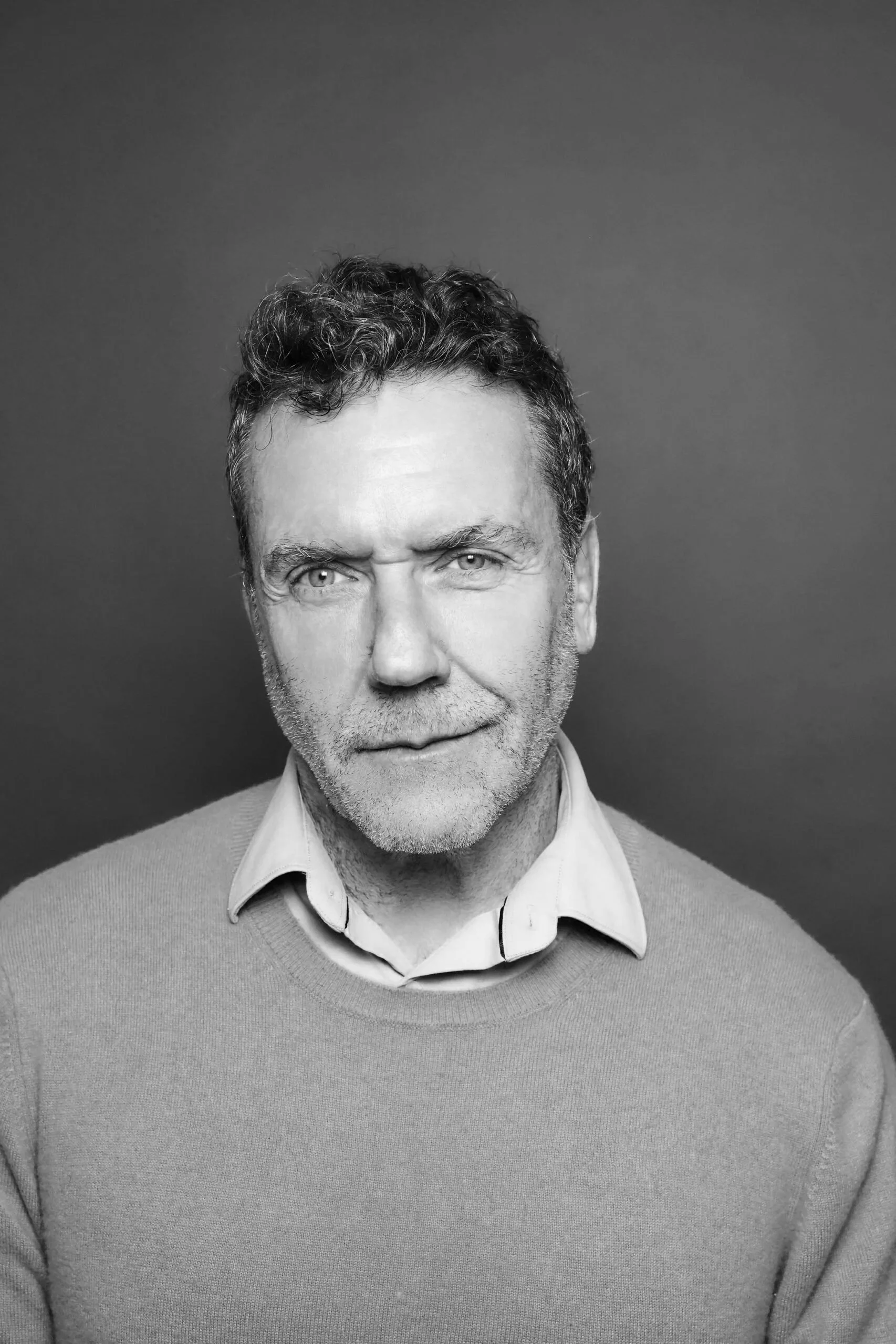


























if you know what you need to do to improve your mental health, but struggle to implement these changes into your life, then this episode is for YOU. today’s guest is shireen rizvi— a licensed clinical psychologist who has conducted research and training in dialectical behavioral therapy (dbt) for over twenty-five years. in this episode, dr. rizvi and i discuss how to implement dbt skills into your daily life. whether you’ve never heard of dbt before, or you’re a dbt expert, this episode isn’t just about learning the skills— it’s about figuring out how to actually apply them in your life. because while awareness is a crucial step in mental health recovery, it’s not the only step that matters.