

listen to this episode:
Tune in and subscribe on your favorite platform: Apple Podcasts | Spotify | YouTube | Amazon | GoodPods | Castbox | iHeart Radio | overcast | pocketcasts
are you tired of constantly choosing between your mental health versus everything else on your plate?! in this solo episode, i answer a listener’s question that a LOT of college students and postgrads struggle with: how do you prioritize success while still taking care of your mental health?
by sharing some of my favorite mental health tips and routines, this episode can serve as your template for how to optimize your mental health without sacrificing your goals.
i talk about:
the mental health misconception so many of us have
one of the biggest lessons i’ve learned in my mental health journey
why so many people struggle with mental health in college + as a postgrad
a mental health mantra that i live by
daily routines that i swear by to maintain my mental health
how to take a mental health audit of your lifefiguring out if you’re about to have a mental health crisis
ways to keep your mental health consistent (even if your life isn’t!)
mentioned:
SHOP GUEST RECOMMENDATIONS: https://amzn.to/3A69GOC
About She Persisted
She Persisted is THE Gen Z mental health podcast. In each episode, Sadie brings you authentic, accessible, relatable conversations about every aspect of mental wellness. Expect evidence-based, Gen Z-approved resources, coping skills (lots of DBT), insights, and education in each piece of content you consume. She Persisted offers you a safe space to feel validated and understood in your struggle while encouraging you to take ownership of your journey and build your life worth living.
a note: this is an automated transcription so please ignore any accidental misspellings!
Sadie: this is why a lot of people struggle in these new eras of life, whether it's post grad in your first job or in college
when you're away from home for the first time
how can you maintain your mental health when you're achieving in big ways, and setting ambitious goals for yourself and thriving. this is for the ambitious high achiever type A girlies.
This is how we maintain that mental health foundation to allow ourselves to thrive
Hello. Hello, and welcome back to She Persisted. We are doing a bit of a casual q and a write in advice episode today.
I know it's nice when you guys write in things that I've struggled with or I'm currently struggling with because I'm like, oh my gosh, it's not just me, I'm not alone. And I know a lot of you guys are gonna feel that way as well. Listening to this episode, 'cause we had a lovely listener write in about what to do when your mental health is getting in the way of your career goals or your academic goals, or any goal that you're currently working towards.
And so I wanted to give you some advice about how I would approach the situation, what to think about and what you can do to prevent,
burnout or your mental health getting in the way of doing what you wanna do in your [00:01:00] life.
I think when we're really struggling with our mental health, when we're in crisis mode, There's this Wishful thinking that once we get out of crisis mode, and once we have the ability to set long-term goals for ourself, and even are able to pursue them, that our mental health will no longer be an obstacle that we navigate, right?
Like when I think about myself as a freshman in high school who couldn't make it through a school day because of panic attacks, who was constantly missing classes for intensive outpatient program appointments, who had missed weeks from hospitalizations, who was taking so many sick days because I physically could not get out of bed because of how lethargic and depressed and.
Comatose. If I was,
When I think back to that version of myself who is unable to even make it through a school day and a school year and had to take a medical leave of absence. If I told her that I would graduate college from the University of Pennsylvania and not only get my degree in psychology, but graduate with honors
and do some of the most intellectually [00:02:00] fulfilling work of my life with mentors and professors that I looked up to for years. That version of myself wouldn't have believed that, but also she would've thought that if I was able to balance and pursue and achieve those goals, then surely my mental health wasn't something that I had to consider on a day-to-day basis.
It wasn't something that I had to make contingency plans for Or Design my life around to allow myself to get to the outcome goal.
And yet it's still at the absolute core of the way that I live my life and how I'm able to pursue my life worth living.
So I wanna get that outta the way first, which is that I think there's a lot of wishful thinking that if we're in the mental state. To be able to pursue goals at such a high level or navigate such responsibilities or be in such a different place than we were when we were in crisis, then surely we're not still prioritizing our mental health above all else in designing our life around that.
And yet I found that to be the opposite of true, but in a much more [00:03:00] doable, reasonable, non burnout inducing way. And that's what I wanna talk about today.
How can you maintain your mental health? How can you make sure that your mental health is a core priority in your life, especially when you're achieving in big ways, and setting ambitious goals for yourself and thriving.
And the best part of this is that you've already done this once before. If you've struggled with your mental health and you're now at a point where you are navigating these really big, ambitious goals and living the life worth living you've never thought was possible, I want you to
remind yourself
that I've done this before.
I prioritize my mental health to get myself to this state, and I can do that again to maintain this life worth living.
One of the biggest lessons I learned in my mental health journey is that without your mental health, you have nothing. I think a lot of us think of our mental health as a luxury or something that sits on the back burner until it becomes so overwhelming and distressing that it absolutely has to be addressed and what I've learned from struggling so much in such extreme ways with depression and anxiety.
Your mental health has to [00:04:00] be a priority. It has to be a strong foundation. You cannot and will not be able to do anything in life without maintaining your mental health. Truly nothing.
And I experienced that firsthand. I wasn't able to be in school. I wasn't able to live at home. I wasn't able to maintain friendships. I decimated my relationship with family. I had no hobbies.
I lost so many normal teenage life experiences in the name of mental health care and mental health recovery, which saved my life and changed my life for the better,
but losing all those things or having all those things placed on the back burner in the interest of trying to get my mental health back to a stable place,
showed me that without that strong foundation of mental health, we can't do anything. None of those things are sustainable.
And I know that might sound like an extreme way to frame things, but whatever. I feel mental health stigma creeping in. I compare it to physical health, and I think most of us agree that if our physical health kept us bedbound and prevented us from. attending school and [00:05:00] maintaining relationships and pursuing our larger goals in our life, that would be a significant problem, and one that we would agree we had to prioritize before navigating any of those other things. Just like your physical health is essential for you to go to school and engage in classes and hang out with friends. So is your mental health.
So I think that's the first reminder here, which is that even if you're no longer in crisis, your mental health is still the foundation of everything. Because you're not just doing the bare minimum skating through life. You're setting high expectations of yourself, and you're pursuing some of your biggest goals and navigating a career path that is really challenging and ambitious,
The level of stability and the strength of the foundation, IE your mental health.
Is actually a lot higher than it was before. So I wanna start there that it completely makes sense that you're struggling. It would be weird if you weren't struggling You're challenging your mental health more than you have in the past, which means growing pains and continuing to work that muscle [00:06:00] and getting used to prioritizing and maintaining your mental health at a new level.
And I think this is why a lot of people struggle in these new eras of life, whether it's like post grad in your first job or in college when you're away from home for the first time because you're no longer going through the motions with your mental health maintained. As a result, you have to actually prioritize your mental health and maintain it intentionally, or you find yourself struggling.
You have to build and invest in relationships. You have to hold yourself accountable to have a sleep schedule and get nutritious meals and incorporate movement in your day-to-day routine and make sure that you. Have a sense of purpose and meaning in your day-to-day life, because that's no longer dictated for you.
With that in mind, that most people will experience this when they're in that new stage of life that kind of forces you in the driver's seat of maintaining your mental health at a new level What do we do?
And this is where I dig into the treatment archives. Looking back at the skills that I have learned and maintained from that year and a half of intensive treatment, what worked for me in the [00:07:00] early days that I have continued to use on a daily basis to maintain my mental health, even in these new, evolving, challenging seasons of life.
And And the rule I set myself here for my mental health that has not failed me yet is that if you're not progressing, you're regressing.
And this is something that people tend to push back on and have a bit of an issue with, but if you've struggled in a big way with your mental health, I think this will ring true. I know for me that if I let myself go on autopilot
I will struggle with my mental health. I will isolate more than should. I will avoid responsibilities that give me anxiety because I care about them, and that makes them challenging and uncomfortable to do.
I will not be vulnerable because that's uncomfortable. And as humans, we are driven to avoid discomfort. I've gone down that path before
of letting my mental health go on autopilot, and it led me to a very deep, dark place,
so I don't go on autopilot. I remind myself that I go back on autopilot, I [00:08:00] regress. And my goal for every day, every week, every month, every year, whatever scale of time you wanna look at, is to at least be moving in the right direction.
This could be two steps forward, one step backwards. This could be 1% better over the next year. It could be the smallest, tiniest amount of growth, but as long as I'm moving in the right direction, I'm not digging myself back to that deep, dark, depressing place that I know my mind tends to go when I'm not, in the driver's seat.
I also know thanks to the many psychology classes I've taken that as humans, we really like to run on autopilot, and it is too much to ask of ourselves to be making good choices for ourselves every second, every minute, every hour of every day. One of our most unreliable resources is willpower.
If you try and maintain good mental health by willing yourself into good situations, you will fail. So knowing that I need to be on an upward trajectory when it comes to my mental health and knowing that it's not effective to rely on my [00:09:00] motivation as I live my life.
I try and design it in a way that keeps me moving on that upward trend day after day, week after week, month after month.
So what does that look like for me, that means being really annoying and obsessive about my sleep routine. The first thing to go when it comes to my mental health is my sleep. I Don't sleep well. I sleep more when my mental health struggles. I am really sensitive to messing up my sleep routines and them ending up in complete disarray, which makes my anxiety worse and my depression worse, and prevents me from showing up to these other areas of life that make my mental health better, like my career and my relationships and my hobbies.
So my North star of my daily routine is sleep. I protect that time. I maintain a routine that allows me to get in bed early
and wake up at a consistent time.
And so when I found myself at the choice point of taking a job after graduating college, one of the things that I weighed really heavily was what would my day-to-day routine look like? It was [00:10:00] really important that I had to get up and go somewhere and be in the office and be held accountable to that weekly schedule of nine to five.
You're in the office. Because it meant that staying on a sleep schedule was a lot easier. And again, it wasn't up to willpower. It wasn't up to motivation because that's what it was up to in college. My sleep routine was a disaster. And so the external accountability of having to be in person at work
keeps me on a strict sleep schedule and keeps me moving in an upward trajectory.
Another thing is relationships. We'll link an episode in the show notes about not leaving your relationships up to motivation and building your life in a way that makes it easy to have strong, fulfilling connected relationships.
Similarly, when I found myself moving to a new state in a new town, in a new job with no one I knew I chose a role where I would have a lot of coworkers my age built in friends, built in people to get to know, rather than leaving it up to my own motivation to try and go out and meet new people and create my own friend group in a new city.
If you're in college, that might [00:11:00] be taking the same classes as your friends, setting up study groups, maybe having a workout buddy that you see a couple times a week, no matter what your schedules look like. What external things can you put in place to keep you on that upward trajectory without relying on your own willpower and motivation in the moment?
So I want you to look at all these areas of your life that can make your mental health more challenging, your sleep, your physical health movement, your nutrition,
medications. Daily routines, your habits, your relationships, your hobbies How can you offload those areas into your routines and responsibilities and commitments? So that even if you have no motivation that week, your social battery gets met, you get enough sleep, you get the nutrients you need, you have some amount of daily movement
and you're feeling that sense of meaning and purpose.
And this is one caveat that I wanna add here The listener that wrote in, says she really loves the work she's doing. There's a really deep intrinsic reason why she [00:12:00] wants to be a DBT therapist and why she wants to help others with their mental health.
It's really challenging to push yourself mentally and physically towards such an ambitious goal when there isn't that sense of meaning and purpose. When it's not rewarding, when it's not aligned with your goals. So if you're listening to this and you're like, yeah, that sounds great, but I still find myself leaving every single responsibility and work and all the things feeling burnt out, and I don't even like what I'm doing, and the long term isn't something that I'm looking forward to. That's worth reflecting on, and we'll do another episode about that.
I'm gonna link the interview we did with Angela Duckworth in the show notes because she talks about how to find your interest, how to follow that, and why it's important to choose. Easy to choose what you're already interested in, what you enjoy, because I think it's really hard to maintain your mental health long term if you're spending the majority of your time doing something that doesn't give you a sense of meaning and doesn't give you a sense of purpose, and you don't enjoy it, and you don't find it rewarding.
So assuming that how you're spending your time is rewarding and meaningful and gives you a [00:13:00] sense of purpose, this is how we maintain that mental health foundation to allow ourselves to thrive at such a big scale.
So I want you to take an audit of your life. I want you to look at a typical week, and I want you to look at every area, social life, your classes, your work.
Your hobbies, your free time, and at the end of the week, I want you to give yourself a grade zero to 150%. means that you're right back where you started. You're continuing on as if the week hadn't happened.
You're not more burnt out, but you're also not feeling more ambitious and energetic. 51%. You're feeling slightly more ambitious and better. You're moving in that positive trajectory. You're on the right direction. 49%. You're slowly but surely on a downward trajectory, and at some point something's gonna have to give and not in a good way. And some part of your day-to-day life and routines and responsibilities is not keeping you on that positive trajectory.
And then I want you to go in and audit each of the areas we [00:14:00] talked about and figure out what is taking your energy? What is giving you energy, and what areas can we offload into routines so that they don't take any more of that mental energy? How can these things automatically happen without us having to motivate ourselves and force ourselves to do them because we know it's good for us? if we're consistently chipping away at that mental health foundation, at some point something's gonna have to give, and you're not gonna be able to continue to achieve these ambitious goals that are so important to you.
So what we do is we audit our life. We see if our daily routines and responsibilities leave us on a positive trajectory or are slowly driving us closer
to an inevitable mental health crisis. I.
And because we know that willpower and motivation are the most ineffective ways to try and maintain our mental health, we do our best to make sure that our life and our routines and our responsibilities are filling our cup and keeping us on that positive trajectory.
My goal for you and what I found to be really helpful when it comes to my mental health is designing my [00:15:00] life in a way where if I just follow the routine and responsibilities of a given week, my mental health stays stable, this gives me the emotional bandwidth in space to weather.
Any storms that might arise, there's gonna be something that comes out of left field. There's gonna be a stressful assignment at work, you're gonna get bad news. The opposite is also true. You're gonna have unexpected, amazing moments throughout your life, but building this really solid foundation that maintains your mental health without you even trying.
Allows you to navigate those challenges without spiraling into crisis.
So I know that's a lot. It's also maybe a crazy way to approach your mental health, but this is for the ambitious high achiever type A girlies. I know you can do it. If anyone can implement this, it is you. This is what I found to be most effective as someone who's went to struggling with their mental health, to the most severe degree, to maintaining it long-term without It dictating every aspect of my life in a harmful way.
The last thing I wanna add here is that if [00:16:00] you currently find yourself struggling, there's probably some area of life that's kind of like sending you on that downward trajectory, right? There's something that's not going as it should and building your life worth living is not an easy task. It's not an easy feat, which you know, because you've struggled with your mental health before and you're now helping others navigate their own struggles. So if you found yourself listening to this episode and you're like, oh my gosh, my relationships are really the thing that's bringing down my mental health, or, wow, my daily routines are a mess and I'm not getting those sleep movement and nutrition needs met, and I'm slowly on that downward trend.
I encourage you to talk to a therapist. The visibility and the accountability and the connection that comes from working on this with someone else is gonna be so much more effective than trying to do it by yourself and like white knuckling your way through the experience.
And I absolutely did not build my stable mental health by myself. but I hope this gives you somewhere to start when it comes to thinking about how we can maintain our mental health when we have really big and ambitious goals for ourselves.
I also hope you feel less [00:17:00] alone in what you're navigating because so many of us can relate to this experience. And if you have another situation that you need advice or support or just another perspective on, send me a message, send me an email, send me a dm. I would love to do more of these q and a mini episodes.
Leave a review if this was helpful. Comment, your best piece of mental health advice for high achievers.
Save this episode so you have it. The next time you find yourself on that downward trajectory rather than an upwards one, which I hope doesn't happen, but for all of us, it does inevitably happen at some point. So we have to course correct and get back on track. And with that, I'll talk to you guys in the next episode.
If you enjoyed this episode of She Persisted, make sure to leave a review, subscribe, and share with a friend or family member. Follow along at at She Persisted podcast on TikTok, Instagram, YouTube and more for bonus content. Thanks for listening and keep persisting.
© 2026 She Persisted LLC. This podcast is copyrighted subject matter owned by She Persisted LLC and She Persisted LLC reserves all rights in and to the podcast. Any use without She Persisted LLC’s express prior written consent is prohibited.


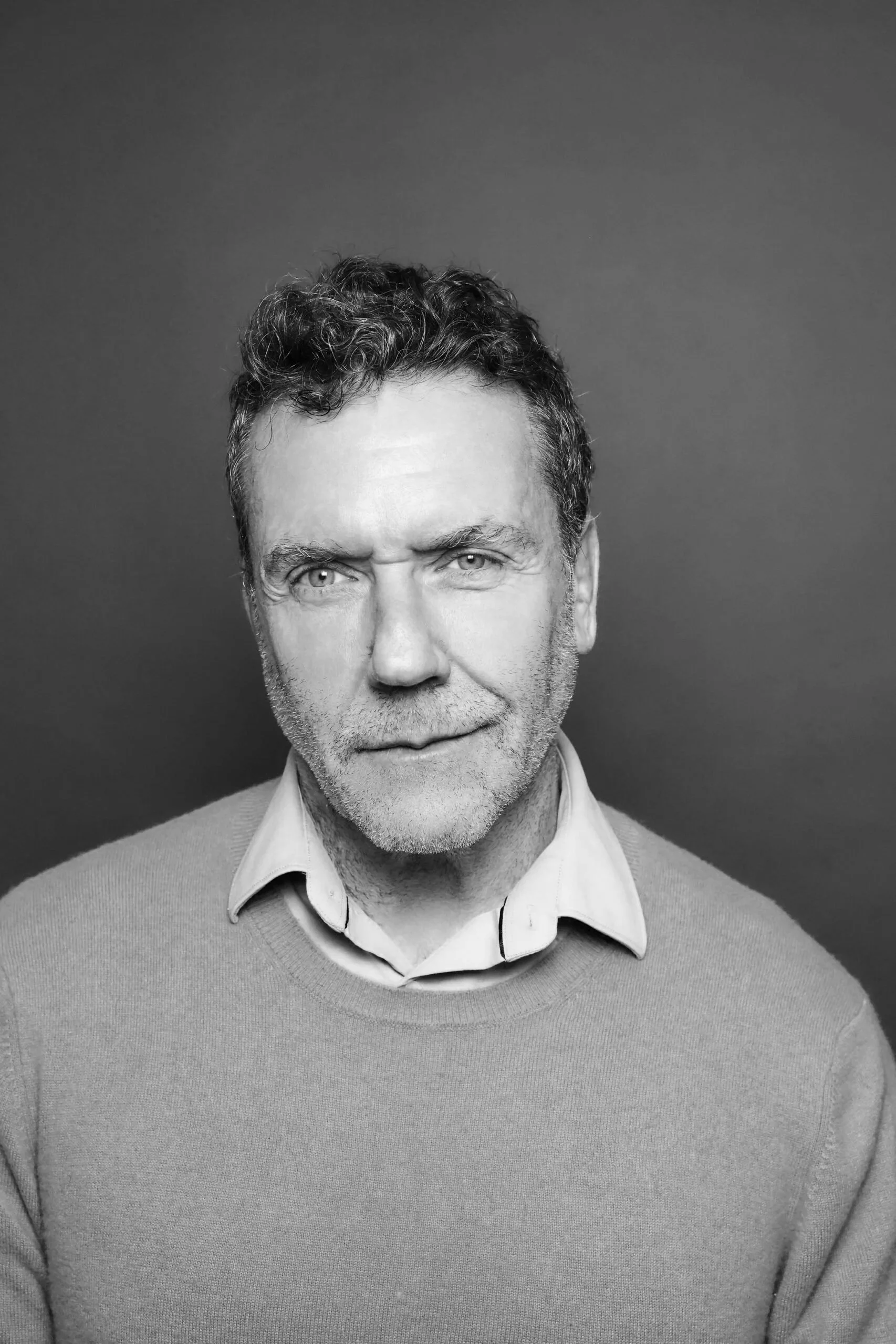


























if you know what you need to do to improve your mental health, but struggle to implement these changes into your life, then this episode is for YOU. today’s guest is shireen rizvi— a licensed clinical psychologist who has conducted research and training in dialectical behavioral therapy (dbt) for over twenty-five years. in this episode, dr. rizvi and i discuss how to implement dbt skills into your daily life. whether you’ve never heard of dbt before, or you’re a dbt expert, this episode isn’t just about learning the skills— it’s about figuring out how to actually apply them in your life. because while awareness is a crucial step in mental health recovery, it’s not the only step that matters.