
246. why external validation keeps you stuck! (feat. dr. scott barry kaufman)
listen to this episode:
Tune in and subscribe on your favorite platform: Apple Podcasts | Spotify | YouTube | Amazon | GoodPods | Castbox | iHeart Radio | overcast | pocketcasts
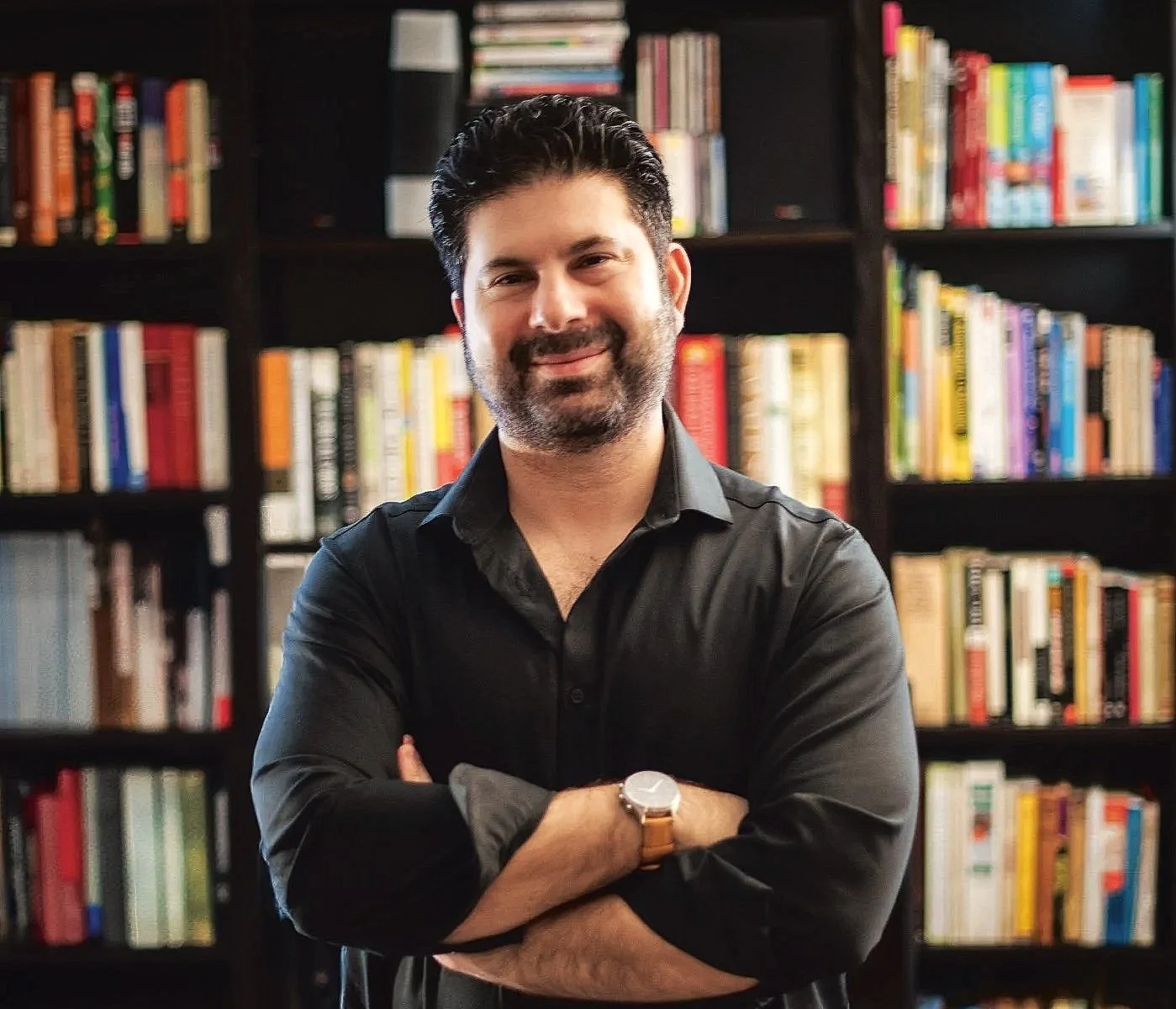
‘self-actualization’ isn’t just a tiktok buzzword– it’s how you can unlock your true potential using psychology. today’s guest is dr. scott barry kaufman— a psychologist, coach, professor, keynote speaker, and best-selling author who is passionate about helping all kinds of minds live a creative, fulfilling, and self-actualized life. he is a professor of psychology at columbia university and host of the psychology podcast, which has received over 30 million downloads.
in this episode, we translate terms like self-actualization, agency, and mastery into actionable tools you can actually use. whether you’re a college student trying to raise your gpa or a postgrad working your way out of an existential crisis (real), this episode is your instruction manual for living your best life starting NOW!
we talk about:
the self-growth metaphor you need to hear
why we delay our happiness + how to break this habit
self-actualization + what everyone gets wrong about it
if gen z has a victim mentality
the importance of gaining mastery
setting achievable goals that don’t cause burnout
comparison culture + how to step out of it
unlocking your potential as a student + learning to enjoy school
+ so much more!!
mentioned:
SHOP GUEST RECOMMENDATIONS: https://amzn.to/3A69GOC
About She Persisted
She Persisted is THE Gen Z mental health podcast. In each episode, Sadie brings you authentic, accessible, relatable conversations about every aspect of mental wellness. Expect evidence-based, Gen Z-approved resources, coping skills (lots of DBT), insights, and education in each piece of content you consume. She Persisted offers you a safe space to feel validated and understood in your struggle while encouraging you to take ownership of your journey and build your life worth living.
a note: this is an automated transcription so please ignore any accidental misspellings!
Dr. Kaufman: A lot of people have a misunderstanding of when I reach certain goals, then I will be successful.
we are a hyper obsessed culture when it comes to validation externally. We're constantly comparing ourselves 'cause everything is constantly online
people should give themselves permission in such a system to not play that game and to not feel the need to compete. There are so many different paths to greatness. So many different paths to self-actualize.
Find a way to play your own game. Rewrite the rules.
That's the key of life.
Sadie: Welcome to She Persisted, the Gen Z Mental Health Podcast. I'm your host, Sadie Sutton. Let's get into it.
Today's conversation is about how to step out of that race that most of us didn't even sign up for.
We have Dr. Scott Berry Kaufman on the podcast today, A psychologist coached Columbia professor, keynote speaker, bestselling author, and the host of the Psychology podcast. And we are talking all about why growth isn't a destination, why self-actualization isn't something that you earn at the end of your suffering and how to stop measuring your life [00:01:00] by someone else's success.
We talk about Dr. Kaufman's sailboat metaphor, which is one of my favorites, and you've heard it on the podcast before. And he uses this to explain what you actually need to do to move forward and what happens when you try to grow and improve and meet your goals without a strong foundation.
So if you've been feeling behind, if you've been feeling all that pressure to compete with everyone else, or stuck This episode is all about clarifying your own goals, your own aspirations, getting there in a sustainable way.
I want to start with the sailboat metaphor because I think a lot of us get. Almost like overexcited with like the goals we wanna set or what we wanna do, or where we see ourselves with regard to shifts in our mental health, through our wellbeing.
But I think bringing it back to this metaphor and this foundation is so important, and so I'd love to hear you break down this metaphor because it's so foundational too life, but also what we'll cover today in this
Dr. Kaufman: episode. Well, thank you. I'm really glad that you see it that way. I believe that, [00:02:00] self-actualization is a journey. It's not some sort of mountain that you climb on stepping over others on the way.
A lot of people have a misunderstanding of Maslow's famous hierarchy of needs. They'll often see a pyramid, and it. It turns out Maslow never drew a pyramid. life is like a, more, like a trek in an ocean, where there's, waves that can come crashing down at any point. you never know what you're gonna get, but you have to know what port you're sailing to.
Yeah. And you have to have really clear vision of where you're sailing. And if there's too many holes in the boat, it won't, the boat won't go anywhere. But if you're just stable, you never open up your sail either. So, you know, it takes sometimes challenge for growth.
Sadie: Mm-hmm. And can you kind of walk us through what is like attached onto this sail and this metaphor and also this boat, which, when we're lacking that foundation, we can't not only survive, but we can't get anywhere as well.
Dr. Kaufman: Yeah. So the needs in the boat for me are the needs for safety.
Connection and self-esteem.
Sadie: Mm-hmm.
Dr. Kaufman: If we are too deprived in those needs, [00:03:00] we feel like we're just fighting to get the water out. Yeah. We're like, oh gosh, I, I'm lonely, you know, how do I reduce that? Or I feel bad about myself, or I'm hungry. You know, we're not thinking about our highest needs mm-hmm.
When we're deprived of those needs. So that's the boat. But just having self-esteem and connection and a sense of safety will not move you anywhere in the direction of your highest purpose.
Sadie: Yeah.
I think it's interesting because when you talk to people about what they want for their mental health or a lot of the ways that we see people describing goal setting.
Online, it's kind of at odds with that, where they're like, okay, well, like once I have this, better version of myself, then I'll build those relationships and get that connection. Or like the self-esteem will come after I've done all these other things. And I think it's helpful to kind of deconstruct that, that obviously your relationships will continue to grow and improve as you move throughout life.
[00:04:00] Same thing with self-esteem and, and mastering agency and all those things, but it's also incredibly foundational and you can't move forward without that. Why do you think people kind of have that disconnect of like, no, those will come later, versus like, these are absolutely essential to move anywhere in life?
Dr. Kaufman: Hmm. Well, there is a cognitive bias that I'll be happy when.
Sadie: Mm-hmm.
Dr. Kaufman: We all have it. We all fall prey to that, dot, dot, dot. You know, when I reach certain goals, then I will be successful. But you, no one ever feels successful
Sadie: Yeah.
Dr. Kaufman: More than a day after reaching those goals. So we have to remember that.
And, you know, we have to move in the direction of growth, but realize that growth is a direction, not a destination.
Sadie: Hmm.
Dr. Kaufman: You know, so our self-actualization is a direction, not a destination. The best we do is make the choices that are right for us as consistently as possible.
Sadie: Yeah,
Dr. Kaufman: yeah,
Sadie: I do have a question for you though. Yeah, go. Because you did mention mindset and you've talked a lot about victim mindset and [00:05:00] self victimizing, and
I think We might go, go wrong when we try and have this conversation about Gen Z what are your thoughts on that? Because that's like a lot of the criticism that you see in like larger media or on the daily Cable News channel when all these studies come out about Gen Z struggling.
Dr. Kaufman: Certainly Gen Zers, , don't wanna be described as such.
Sadie: No,
Dr. Kaufman: it doesn't feel like a positive characterization,
Sadie: but also why would you want to try and do anything different if you've already been labeled as depressed and anxious? That's a
Dr. Kaufman: good point. Yeah.
Sadie: The victim.
Dr. Kaufman: Yeah, that's a good
Sadie: point. It doesn't help.
Dr. Kaufman: So when I talk about overcoming a victim mindset, I do so In a way that I wanna help people see the ways in which they're getting in their own way. Mm-hmm. not in a way to shame anyone or to minimize anyone's suffering. There are various ways that you can handle a situation that is challenging to you.
And I propose a empowerment mindset, that's very yes. And, you know, from like improv principles. Yeah. Where, and I also call it Honest love. I'm not a fan of tough love. You'll [00:06:00] never hear me be like, oh, Genzer, stop complaining. You know, like little snowflakes.
Yeah. If someone's committed to a victim mindset Yeah. Then you have to kind of let them be. Yeah. But if someone is open to, being a little bit empowered mm-hmm. I think that, it can really change lives.
And I also think people don't realize the extent to which they can bring their character strengths and signature strengths to the table.
Sadie: Mm-hmm.
Dr. Kaufman: To overcome hard things.
Sadie: Yeah.
We kind of have talked about , the lacking agency piece, but there's also this like. Mastery side of the equation. Like do people feel that they are able to get better at things?
And not only if they try will something change, but will they see growth and will they see improvement in their self? And that this is another kind of criticism that people will throw out there that like Gen Z didn't have to struggle.
People don't tell them no, everything's handed to them. And that that is like the missing piece that has led to this pessimism or this despair and this, this [00:07:00] hopelessness.
Do you think that that is something at play as well with Gen Z is not. Moving that muscle enough or, wanting to build that mastery in these different areas.
Dr. Kaufman: the mastery process, usually you don't see the motivation initially, or what you'll do is like, you'll get a surge of inspiration and then if you hit a wall, a lot of people just stop.
Sadie: Yeah.
Dr. Kaufman: And they're like, oh, what's, you know, this is too much. , You know, If you weigh 600 pounds and your dream is to be 150 pounds, you got a long way to go there. And so it may be frustrating to be like, oh, I lost four pounds. Great. You know, that's, but you, it is great. And so what I think people need to realize is that every small win is great.
Yeah. It's, it's really moving you in the direction of where you want to go. This is why I said earlier, it's a direction, not a destination. Don't get so stuck on reaching the goal, but every day make progress towards that [00:08:00] goal. You know,
Sadie: how do people do that? Cognitive reframe and really.
Bring that back to the individual moment versus like this giant unattainable goal at scale. Like I think that's something that everyone struggles with regardless of what area of life is to truly celebrate those little wins or focus on those everyday moments. I'm sure students as well struggle with this in your class.
How do you advise people to be more mindful in those moments and bring it back to those smaller goals when it kind of does feel like messaging from society as a whole does really emphasize and focus on those, larger wins, those larger things that the moment to moment isn't as important or valuable?
Dr. Kaufman: Well, yet you really have to turn the, scope of attention inward to, your past and your future comparison. I mean, easier said than done. But we are a hyper obsessed culture when it comes to [00:09:00] validation externally.
Sadie: Yeah.
Dr. Kaufman: we're constantly comparing ourselves 'cause everything is constantly online and we're constantly seeing other people, first of all, maybe take a break for Instagram.
Sadie: Yeah.
Dr. Kaufman: Twitter, chill. Mm-hmm.
Sadie: Chill
Dr. Kaufman: on that. You know, you don't need to see other examples of other people self-actualizing because at the end of the day, it doesn't make any sense to try to self-actualize someone else's soul. That's their soul. It doesn't make any sense. You can't do and you can't do it.
Mm-hmm. You know, all you can do is self-actualize your own soul. Mm-hmm. It takes meditation, it takes turning inward. It takes really hyper-focusing on the inward comparison of, who you used to be and where you're moving and being happy with that and being content with that.
It's, I'm not saying it's easy.
Sadie: Yeah.
Dr. Kaufman: But it's a practice.
Sadie: I mean, when I think about the average, like say college student, right?
Like your day to day is really driven and defined by external quote unquote, like [00:10:00] success at scale, which is like the grade that you get on this assignment, which is then your grade in the class, which is then your GPA and graduation. Yeah. Like it's, it's very external and each small thing that you're working towards is towards this much larger external achievement.
Dr. Kaufman: Yeah.
Sadie: And then when I think about like, okay, the things that you're consuming likely on social media. You mentioned watching other people self-actualize. I think it's a similar thing where it's also these larger achievements or these external, successes. And so I think that really reinforces this focus on these larger things versus like those day to day between moments.
Dr. Kaufman: Yeah, I guess it does. , And great, you know, having the, the looming idea of having to get good grades is built into the system of being pretty, antithetical to self-actualization.
I think a lot of these students do need to stop complaining and start love learning and, when you're in a [00:11:00] system that you can't change, sometimes the best thing you can do is to stop complaining.
I would say, you know, and try to find the silver linings and try to find what you can get out of it that will be the best for your own personal growth.
Sadie: Yeah.
Dr. Kaufman: What I decided to do in college is, I would study like eight hours a day and I started to love it. I reframed it as not, oh, I have to do this, but like, oh my gosh, I get to do this. You know? And that re that simple reframing changed my life. And, it almost doesn't matter what it is that you're mastering. Like, let's say you take, I took every class I took, I'd be like, this is an opportunity for me to master this new topic I've never done before.
What an exciting challenge. I don't think that most college students have a, the right mindset about their own learning process. They view everything as drudgery, you know, oh, why do I have to study this? Why I have to do that? And yes, you know, there's a lot of things we make young people study that's not gonna help [00:12:00] them in their future. But in a way, the process of learning how to master or learn anything like view it, view this as an amazing opportunity to master that meta skill. Mm-hmm. You know, which will carry you so far in life whatever you do. You know, I learned how to learn and I also fell in love with the learning process.
And that's coming from someone who, you know, no one thought could learn or had the capacity to learn when I was younger. So for me it was exciting to have the opportunity, that so many people take for granted.
Sadie: Do you think that reframe of, I get to do this versus I have to do this, do you think there's a key ingredient there of like enjoying either the learning process or the mastery process or what you're learning about?
Like do you think if I took organic chemistry, there could be that like excitement and reframe
Dr. Kaufman: Oh yeah.
Sadie: How does that work then? Because I think that's another thing also that people get stuck in where like, sure. If it's a class in their major and they enjoy [00:13:00] it, they get in that like, okay, I'm loving, don't
Dr. Kaufman: you get excited by learning things that are so, like for me, I love to pick up something that, see, maybe that's a result of my early childhood experiences where I feel like a constantly was trying to prove to people to defy their expectations.
You know, who would think that I could learn or understand organic chemistry? So to me it was a fun little mm-hmm. Challenge. Yeah. You know, I was like, oh, I'm gonna be the best student in organic chemistry.
Sadie: Yeah.
Dr. Kaufman: For me personally, I, I think being able to learn something that is so outside my identity is, is so cheekily exciting.
Sadie: Yeah.
Dr. Kaufman: And I think that, you know, like let's say that whole way of like being a cognitive athlete is similar to like being a basketball athlete. Yeah. Then imagine we had a whole system where everything was predicated around in order to move up in the education system, you had to be as good as Kobe Bryant.
You had to be as good as Michael Jordan. Yeah. You would constantly feel inferior about yourself. Although I [00:14:00] did beat Kobe Bryant in high school in the the chalk test, you know, and the physical fitness test. Oh my gosh. The mark, you the go back and forth with officer. Yeah. It's only one.
He's, he's definitely the goat. He's definitely the goat. That is so funny. But I went to high school with him in middle school. That's crazy. he rest in peace. But imagine we had a system where like we made it, we forced everyone to compete in the same avenue. I mean, that's the system we've set up, which is absurd.
Sadie: Yeah.
Dr. Kaufman: You know, , people should give themselves permission in such a system to not play that game and to not feel the need to compete. There are so many. Different paths to greatness. So many different paths to get to where you personal greatness, call personal grace, where you want to get in your own life to self-actualize.
We really underestimate the value of learning in a community college learning, you know, , not going to college. Like more and more people are realizing that they don't need to go to college to be a great musician, to do [00:15:00] work in a trade.
So many things they wanna do that will have so much value in the world to be a writer, you know, , So my message, and it has always been my message based on my own personal experiences, is find a way to play your own game. Rewrite the rules. I have done that continually throughout my life.
Sadie: Yeah.
Dr. Kaufman: And so I really think that's the key of life.
Sadie: Well, thank you so much for joining me today. Thank you. If people want to continue to follow along with your work, read your books, all the things, where can they do that?
Dr. Kaufman: They can follow me, on Instagrams at Scott Barry Kaufman. the Psychology podcast, after 11 years, I wrapped it up a couple weeks ago. But you, there's five, almost 500 episodes you can catch up on if you want.
Sadie: Yes. Lots to go through the arc
Dr. Kaufman: for sure. And then Center for Human Potential, we have coaching training programs, and then my books are available wherever you can buy books. But thank you so much for asking me that and having me on.
Sadie: I'll go ahead and put all those in the show notes. Thank you so much for joining me today.
I'm so glad we got to do this. [00:16:00]
Dr. Kaufman: So glad as well.
Sadie: If you enjoyed this episode of She Persisted, make sure to leave a review, subscribe, and share with a friend or family member. Follow along at at She Persisted podcast on TikTok, Instagram, YouTube and more for bonus content. Thanks for listening and keep persisting.
© 2026 She Persisted LLC. This podcast is copyrighted subject matter owned by She Persisted LLC and She Persisted LLC reserves all rights in and to the podcast. Any use without She Persisted LLC’s express prior written consent is prohibited.
























if you know what you need to do to improve your mental health, but struggle to implement these changes into your life, then this episode is for YOU. today’s guest is shireen rizvi— a licensed clinical psychologist who has conducted research and training in dialectical behavioral therapy (dbt) for over twenty-five years. in this episode, dr. rizvi and i discuss how to implement dbt skills into your daily life. whether you’ve never heard of dbt before, or you’re a dbt expert, this episode isn’t just about learning the skills— it’s about figuring out how to actually apply them in your life. because while awareness is a crucial step in mental health recovery, it’s not the only step that matters.