
listen to this episode:
Tune in and subscribe on your favorite platform: Apple Podcasts | Spotify | YouTube | Amazon | GoodPods | Castbox | iHeart Radio | overcast | pocketcasts
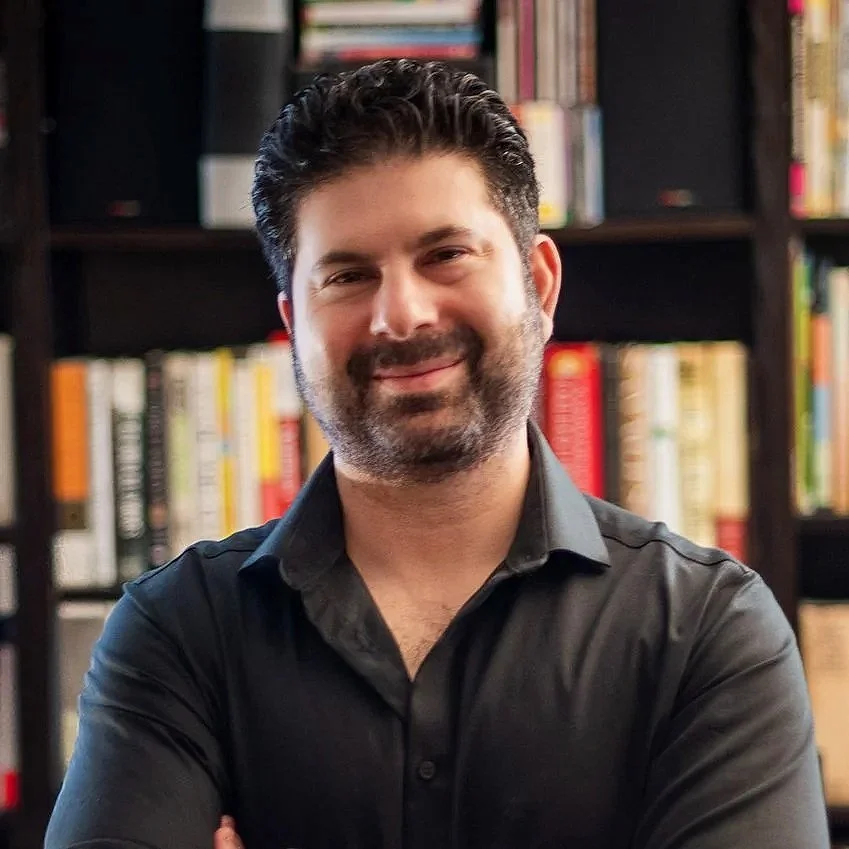
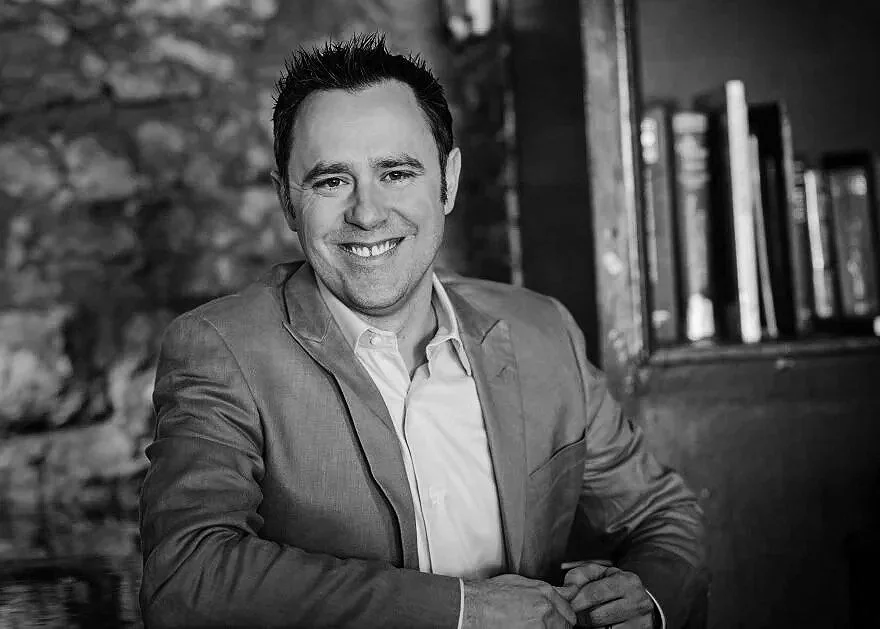
why is the college experience SO different for our generation??! today’s guest is dr. scott barry kaufman— a psychologist, coach, professor, keynote speaker, and best-selling author who is passionate about helping all kinds of minds live a creative, fulfilling, and self-actualized life. he is a professor of psychology at columbia university and host of the psychology podcast, which has received over 30 million downloads worldwide.
in this episode, we break down why gen z students are having such a unique college experience– and what that means for our mental health.
we talk about:
if college students are struggling more with their mental health than ever
college students ten years ago versus today
pros + cons of ai use in college
what good leadership looks like to our generation
whether standardized tests really matter
paths outside of a traditional four-year college
mentioned:
SHOP GUEST RECOMMENDATIONS: https://amzn.to/3A69GOC
About She Persisted
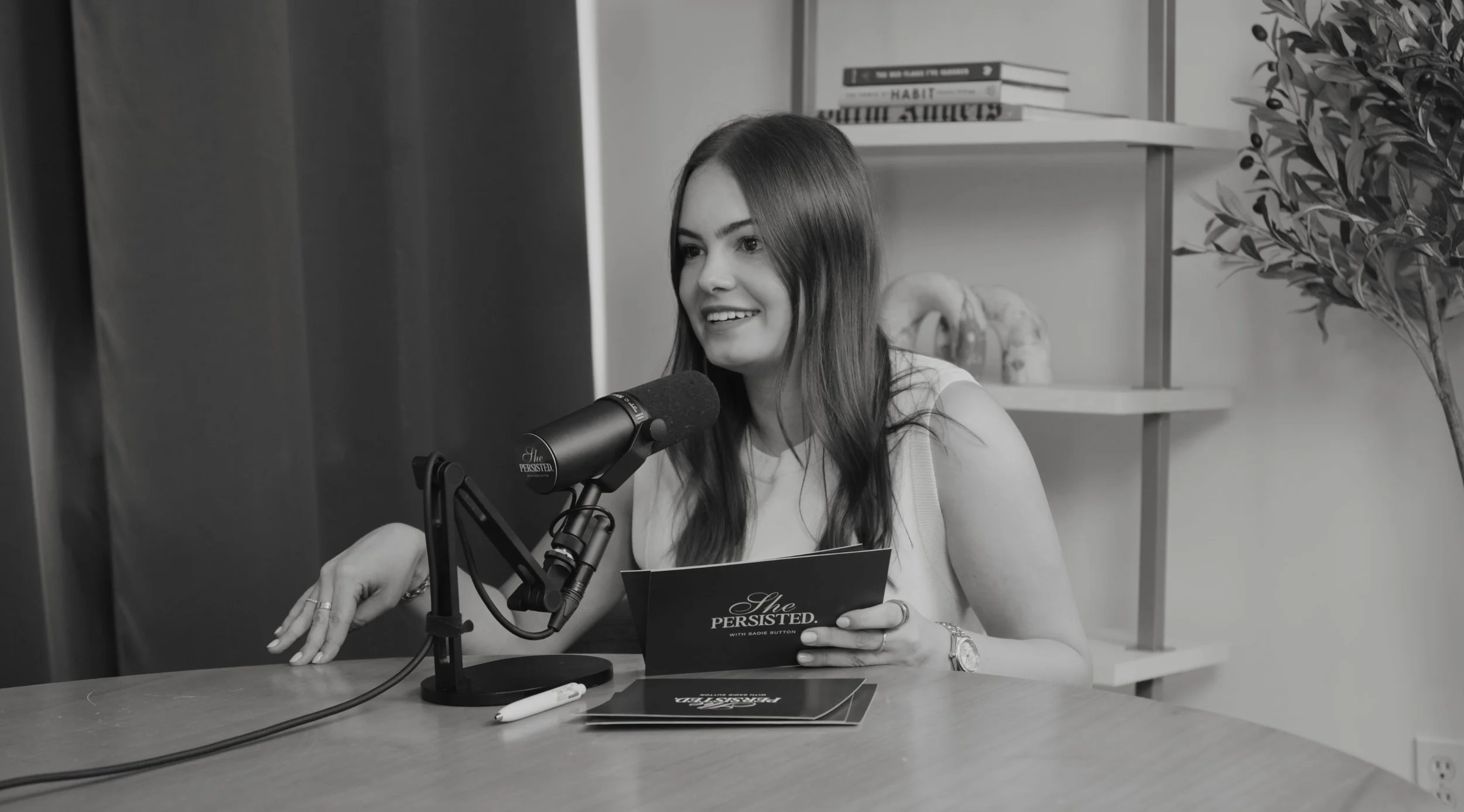
She Persisted is THE Gen Z mental health podcast. In each episode, Sadie brings you authentic, accessible, relatable conversations about every aspect of mental wellness. Expect evidence-based, Gen Z-approved resources, coping skills (lots of DBT), insights, and education in each piece of content you consume. She Persisted offers you a safe space to feel validated and understood in your struggle while encouraging you to take ownership of your journey and build your life worth living.
a note: this is an automated transcription so please ignore any accidental misspellings!
Sadie: [00:00:00] college students are experiencing their mental health in a different way than they have historically.
Dr. Kaufman: For young people right now, there is a sense of apathy and, a lack of hope.
Sadie: so many people get to college and have some degree of struggle,
Dr. Kaufman: schools, and that whole system of standardized testing does favor a particular kind of mind,
Sadie: it has never been more pressure and emphasis put on these results.
Dr. Kaufman: You have to change your mindset about what there is to be hopeful for.
Sadie: Welcome to She Persisted, the Gen Z Mental Health Podcast. I'm your host, Sadie Sutton. Let's get into it.
We have Dr. Scott Berry Kaufman on the podcast today, A psychologist coached Columbia professor, keynote speaker, bestselling author, and the host of the Psychology podcast. I'd love to hear your thoughts on the state of mental health, especially for this younger generation, because we're seeing a lot of research that suggests that college students are experiencing their mental health in a different way than they have historically.
Whether [00:01:00] that is rates of depression and anxiety, or even like the values that they have. When we look at things like personality traits or what we want for the future, it seems to be different from what we've seen across many generations.
Dr. Kaufman: For young people right now, there is a general sense of apathy and, a lack of hope. For the future? For many good reasons. I wouldn't wanna be a young person today.
I don't even wanna be my age today. No one's winning.
Sadie: Yeah.
Dr. Kaufman: No one's winning. Maybe the billionaires, I don't know.
it's a tough time of change. And in these kinds of moments, you have to change your mindset about what there is to be hopeful for. And yet the view change and reframe it as a great opportunity to redefine yourself and a great opportunity to, discover other parts of your being that are alive.
Maybe you never discovered before.
And I think that's the best we can do in is climate. 'cause there are a lot of things going on right now in the environment [00:02:00] that it's very easy to get stuck in cynicism.
Sadie: Yeah.
Dr. Kaufman: I teach college students.
Yes. You. So I know how they think. You see it, you see it. I see it all the time. Yeah. And I teach a course called the Science of Living Well mm-hmm. where we have them do exercises and things. And so we, I get, you know, a front row seat, you know, in the popcorn to reading their reflections Yeah. About what's most pressing on their mind.
And there's a lot of despair right now.
Sadie: And what were you, 'cause obviously I think so many people get to college and have some degree of struggle, right?
Like it's a new experience. You're really challenging yourself, you're much more independent, like, obviously it's not an easy stage of life and yet to see such a stark difference and how people are verbalizing their struggles or what's top of mind as far as their concerns. Like what is that difference as far as what you saw people struggling with almost a decade ago versus today
Dr. Kaufman: I saw people a lot more enthusiastic.
10 years ago. there's a real blase. Students have right now that [00:03:00] I've never seen before you know? i used to be able to easily just get everyone really inspired and excited just by talking about meaning and purpose and it doesn't do it anymore.
Sadie: Yeah.
Dr. Kaufman: I also think that's another thing that has changed as phone use.
The amount of students now that are just constantly on the laptops on the phones, they're not in the moment. I feel like students were a lot more in the moment, even a decade ago.
Sadie: absolutely. And it's really fascinating, especially in the classroom. I only. I wanna say one class, which was truly tech free, which was Angela Duckworth's class. And it was a very strict policy that it was no phones, no laptops, nothing. And that's really different from a lecture hall where every single student is behind a laptops screen taking notes or watching a football game or doing literally anything else during the class period.
And I think in high school, we obviously are seeing a shift where tech is more involved in day-to-day curriculum with Chromebooks or personal devices or whatever it is. But in college it's [00:04:00] just such an, at an increased scale because it's more like the professor talking at people. Whereas high school, you're kind of being handheld through the process.
And so it does mean that people are a lot more engaged in their devices. Yeah. And not as much in the, course itself.
Dr. Kaufman: you nailed it. But in order to be engaged, you have to see a relevance to your own life. a lot of education is pointless and stupid.
And I think college students are right to be bored out of their minds. Mm-hmm. You know, There are a lot of things that they're forced to learn and to memorize that will have no bearing on their life. so I don't like that, , I think probably academia could use a significant overhaul.
And catch up with the times.
Sadie: Yeah.
where do you think AI will fit into this equation and this picture? Do you think it will
kind of,
Dr. Kaufman: oh boy,
Sadie: compound this. Further and further getting away from like the joy of learning and loving the process and really building that mastery. Or do you think if you're using it right, it will make that process easier of being like, teach it to me in this [00:05:00] framework because this is how I love to learn.
Dr. Kaufman: Professors are having a conniption. Right now. And just in the last couple years, there's data showing that students are using chat, GPT and other ai aids at an exponential rate.
Just almost supplanting any of the work they're actually doing
Sadie: more than any other demographic.
Dr. Kaufman: Yeah.
Sadie: Like,
Which is wild to think about.
Dr. Kaufman: Yeah. And so if it continues to be used as a crutch or as a way to make things easier, obviously there's not gonna be growth there. The onus is not always on the students.
I think teachers need to take some freaking responsibility too for adapting and changing with the times.
Sadie: Yeah.
Dr. Kaufman: teachers can get a victim mindset in the faculty room, oh, the students are using ai, we're screwed, blah, blah. It's like stop your complaining, you know, like, this is the situation.
How can we have more creative assignments, that keeps the human element to it. You know, Like my science of Living Well class, I have take home essays where I have them [00:06:00] reflect on their growth challenges and growth experiences that we have them do and make a connection to the material.
So the memorization aspect's, not the most important aspect of it. To me, if you're gonna feed into chat, GBT, you know. please summarize my growth journey chat. G BT will be like, but I don't have enough information. I don't know your growth journey. So also if you're the type of person who does that, you have to look at yourself in the mirror.
Yeah. If you're the type of person that does that, yeah. At some point you have to take responsibility as a adult for what you're doing to try to cheat a system that's trying to help you.
Sadie: Yeah.
Dr. Kaufman: But I also understand if people feel like a lot of ways they're in a system that isn't just trying to help them grow or, you know, that's just trying to like test them in some stressful way.
Yeah. Yeah. I understand that. It's, it can seem very, alluring
Sadie: mm-hmm. to use ai. It's gonna man in the next 10 years. Some people say next five years, it's things are gonna get cray cray.
Yeah. ,
Dr. Kaufman: And, , it's gonna [00:07:00] make a lot of assignments, just look so silly that we ever ask students to do this when AI can just
Sadie: Yeah
Dr. Kaufman: You know?
Sadie: Well, I mean, I see the, I think it was last week I saw either like a TikTok or a tweet posted somewhere where it was showing the, nano banana handwritten homework and teachers were like, it's done. The handwriting's done. it's literally doodling in the margins because you're saying like, make eraser marks rewritten things.
And so it is gonna be really fascinating to see how we kind of adjust and adapt the system based on that. And so if students don't want to truly learn the things and don't want to adjust and adapt, they just won't.
Dr. Kaufman: Yeah. It's very true. The word adapt I really like that you used that word. I'm editing a book right now, it's coming out next year, , from some of the biggest, , business leaders, , like writers on leadership. And I put together a thing on the future of leadership with, Chris Shipley, both the editors of it.
And, We're, We are arguing there that adaptability as a leader [00:08:00] is gonna be one of the most important things you can do. And, I think leaders need to take a lot of responsibility. , A lot of people blaming young people for all the problems. Yeah. That's not right. That's not right. I mean, to do that you have to be an inspiring leader, you know? if you're an elder, you can't just complain about the young people today. You have to be adaptable about leadership within the confines of a really changing world.
Sadie: Yeah.
A hundred percent.
you've talked a lot about standardized tests and those being like a metric or an external way that we look at success, even though it's not a great way to assess ourselves i'm curious what your thoughts are there, and if you could share some of your wisdom on that subject. My wisdom for these like very binary external markers of success that there is so much pressure to conform to or to jump through that hoop.
Which I think can be really challenging, especially if that's not an area of strength
Dr. Kaufman: Yeah, my, my answer to that always comes back to self-actualization. I think that [00:09:00] schools, and that whole system of standardized testing does favor a particular kind of mind, and I've argued that for 20 years now. I wrote my book on gift. Yes. You've been following. Yeah. My first book on gifted. was all about redefining intelligence and understanding.
There are different kinds of minds. I'm a big advocate of neurodiversity mm-hmm. With a topic we haven't really talked about yet. I do think that SATs, are nothing more than a disguised IQ test.
Sadie: Yeah. ,
Dr. Kaufman: There's data showing the correlation is very high. But let's say you don't have a sky high iq. Does that mean you're stupid? No, I think there's broader conceptualizations of intelligence that we can have.
you know, like Let's say that whole way of like being a cognitive athlete is similar to like being like a basketball athlete. Yeah. Then imagine we had a whole system where, everything was predicated around in order to move up in the education system, you had to be as good as Kobe Bryant.
You had to be as good as Michael Jordan. Yeah. You would constantly feel inferior about yourself. But imagine we had a system where [00:10:00] like we made it, we forced everyone to compete in the same, avenue. I mean, That's what, that's the system we've set up, which is absurd.
Sadie: Yeah.
Dr. Kaufman: People should give themselves permission in such a system to not play that game and to not feel the need to compete. There are so many. Different paths to greatness. So many different paths to get to where you want to get in your own life We really underestimate the value of learning in a community college learning, not going to college. Like more and more people are realizing that they don't need to go to college to be a great musician, to do work in a trade.
So many things they wanna do that will have so much value in the world to be a writer, you know, the list can go on and on and on. my message, and it has always been my message based on my own personal experiences, is find a way to, play your own game. Rewrite the rules. I have done that continually throughout my life.
Sadie: Yeah.
Dr. Kaufman: And so I really think that's the key of life.
Sadie: Yeah. I love that. And I [00:11:00] think when you're describing like the SAT process, and I think how my siblings and I have gone about it, when you describe like training as an athlete, if the SAT is the hoop that has to be jumped through, because now when you look at applications, especially this year going through grad school applications.
They don't require the GRE yet, but it's looking like it might get reintroduced where if you're not submitting that every single piece of information you're giving them could be ai.
Dr. Kaufman: Yeah.
Sadie: That's a really interesting reality to grapple with. So if you're like, okay, this is a hoop that must be jumped through.
Thinking about it as a different type of game. And what you see so many kids doing these days, even though they shouldn't have to do this in the first place, is training for it and practicing and sitting for the tests. And they have their games every weekend where they sit for the two hours and do the practice test and you're going and training and going through the questions.
I remember my dad used to say, in high school, he was like, you gotta put in the reps, gotta put in the reps on the SAT. And [00:12:00] it's so incredibly unfortunate that's the hoop that has to be jumped through. And that's the thing you have to train for. But if you're approaching it differently and you're mentally understanding, okay, it's like a puzzle and there's all of these different ways that you can approach it and all these different ways you can practice and study and get better at the game.
Dr. Kaufman: Yeah. And I also think that, sometimes you do have to play the game to get to where you want to go. If your dream in life is to get to Harvard, then there are things you have, you gotta take the SAT You can't say I'm gonna play my own game where I hack the system and get into Harvard.
Yeah. Without taking the SAT. Yeah. being realistic is true too, but knowing where you want to go, I'm just saying there's so many people that, know where they, what they wanna do is so early and playing the game that everyone tells 'em they have to play is not gonna be beneficial for them to get to where they want to go.
Sadie: Last parting advice, I would love to know what your student's favorite assignment is in your class so that people can leave the episode and do that
Dr. Kaufman: themselves. Oh yeah. [00:13:00] Funnily enough, the week that always gets the best feedback is the embrace Your Dark Side.
Sadie: Okay.
Dr. Kaufman: I have all these kind of exercises that anyone can do. Mm-hmm. In my book Choose Growth, which is a workbook mm-hmm. that I co-authored with a former student of mine at Penn, Jordan Feingold, who's became a doctor. And we decided to write a book together. And Brace Your Dark Side, you know, it's about welcoming, your beautiful monsters, All the dark side means is that it's not in the light yet. That's all it means.
Sadie: Yeah.
Dr. Kaufman: And so the more that you can acknowledge and, say, I see you over there. You know, I see your Mr. Anxiety. I see you. What do you want? What do you need? Showing some self-compassion. Also acknowledgement
and setting boundaries around it.
Sadie: That's the homework. People have to leave and, and do that. Thank you so much for joining me today. Thank you. If people want to continue to follow along with your work, read your books, all the things, where can they do that?
Dr. Kaufman: They can follow me, on Instagrams at Scott Barry Kaufman. the Psychology podcast, after [00:14:00] 11 years, I wrapped it up there's five, almost 500 episodes you can catch up on if you want.
Sadie: Yes. Lots to go through the arc
Dr. Kaufman: for sure. And then Center for Human Potential, we have coaching training programs, and then my books are available wherever you can buy books. But thank you so much for asking me that and having me on.
Sadie: I'll go ahead and put all those in the show notes. Thank you so much for joining me today. I'm so glad we got to do this.
If you enjoyed this episode of She Persisted, make sure to leave a review, subscribe, and share with a friend or family member. Follow along at at She Persisted podcast on TikTok, Instagram, YouTube and more for bonus content. Thanks for listening and keep persisting.
© 2026 She Persisted LLC. This podcast is copyrighted subject matter owned by She Persisted LLC and She Persisted LLC reserves all rights in and to the podcast. Any use without She Persisted LLC’s express prior written consent is prohibited.




















do you want to start therapy but are worried about what your parents might think? are your parents making you try therapy but you don’t know what to expect? whether therapy is your idea or theirs, this episode breaks down why dialectical behavioral therapy (dbt) can help families navigate even the most challenging mental health issues (content warning for brief mentions of SH).
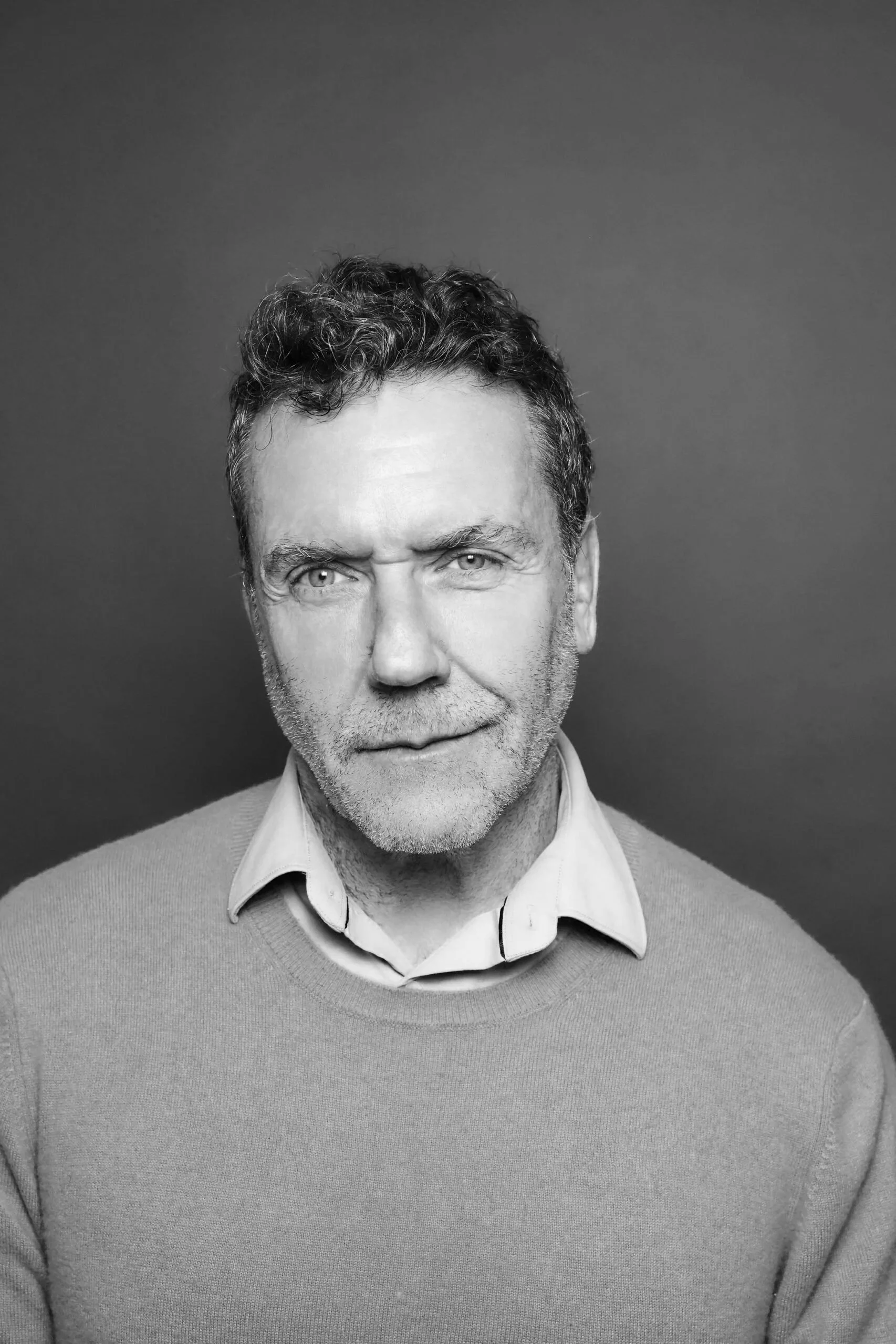
today’s guest is dr. jill rathus— a world-renowned authority on dbt. she co-developed dialectical behavior therapy for adolescents and families alongside dr. alec miller and dr. marsha linehan and is the co-author of several of the leading texts on this subject, including the widely used dbt skills manual for adolescents.
in this episode, dr. rathus shares her expertise on a number of teen mental health topics, including how to tell if a teen is dealing with mental health issues and what steps a family can take to help.