
253. why therapy didn’t work… until this

listen to this episode:
Tune in and subscribe on your favorite platform: Apple Podcasts | Spotify | YouTube | Amazon | GoodPods | Castbox | iHeart Radio | overcast | pocketcasts
when i think about a major turning point in my mental health journey, this one conversation is truly what kickstarted my recovery.
in this solo episode, i break down the moment in intensive mental health treatment that changed my outlook on mental health recovery, what led me to being hospitalized for my mental health in the first place, & how i began to recover from severe depression, anxiety, and suicidal ideation.
if you are on the fence about whether to ask for help with your mental health (or have a loved one in that exact spot), this episode details when i was in the exact same spot: i explain how i went from not believing i could get better to feeling hopeful that i could recover & build a life worth living.
i talk about:
why i needed intensive mental health treatment
the question my doctor asked me that changed my life
how i almost got turned away from my mental health treatment
dbt wise mind & how that impacted my journey
my biggest fears going into a residential mental health facility
being vulnerable when you’re getting mental health care
the mindset i had going into getting residential mental health care
SHOP GUEST RECOMMENDATIONS: https://amzn.to/3A69GOC
About She Persisted
She Persisted is THE Gen Z mental health podcast. In each episode, Sadie brings you authentic, accessible, relatable conversations about every aspect of mental wellness. Expect evidence-based, Gen Z-approved resources, coping skills (lots of DBT), insights, and education in each piece of content you consume. She Persisted offers you a safe space to feel validated and understood in your struggle while encouraging you to take ownership of your journey and build your life worth living.
a note: this is an automated transcription so please ignore any accidental misspellings!
Sadie: [00:00:00] that is the mindset that built foundation that my mental health sits upon. that forever changed the trajectory of my life and my mental health and for the better.
saved my life. changed my life.
And I can absolutely trace it back to that conversation Hello. Hello and welcome back to She Persisted.
around this time of year, February, March, I always am taken back to my early days of treatment and, my intake process at residential And especially my 14th and 15th birthday, which I spent, in intensive treatment, one in residential, and one at a therapeutic boarding school.
And so it's always a cool time of year to reflect on how different my life looks compared to seven years ago when I was suicidally depressed at the lowest of lows, feeling really hopeless No hope for the future. No expectations for the future. No plans to stick around for the future, as sad as that might sound, and how different my life looks today.
And also a real understanding and appreciation that my life worth living, that I've built [00:01:00] over the past seven years lays completely on that foundation that I built in intensive mental health treatment and those early days of recovery where I went from suicidally, depressed, to just, okay. That was really all I was hoping for, and I was so empowered by the feeling of just waking up in the morning and feeling neutral instead of depressed immediately.
I remember that was the craziest and most foreign feeling to open my eyes and be like, oh my God. There's not immediately an onslaught of dread and overwhelm and emotion, and I can just start the day, not even like optimistic, jumping for joy. Can't wait to see what today has to offer, but I can just go throughout my day and not have to be immediately in like reaction, distress, overwhelm, mode. So as I look back on that time in my life and what a turning point that it was, I am always brought back to the one conversation that I had in residential treatment during my intake process that I truly think saved my life and forever changed the [00:02:00] trajectory of my mental health.
So to set the scene as a freshman in high school, I had exhausted my local mental health resources. I had been hospitalized four times for depression and suicidality. I'd done two rounds of intensive, intensive outpatient at my local hospital.
I'd done two or three cycles of DBT skills group at Stanford's outpatient adolescent DBT program. I had worked with an individual therapist. I had done family therapy, I'd done occupational therapy, I'd done group therapy, you name it, I tried it.
And because of the ways in which I was coping with the distress and overwhelm and pain that I was experiencing, whether that be self-harm or suicidal ideation or isolating and not asking for help, I found myself in a position where I had no other options.
And so halfway through my freshman year of high school, I learned that I was going to be going to residential treatment. And that was something that was really scary and overwhelming even as someone who had done a lot of mental health treatment and been hospitalized and been in that context before.
[00:03:00] The idea that my mental health had gotten so bad that I was no longer able to have these things in my life that felt normal. Whether that was hanging out with friends, being a high school student, living at home, all of those things went on the back burner because of my mental health.
And I've said this many times, and I'll say it again. I was lucky that I had parents who were in my corner and looking out for me and advocating for me when I didn't want to advocate for myself and was unable to. They did an incredible amount of research and found a really great intensive treatment option, which was Three East at McLean Hospital, where they did dialectical behavioral therapy for young adults.
This is something I think is really unique about navigating any type of mental health treatment as a teen, is a lot of the time you are not the one that's actually making the decision. That feeling of knowing that no matter what I do or what I say, or how I go about this, I will be going to intensive treatment.
That decision has been made for me and this is happening, and that's what's next. That was really disarming.
And as someone who likes [00:04:00] to control and know what to expect and plan, there was a lot of anxiety and apprehension. Not even about like would this work? Any of that, but just like, what would it be like? where am I gonna be sleeping? Who's there? What does the day-to-day look like? What do I pack?
And so I found myself packing up my suitcase and all my belongings to go and live at McLean Hospital for an indefinite period of time. As a 14-year-old, my parents and I flew across the country to Boston. And we drove up to East House, which is on the McLean campus, and went into our intake meeting.
And I remember we were sitting in the hall with all of my suitcases and we go into this room, they call the fishbowl because it has windows on it. And I'm sitting there with my parents And like eight to 10 different clinicians come in.
I have no idea who they are or what role they're gonna be playing in this mental health treatment journey I was embarking on, but they were all there to talk about me and hear about my experience and what had brought me into their [00:05:00] care. And one of the first questions that they asked me was, do you want your parents in the room for this?
And I looked at my parents who had very lovingly dropped everything and flown me across the country for intensive mental health care. After we had exhausted all our local resources. And I didn't want to accept help and I didn't wanna try anything different. And I was so angry at them, I blamed them for every single thing I was experiencing.
I was of the mindset that like, if you raised me, you must have made me this way. I'm 14. I haven't had the opportunity to make my own choices and do my own things and live my life the way I want to. So this must be your fault. so I kicked them outta the room. They were nice enough to listen to that request. I found myself in this room surrounded by psychiatrists and therapists and social workers.
And I was asked why I was there. Why was I at three East? Why was I in an intake meeting for residential treatment? What had brought me to this point? And I felt like I really understood that. I explained to them that I have no other options. I've exhausted my resources. I can't be a patient in Stanford's DBT outpatient program anymore.
[00:06:00] I've been hospitalized too many times. It's not helping, it's not doing anything different. already, I've already done intensive outpatient twice. It didn't help. need a higher level of care than just meeting with a therapist. This is the next option. This is all that there is left.
I can't keep living at home. And then they changed their question. They asked, do you want to be here? And that was a really easy answer for me. I didn't, I had to be there. I was told that that was the next option. I understood that I had exhausted my resources and there was nothing left at home for me to try, but I didn't want to be in intensive treatment.
That was the option. That was what I was being told. But I definitely didn't want to,
and as we're having this conversation, Dr. Blaise Aguirre, who we've had on the podcast before and are absolutely gonna have back on when our schedules align and we're in the same place and get to record in person said to me, I'm gonna be really honest with you, we have seen hundreds, if not thousands of girls that are in your exact position.
You're not unique. We have seen so many. People who are just like you, they're depressed, they're anxious, they're suicidal, They're in amount of pain. [00:07:00] They're suffering.
You are not unique in that And I don't know if anyone had really said that to me before. I had been surrounded by other teens that were struggling with their mental health, whether it was in hospital stays or in group therapy doing intensive outpatient or in skills group doing outpatient. had attracted a lot of peers and friends who were also struggling with their mental health because I could relate to what they were going through, and they understood what I was feeling.
But I also had an appreciation for the fact that the intensity of my mental health challenges were really different from the people that I had crossed paths with.
no one else in my high school was taking a medical leave of absence to live in a mental hospital across the country. No one else was doing that.
And I also had been so all consumed by this internal experience so long.
There was also this extreme awareness of how much my internal struggle and suffering.
Dictated every single aspect of my life. Every single minute of every single day was filled with overwhelm and distress [00:08:00] and pain and self-loathing and disgust and isolation. It was day in and day out. Me being alone in my mental health challenges,
And so to have someone look you in the eye and say, despite the fact that you have found yourself in this incredibly rare situation, which is to have your mental health be so unstable that you found yourself. On a medical leave of absence from your freshman year of high school after four hospitalizations and exhausting your local treatment options you are absolutely not unique. and we have helped so many people through exactly what you're struggling with.
And so while Blaze made it very clear that recovery was not impossible and that so many people had been in my exact position before and made it to the other side.
He also made it really clear that I had to want it.
He very quickly saw that if there was one thing I was able to do, it was go through the motions, and that was what I'd done for the past two and a half years of mental health treatment.
I'd gone to the skills groups. I'd done the worksheets. I'd asked for help. I'd explained the experiences I was going through in a lot of ways, three East [00:09:00] wasn't going to be drastically different from that. And he said it was possible that if I went through the motions and I went to the therapy sessions and I talked about what I was experiencing, I might feel a little bit better.
I might see a bit of a difference, but it wouldn't last. and I would find myself back in the exact same position In six months or a year or two years,
No one had ever asked me, and in fact told me that unless I saw the wisdom in the process, it wouldn't work and I couldn't do it.
And he pointed around the windows because we were in the fishbowl and all the other girls were hanging out and getting ready for the day and going off to skills group And he said, you look around here, every single girl that you see wants to be here.
We ask them the exact same question. They see the wisdom in treatment. They're trusting us to help them and they're here because they want to be here. And he said, I'll be really honest with you, there's a lot of places where that's not the case. There's a lot of places where you show up and your parents will sign on a dotted line and that's it.
and I remember that scaring me in the moment because I was really [00:10:00] aware that that was a real possibility. I had experienced involuntary mental health care before I'd been hospitalized four times.
And this was going to be day in and day out, what my life looked like for an indefinite amount of time, And even if I didn't understand what I was signing up for or what intensive treatment would look like, I knew I wanted that autonomy. I knew I wanted that choice. I knew I wanted to have some control in the process rather than being put in a situation where that opportunity was completely stripped from me.
And so he told me to think about it. He said he would answer any questions that I had and I could meet with my therapist and my psychiatrist and take as long as I needed to figure out if I was going to see the wisdom in treatment And be an active participant who wanted to be there. And so they brought my parents back in the room and said, Sadie's actually not gonna be starting as a patient today.
And they're like, what are you talking about? We just flew from San Francisco to Boston because we signed her up to be a patient. And you guys do DBT and you're the last people that can help her. What do you [00:11:00] mean she's not going to start today in this program?
But they explained that at three East, the patients wanted to be there. They chose to be there. It was a voluntary program, and part of that meant seeing the wisdom in treatment. As they told me to take the night, think about it, ask the questions that I have. My parents and I went to lunch. I wrote my questions down on a napkin about what this would look like and and how do I know that this is gonna be different from the many rounds of DBT I'd already done.
And if I've already tried all these things and I'm still depressed, and I'm still anxious, and why would this be any different? Why should I trust you? Why should I be hopeful? Why should I even want to try? And in that time reflecting, I did my best to find the wisdom and treatment.
And for anyone who hasn't done DBT or is listening to this and is like, what are you talking about? What is the wisdom? It sounds like a cult, but in DBT we have our rational mind and we have our emotion mind and the perfect, happy, medium, best, most balanced version of ourself is our wise mind rational mind is our facts, our [00:12:00] logic.
We're thinking clearly we want an objective met.
We're able to weigh the pros and cons and think about what the outcome is most likely to be. Our emotion mind is hot and intense and reactive and sensitive to how we're feeling on a day-to-day basis. It's also things like trust and vulnerability and hope and and willingness. And willfulness and our wise mind is that perfect balance of the two.
And so in this context, there was the logical, rational side of these are the most qualified people to help me. We are at McLean Hospital with a Harvard Medical School psychiatrist and incredibly qualified therapist using an evidence-based approach. To treat my depression, anxiety, and suicidal ideation.
They have worked with hundreds, if not thousands of teens who are in the exact same position that I'm in
and have helped them through that challenge.
And then there was the emotional part, which was really messy and overwhelming and scary. There was the fear of this new experience and living [00:13:00] in a mental hospital, in residential treatment, and not knowing what to expect, but also the fear of, if I'm not here, where will I be?
What will this look like if I don't have that choice, if I'm not asked if I want to be there, if I'm not a voluntary participant.
And the other emotional piece that seeing the wisdom required was hope, and Hope was a very scarce resource in my life and in my brain. At that point, I didn't really feel hopeful about anything. Like I said, I was all consumed in my emotional experience,
at that point. I still didn't have any hope that anything would change. I fundamentally didn't believe I was capable of being happy. I. I didn't believe that I could build a life worth living. I really thought that I was completely unique. Whether it was my brain or the way I approach things, or how I learned to navigate the world that made me incompatible with happiness and wellbeing and mental stability,
and part of doing anything in life, in any context, whether it's your career or your academics, or your relationships [00:14:00] or your hobbies, any area of your life. Part of doing anything requires buy-in and requires some amount of hope and belief
Otherwise, we wouldn't do anything, like if we knew that the outcome was certain and that no matter how much we tried, we would fail and never get there. We would never do anything. And our mental health isn't any different if we don't believe that we're capable of recovery, if we don't believe it's possible for things to get better, we don't try and we might go through the motions. We might fake it till we make it and then relapse and end up two steps backwards. But just like any goal in life.
We have the best chance of success and the best chance of a positive outcome when we believe it's possible, and when we have buy-in and when we're emotionally invested and hopeful for a positive result. And it doesn't have to be a lot. I can tell you that I did not enter my first day of intensive treatment, believing that I would be happy and healthy and stable, and be able to go to college and have a career and have larger goals and want to live my life.
There was [00:15:00] absolutely no belief that any of that was possible. And it felt really painful to even try and do that because again, there was so much like self-loathing and disgust and blame, and there was so many emotions around my mental health itself. Like yes, I was in so much pain. And yes, I despise that, but also my self-esteem and.
Self-concept was so bad that it felt like I deserved to be in that much pain. Like I didn't deserve as a person, to have a life or I was happy and healthy and felt seen and heard and understood.
So there was not optimism and hopefulness and excitement about this next chapter. But I understood there had to be something and there had to be some amount of hope and willingness in that wisdom that I saw in treatment.
And so the amount of self-compassion and hopefulness I had at that point was that at one point, maybe 50 years from now, maybe things will be slightly 1% better. That's all. maybe when I'm 64 years old, maybe things will be 1% better than they are today. As a [00:16:00] 14-year-old who's suicidally depressed about to spend four months living in a mental hospital, it's progress.
It's not worse. And for so long, things just kept getting worse or staying painful and staying stuck. And so while it wasn't a lot and it wasn't groundbreaking and it was not a hold, new lease on life. It was something, and it was some amount of movement in the right direction, and technically it was hope.
And so I had this amalgamation of wisdom that I was trying to put together of. I logically understand that if anything's gonna work, this is it based on the research and the evidence and all the things we know about mental health, and I understand that if there's anyone out there that's qualified to help me as these people, I can trust them.
They know what they're doing. This is a safe space for me to struggle and accept help
and the last piece is something that I had done in therapy before, but I think is incredibly important and I brought it into new, therapeutic relationships at residential as well,
which is being vulnerable about what you're experiencing and trusting people to help you, [00:17:00] and accepting the help that is offered and making that commitment of like, when I go into that therapy office, I'm gonna share what's actually going on, and I'm gonna talk about what I'm experiencing, and I'm going to trust that the other person is going to support me through that.
Because that's another thing that's not a given. Even if you're in the therapy room and you're in the office and you're put in all the right context, there's still nothing that's making you do the work. You can sit there and run out the clock, when I was still at home doing outpatient therapy, I would sit in the room and I would look at the clock on the ground, and I would stare at the floor in silence until the 50 minutes of the session were done, and I would say nothing and I would not make eye contact, and the therapist would try and engage me in conversation or talk about things, and I would absolutely ignore it for the 50 minutes until the session was done.
So even if you've done all the work to get yourself in the room, or someone in your life has done all the work to put you in a position where you have the resources you need to get help,
you still need to make the choice and be brave [00:18:00] enough to be vulnerable and trust and accept the help that's offered.
And so that is the mindset and the approach I brought to my 14 weeks in residential treatment. And that is the mindset and approach that built the foundation that my mental health sits upon. And that forever changed the trajectory of my life and my mental health and my wellbeing for the better.
It saved my life. It changed my life.
And I can absolutely trace it back to that conversation and that decision and that cultivation of wisdom and willingness
in those early days of treatment. Now, I will say, as a caveat, I'm not someone who believes in single conversations or single moments or single decisions fundamentally changing our lives. I could have said, I see the wisdom in this, and cultivated that hope and vulnerability and trust and logical belief that this would work, and the next day decided I didn't wanna do it.
I could have gone through residential treatment and continued to [00:19:00] recommit to wanting to get better and wanting a better life for changed my mind once I went home and relapsed.
Yes, it was that conversation that allowed me to cultivate that wisdom and bring that approach to treatment. continuing to recommit. Over many moments, across many days, across many weeks, and many months after the fact that allowed me to build my life worth living,
and I still recommit to those mental health goals on a daily basis, on a monthly basis, on a yearly basis. When I reflect on how much things have changed over the past seven years, and how happy I am with what my life looks like and where I'm at mental health wise. So while I can look back and be like, this was something that really changed my life for the better.
I also fundamentally believe that I continue to make that choice thousands, if not millions of times over the last seven years and continued to see the wisdom building a life worth living, and accepting help and being vulnerable and trusting others and doing the hard things and sitting in the discomfort and being willing instead of willful [00:20:00] and whatever it is that you're doing on a day-to-day basis to maintain your mental health.
And there was also a lot of times over the last seven years that I didn't choose to see the wisdom and I didn't accept help. And this is something that I talk about with you guys a lot, which is the idea that if I'm not progressing, I'm regressing.
If I'm not moving in a positive direction, that means inevitably things are getting worse. But it doesn't mean that things have to be at 99%, 99% of the time I'm going for just like 51% rather than a 49% trajectory. Like, yeah, the progress is slow and yeah, gonna take a while to see change, but as long as things are slightly getting better every day, every week, every month, I'm gonna get there eventually.
Because if I choose the opposite, if I allow things to slightly degrade and get worse, I will bury myself back into that pit inevitably because I'm on a downward trajectory. And so while I made that choice to recommit to seeing the wisdom and building life worth, living and accepting help and investing in my mental health over the past seven years, there were a [00:21:00] lot of times I didn't.
But the times that I did outweigh the times that I didn't, and that allowed me to stay on that upward trajectory and move in the right direction and the growth compounds and momentum makes it a lot easier to stay motivated and it gets easier with repetition and practice and habits and systems in place and structure and support and all of these things that we build into our lives worth living.
So if you are starting therapy or you are asking for help for the first time, or if you are just looking to adopt a new approach to how you think about and navigate your mental health, I hope it was helpful to understand the headspace I was in starting intensive treatment
and what that looks like and where it's gotten me seven years after the fact.
And if you're not in a position where you're ready to choose to see the wisdom in things, more times than not, that's okay. I wasn't in that spot for many years, And I do think there's something to be said
for being in the right environment, supported by the right people at the right [00:22:00] time. I could have had the same conversation six months prior doing outpatient DBT at home and tried to cultivate the wisdom and the hope and the, willingness to try to get better and it might not have stuck.
There's a lot of things that have to go right. For this growth to stick and compound and become a fundamental part of our selves. So give yourself grace. It's not all on you and your mindset and your approach. There's a lot going on, but it was a really important part of the process for me, and so I wanted to share that with you. I am curious if there are any points that you reflect on in your mental health journey, pieces of advice people gave you, or conversations you had or, pieces of wisdom you heard that really changed the way you approached your mental health or your life.
I would love to hear them. It might be exactly what someone's looking for just leave them the comments. Send me a DM or a message or an email or all the things. I love hearing from you guys your thoughts on the episode and what you think and what you agree with and what you don't and what you're going through.
It's truly my favorite part of the podcast and it makes my day [00:23:00] every single time. So I hope to hear from you after this if you stuck around for the whole episode. Thank you. I appreciate it. Make sure to leave a review, subscribe, share. It really helps the podcast. We're still chugging along six and a half years later.
I've talked about it before. I'm sure I'll talk about it again, but the podcast is really a result of that time and treatment and how alone I felt
and how much progress I made when I really didn't think I was capable of it. so the driving goal of the podcast and what continues to be the mission is to help you feel less alone and to help you feel understood in what you're going through.
And to let you know that it is possible. I've been there too. I get it.
And if I can do it, you can too. So with that, I hope you guys have a great rest of your week. I can't wait to see you in the next episode. Follow along at at She Persisted podcast and I'll talk to you soon.
If you enjoyed this episode of She Persisted, make sure to leave a review, subscribe, and share with a friend or family member. Follow along at at She Persisted podcast on TikTok, Instagram, [00:24:00] YouTube and more for bonus content. Thanks for listening and keep persisting.
© 2026 She Persisted LLC. This podcast is copyrighted subject matter owned by She Persisted LLC and She Persisted LLC reserves all rights in and to the podcast. Any use without She Persisted LLC’s express prior written consent is prohibited.










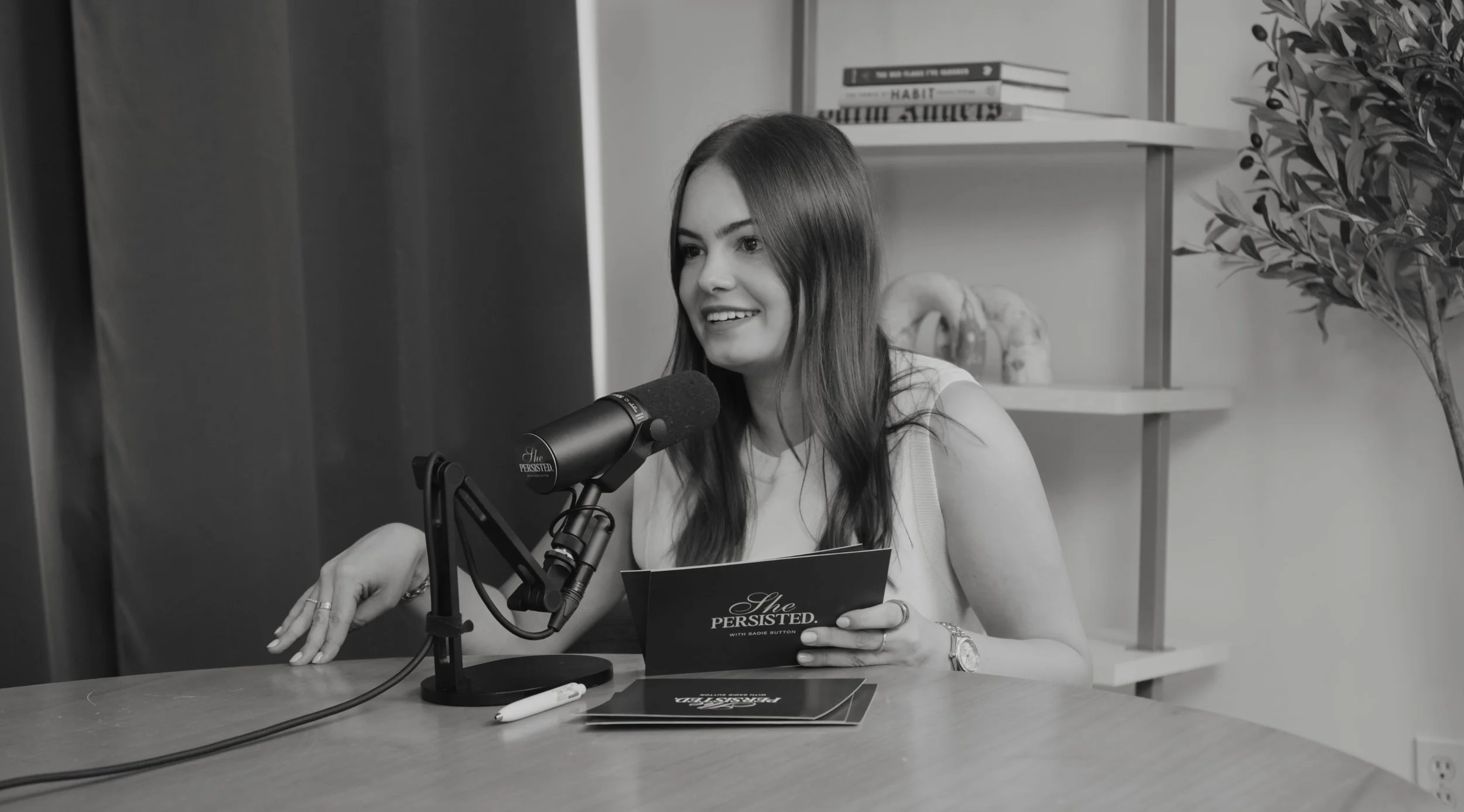

if you know what you need to do to improve your mental health, but struggle to implement these changes into your life, then this episode is for YOU. today’s guest is shireen rizvi— a licensed clinical psychologist who has conducted research and training in dialectical behavioral therapy (dbt) for over twenty-five years. in this episode, dr. rizvi and i discuss how to implement dbt skills into your daily life. whether you’ve never heard of dbt before, or you’re a dbt expert, this episode isn’t just about learning the skills— it’s about figuring out how to actually apply them in your life. because while awareness is a crucial step in mental health recovery, it’s not the only step that matters.