

listen to this episode:
Tune in and subscribe on your favorite platform: Apple Podcasts | Spotify | YouTube | Amazon | GoodPods | Castbox | iHeart Radio | overcast | pocketcasts
how do you help someone who’s struggling with depression??
in this solo episode, i answer a mom's question on how she can best support her son with his depression. i explain how my mental health journey taught me what the best– and worst!– ways are to be there for someone who’s depressed– and three conversation ideas you can try out.
whether you’re a parent, sibling, or friend, this advice can apply to anyone who wants to be a support system for their loved one.
i talk about:
what to do if someone you care about is feeling hopeless
why encouragement can be invalidating when you’re depressed
do’s + don’ts for supporting someone who’s depressed
using dbt diary cards to validate
the best ways to offer advice to someone with depression
how depression + anger are linked
three ways to make someone feel less alone
SHOP GUEST RECOMMENDATIONS: https://amzn.to/3A69GOC
About She Persisted
She Persisted is THE Gen Z mental health podcast. In each episode, Sadie brings you authentic, accessible, relatable conversations about every aspect of mental wellness. Expect evidence-based, Gen Z-approved resources, coping skills (lots of DBT), insights, and education in each piece of content you consume. She Persisted offers you a safe space to feel validated and understood in your struggle while encouraging you to take ownership of your journey and build your life worth living.
a note: this is an automated transcription so please ignore any accidental misspellings!
sadie: when you're already overwhelmed, love and support can feel like pressure.
no one is aware of this invisible burden that you're carrying on a daily basis.
I wanna give you advice on how you can offer support and help that's actually received and appreciated
You can't force someone out of hopelessness, but you can change how safe it feels for them to come back to you.
One of the hardest parts about loving and supporting and caring for someone that is struggling with depression is that the more you try and help, the more you try and. Problem solve. more you try and support a lot of the times, the more they pull away and the more they push you away.
I had a mom write into the podcast and she said, my son struggled through school all day, panic attacks, depression, et cetera. 15 years ago, no one said anxiety or depression. So I started in behavioral therapy. He did better, but the real struggle now at 21 is hopelessness. Again. I dunno how to help. And he just gets angry with me. Do you have any suggestions on how to communicate with him or encourage him
[00:01:00] and lucky for you? Unlucky for my parents. This is exactly what we went through when I was struggling.
So I wanna start by explaining what's actually happening when we feel hopeless We had a therapist on the podcast, Dr. Maddie Berger, and she gave some incredible advice here.
if somebody can't figure out why they are unwilling to try anything,
then you ask them what is the fear? it's not, I don't want to, I don't care. But really what it is is. Often I am afraid that if I try this and it doesn't work, then what? Or I'm gonna try this and I'm not gonna be able to do it.
So what does that mean about me?
So I wanna build on that because even hopelessness is a sign of something else.
It doesn't exist in isolation. There's a reason that people push people away or don't accept help or don't wanna go to therapy.
So if we think about hopelessness instead of just this abstract thing where you don't wanna do anything differently or try or problem solve, and instead think of it as [00:02:00] not feeling like you have control over the situation and feeling emotionally exhausted. If I were to try, nothing would work and I don't even have the energy to try in the first place.
and that's a really painful headspace and mindset and emotion to experience, especially to experience day in and day out almost constantly, which is what a lot of people with depression face.
And so instead we respond with anger, which anger is never a primary emotion. It's never like the only thing we're feeling, it's in response to something else. So it's in response to hopelessness shame fear guilt sadness. Anger is our reaction to our reaction, and it's a lot more palatable and it's easier to take action on a lot of the time.
But the anger is oftentimes people feeling misunderstood, feeling pressured, feeling like they're at disappointment. And so when someone is in that hopelessness head space and when they're depressed and when they're really struggling, someone coming to them with help and [00:03:00] support, it can feel like pressure in a situation where you already have no energy to try and believe that if you try, it won't work. Questions about how you're feeling and what's going on and how things are changing.
It can feel like something else that's needed from you. And again, you have no energy to try. It almost feels like an interrogation and encouragement, and you'll get through this, it'll get better. The only way out is through.
It can feel really invalidating because it feels like the person who's trying to support you is missing this big elephant in the room. That is your all day, every day experience. Like of course I've tried to feel better. Of course I want things to be different. Of course, I didn't wish I felt this way, and yet you're in that head space that anything I do to try doesn't work and I've lost the energy to try.
So when you're already overwhelmed, when you're already in crisis, even that love and support can feel like pressure.
So I wanna take you back to me at 14 years old, sadly [00:04:00] depressed.
I was sleeping on my parents' bedroom floor for six months because they didn't trust me to sleep in my own room, down the hall.
I struggled to fall asleep, woke up with nightmares. I woke up too early in the morning and would lay there staying at the ceiling, and when it was finally time to wake up and start the day and go to school. It was physically impossible to get out of bed and get going.
But my parents, they started their day. They would get up to their alarms. They would get ready to drop my siblings off at school and go to work and go about their day, and I would stay in bed with my head in the pillow comatose.
And my dad seeing this went into problem solving mode. Sorry dad, you're getting put on blast for this story, but it's a great anecdote and example of problem solving versus validating. And in his mind, I now know he was like, let me make this a nice way for her to wake up.
I'll play some music. Like, let me make this a nice wake up to the day. Let's get going, start things. So we played orchestra [00:05:00] music at the maximum volume on our speaker, so at 14 as an eighth grader, I found myself laying on a trundle mattress on my parents' bedroom floor.
Suicidally depressed with the pillow over my head, trying to block out this orchestra music that won't stop playing at max volume every single morning. And when that didn't work, when the noise and the sound and the volume wasn't aversive enough to like jolt me out of bed and get me going, he'd come over .
He'd try and talk me out of the situation and they'd say, Sadie, it's really important that you go to school today, because if you don't go to school today, you're gonna fall behind. And if you fall behind, you're not gonna be able to finish your final projects and your exams, and then you're not gonna get good grades on those. And that's really important for your transcript. And your transcript is what is gonna matter when you apply to college, and go to a certain school and what job you're gonna get and what the rest of your life is gonna look like, and blah, blah, blah, blah, blah, Textbook example of catastrophizing, and I would lay there with my head in the pillow comatose and not respond.
Well, I don't remember exactly what I was thinking. It was something along the lines of, you don't get it. Of [00:06:00] course, I've thought about this. Of course, I know I need to go to school today. Of course, I know I'm gonna fall behind, and that it has all these potential ripple effects into my future and into these things that I would maybe want one day, but that doesn't matter because this lack of energy and this hopelessness and this overwhelm is so all consuming that I can't even fathom rolling over, let alone getting up, getting ready, and going to school.
But after I started treatment and after my parents went to the parent DBT Skills group at three East while I went to the resident skills group, and we both learned skills to interact more effectively, something else he did did work and it worked really well.
So while I was in residential treatment, I was doing DBT or Dialectical Behavioral Therapy, and a part of DBT is a diary card. We've done episodes on those in the past, and we'll link them in the show notes. But what you're doing is you're writing out how you're feeling every single day, and that's not just like on a scale of one to 10 or happy versus sad, I would track suicidal ideation and [00:07:00] depression and anxiety and maladaptive coping mechanisms and shame and guilt and the skills. I was using the db T skills that I was practicing on a daily basis, so this massive like Excel sheet that I would write down how I was feeling on a given day
and it forced me to objectively rate where I was at on a daily basis.
This was something that my dad found incredibly helpful to understand and contextualize where I was at mental health wise. So when he would visit on the weekends and we would go get brunch together and sit down or check in over the phone, he would ask me how I was doing on my diary card, and I would give him the number from one to 10 for how depressed I was that day, how suicidal I was, and how anxious I was.
And as a parent, if you're listening to this and you're hearing. You want me to ask my child who's struggling, how depressed they are that day, how anxious they are, like how suicidal they are. It feels really counterintuitive and I'm sure incredibly painful. And we know from research that asking people about [00:08:00] these things and talking about these things and normalizing that it's okay to come to someone else when these are the thoughts you're having, the feelings you're experiencing doesn't amplify them or worsen them or anything like that.
And I also want you to think about the fact that. Whether or not you ask about them and whether or not you have this conversation, they're still there. At least this way. They're not just in your kid's head, they're not alone in this experience. Someone else is looped in, someone else is aware, someone else is checking in.
They've put a voice to it. It's really scary and overwhelming and daunting When you are absolutely alone in your emotional experience, when you've never said out loud, I'm not okay and I think I need help, it's abstract and overwhelming and misunderstood in your brain, and no one is aware of like this invisible burden that you're carrying on a daily basis. And for me, that was the most painful part, was struggling so much and knowing that no one knew and no one understood and I couldn't explain it well enough to get anyone else.
In the loop.
So when my dad and I sat down in those [00:09:00] early days of treatment, after he'd learned about validation, he asked me, how are you doing today? Because that was a really easy way for me to answer with numbers. I didn't have to try and like give this perfectly articulated therapy response of here's how I'm feeling about the world and my future, and here's where I'm at in this treatment process.
I could just give him numbers. Here's how depressed I am, here's how anxious I am, and here's how suicidal I am. And when he would ask how anxious I was on this normal day where I wasn't in school and didn't have any.
Big changes going on, and we were just at lunch together, let's say an eight or a nine out of 10. And when he would ask how suicidal I was on this normal day in my life at 15 years old, I would say an eight or a nine out of 10. And for me, that was every day for years. And, Well, I can't give you a perfect explanation of what his internal monologue and response was.
What I've heard from him was that it was incredibly. Eyeopening to understand that us just having lunch and hanging out when nothing else was going on. [00:10:00] When I was at my baseline, I was an eight or a nine for how depressed I was out of my entire life. I was an eight outta nine for how anxious I was on a daily basis, and I was an eight or a nine out of 10 for how suicidal.
I was just living my day to day life and it allowed him to understand. The baseline of my mental health and how I was operating the world, and how much I was struggling and suffering, and how much pain I was in on a daily basis, even when nothing quote unquote went wrong.
It allowed me to feel like I wasn't a problem that needed to be solved.
The Moment where it started helping and where our relationship improved and where I felt supported wasn't when he found the right solution It was when I felt understood and even if I wasn't understood, I felt seen.
And the way he did this was responding to these numbers and saying, I see you verbalizing what I just said, which is that we're just sitting here for lunch. On a normal day nothing really crazy has happened [00:11:00] and you're in an incredible amount of pain.
You are struggling to a huge degree. You are suffering. And I just want you to know that I see that and I understand that, and I know that that's what you're going through. And I give this example with my dad because my mom was a, a earlier adopter to validation with my dad. It was just such a stark difference before and after we learned the skill and way of communicating.
So it makes for the better anecdote. But this was also incredibly helpful with my mom and continues to be a big part of my relationship with both my parents today. Validating the experience, validating the emotion before jumping into problem solving.
So going a little bit more into this validation piece, which is a. Cornerstone of DBT and my therapist, Dr. Caroline Fleck, wrote a book on validation called validation. We're gonna put that episode in the show notes and a link to the book. If you want to dive all in on how this skill works and how you can apply it to every area of your life,
But I wanna give you a bit of advice and a bit of like some guardrails on how to approach this and how you can [00:12:00] offer support and help that's actually received and appreciated rather than linked, rejected, or pushed away. And the thing to remember here is that people don't take advice.
They don't feel understood by.
And it's really hard to feel understood when someone comes in 110% energy and immediately jumps into problem solving because it almost implies that you haven't thought of that yourself or that you don't want to solve the problem so instead of saying, have you tried, can we try? Let's do this. Starting with that sounds really exhausting. That sounds really overwhelming.
I see how much you're struggling. I see how overwhelming this is. I know you're trying your best, Leading with that validation instead of the problem solve or the solutions. And earlier we talked about when you're feeling hopeless and depressed and overwhelmed, even support and love and people reaching out can feel like pressure.
It feels like another thing that you're not gonna do, right? It feels like another thing. You're gonna fail out another way. You're gonna let someone down.
Instead of saying, you need to or try this, or this will work, saying, I'm here if you want help. I'm here if [00:13:00] you need to talk. But if you're not ready, that's okay. Another thing you can try is asking better questions, and this is again, what moved that needle with my dad instead of just trying to solve the behavior without even asking the question, and just assuming the answer was a given or not necessary to move forward. He asked, where are you at today?
In a context that we were both able to understand in a way that felt doable for me to communicate where I was at, and that he was able to understand what I was saying. Asking what's wrong is really hard and overwhelming to try and articulate everything going on.
When you're in crisis, the person also might not know, so other questions like, What feels hardest right now on a scale of one to 10 for this emotion? Where are you at? Really specific questions that don't require someone to perfectly articulate and describe and convey how they're feeling because it's not only like mentally really difficult and challenging and takes years of therapy to do, it's also incredibly vulnerable.
The other thing that made this shift in my relationship with my dad [00:14:00] so effective, was that it was consistent small check-ins rather than one intense, big conversation. Whenever we would talk, whenever we'd spend time together, we would do that check-in of, what's your diary card today?
How are you feeling? And giving him those numbers. It happened on a routine basis. It happened consistently. It took away any pressure or overwhelming, I'd just give the numbers. He'd say, I see you. I understand. And we'd move on. We'd talk about it more if we needed to or if I wanted to,
but there wasn't the pressure or the expectation of like, we're gonna have this big conversation and talk about how I'm feeling. Get to the bottom of this whole mental health crisis. Small check-ins over a big conversation, and consistently having someone that's consistently checking in on you and seeing how you're doing, it builds safety.
And they might not be in the headspace today to tell you how they're feeling. They might not be in the headspace tomorrow, but knowing that you're gonna come back can give them the time to build that muscle of vulnerability and build that bravery because it is really brave and courageous and hard to do to ask for help.
[00:15:00] And we're gonna do another episode, kind of a part two to this about exposure therapy for being vulnerable, how to build that muscle vulnerability and practice sharing your emotions and your experiences so that you can get better at asking for help. Because this was the other side of the coin, my dad changed how he responded and reached out and I worked on actually.
And saying how I was feeling and bringing that information to the table, which at many points I never would've been able to do. And the last thing is easier said than done, but understanding where that anger comes from. We talked about earlier in the episode about what it means when you're feeling hopeless, what that looks like for the person, why it's easier to respond with anger, when those are the emotions that you're struggling with.
So whatever you can do to reframe, understand the anger isn't at me personally or at asking how they're doing or trying to support, it's maybe because it feels like too much pressure and another expectation that they're gonna fail at any way. So just push it away and reject it now, or it's too [00:16:00] painful to sit with and think about how they're doing.
So shutting down and ending the conversation It's much more tolerable.
And this also means giving yourself lots of validation that this is hard, this is difficult, it's painful. You want to problem solve because you don't wanna see your kids struggling. We don't wanna see anyone in pain.
It makes sense that you know things that might work, so you want to suggest them. It makes sense that it's incredibly painful when you try and offer support and love and they push you away instead. Creating space for that and acknowledging that because that emotion is valid as well.
And then the last thing that I wanna add here is the context on this, which is that my dad and I were able to have these conversations because he also had an immense amount of trust in my treatment team. He was able to ask, how depressed you today? How anxious are you today? How suicidal are you feeling?
I could just give those answers and we could move on with our lives because there was the understanding that I was getting the care and support that I needed, that I was getting help with those big emotions and big responses and big urges.
So while it's important to check in and support people in your life [00:17:00] that are struggling, if they're in crisis, that is secondary to that professional support. You can't be their therapist. You can't force them to change. And so if safety is something that is a concern,
it's really important to have professional involved, and have that level of support. And when Mental health care is part of the equation. These conversations that you're able to have showing your support, showing your understanding, only compound the work that they're doing In sessions, the relationship becomes another protective factor, another buffer, another, piece of the support system. For the person who's struggling.
So if there's one thing that you remember from this episode, if there's one thing you write down, if there's one thing you screenshot, if there's one thing you put on a Post-it and hang on your wall, it is that it's not your job to pull them out of crisis. Your job is to make sure they don't feel alone in it.
And to do that, we can do three things. Validate before we give advice, reduce pressure, but increase your presence and focus on connection over correction.
If [00:18:00] you have ever struggled with your mental health and someone was in your corner, someone was there for you, you had a conversation that you felt really supported and understood in, please leave it in the comments or send a message. Would love to share those. Help anyone who's out there that is struggling to support a loved one, a friend, a family member, what was helpful for you, what can they try?
And similarly, if you've ever been effective in supporting someone who's struggling, what did you do? What did you say? What were they receptive to? Let us know we can share all the tips and pass them along
and if you're listening to this and you are struggling and you wish there was someone out there who is listening to this episode to understand how they can better support you and wanting to feel less alone, I really, really, really hope you know that you are not the only one feeling this way. People care about you.
You are loved, you are supported, and you deserve help. You deserve support. You deserve to not feel this way. And I see you. I hear you, and I'm in your corner.
So with that, make sure to follow, [00:19:00] subscribe, comment, like, share with a friend or family member. Post about it on social media tag at She Persisted podcast. Thank you guys for tuning in. Thank you for listening. If you have a question that you want answered or need support on, you can use the link in the show notes.
Send me a message and I will do my best to do an episode or send you a message, with my thoughts. And with that, I hope you guys have a good rest of your week.
Sadie: If you enjoyed this episode of She Persisted, make sure to leave a review, subscribe, and share with a friend or family member. Follow along at at She Persisted podcast on TikTok, Instagram, YouTube and more for bonus content. Thanks for listening and keep persisting.
© 2026 She Persisted LLC. This podcast is copyrighted subject matter owned by She Persisted LLC and She Persisted LLC reserves all rights in and to the podcast. Any use without She Persisted LLC’s express prior written consent is prohibited.

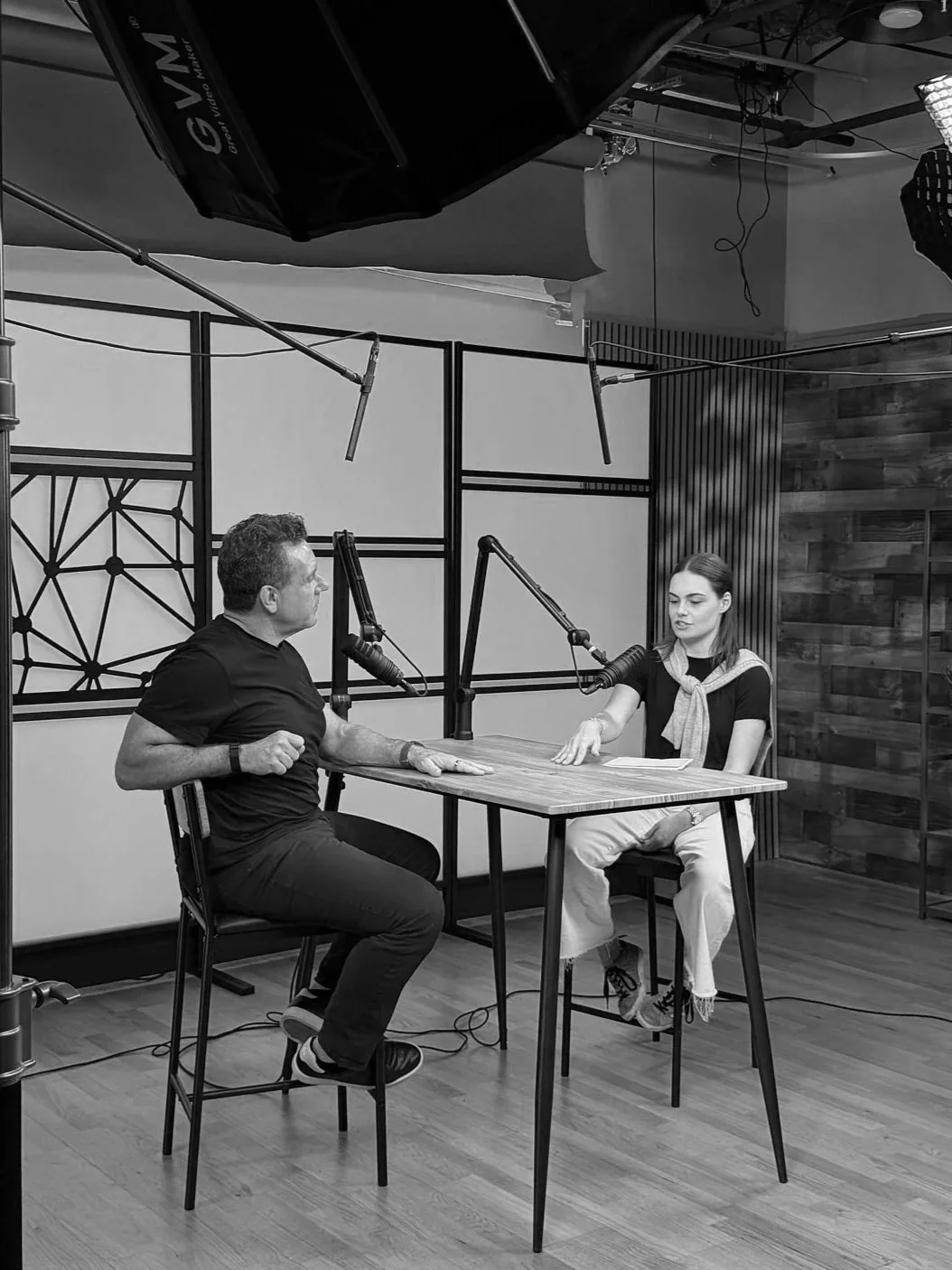


























if you know what you need to do to improve your mental health, but struggle to implement these changes into your life, then this episode is for YOU. today’s guest is shireen rizvi— a licensed clinical psychologist who has conducted research and training in dialectical behavioral therapy (dbt) for over twenty-five years. in this episode, dr. rizvi and i discuss how to implement dbt skills into your daily life. whether you’ve never heard of dbt before, or you’re a dbt expert, this episode isn’t just about learning the skills— it’s about figuring out how to actually apply them in your life. because while awareness is a crucial step in mental health recovery, it’s not the only step that matters.