
listen to this episode:
Tune in and subscribe on your favorite platform: Apple Podcasts | Spotify | YouTube | Amazon | GoodPods | Castbox | iHeart Radio | overcast | pocketcasts
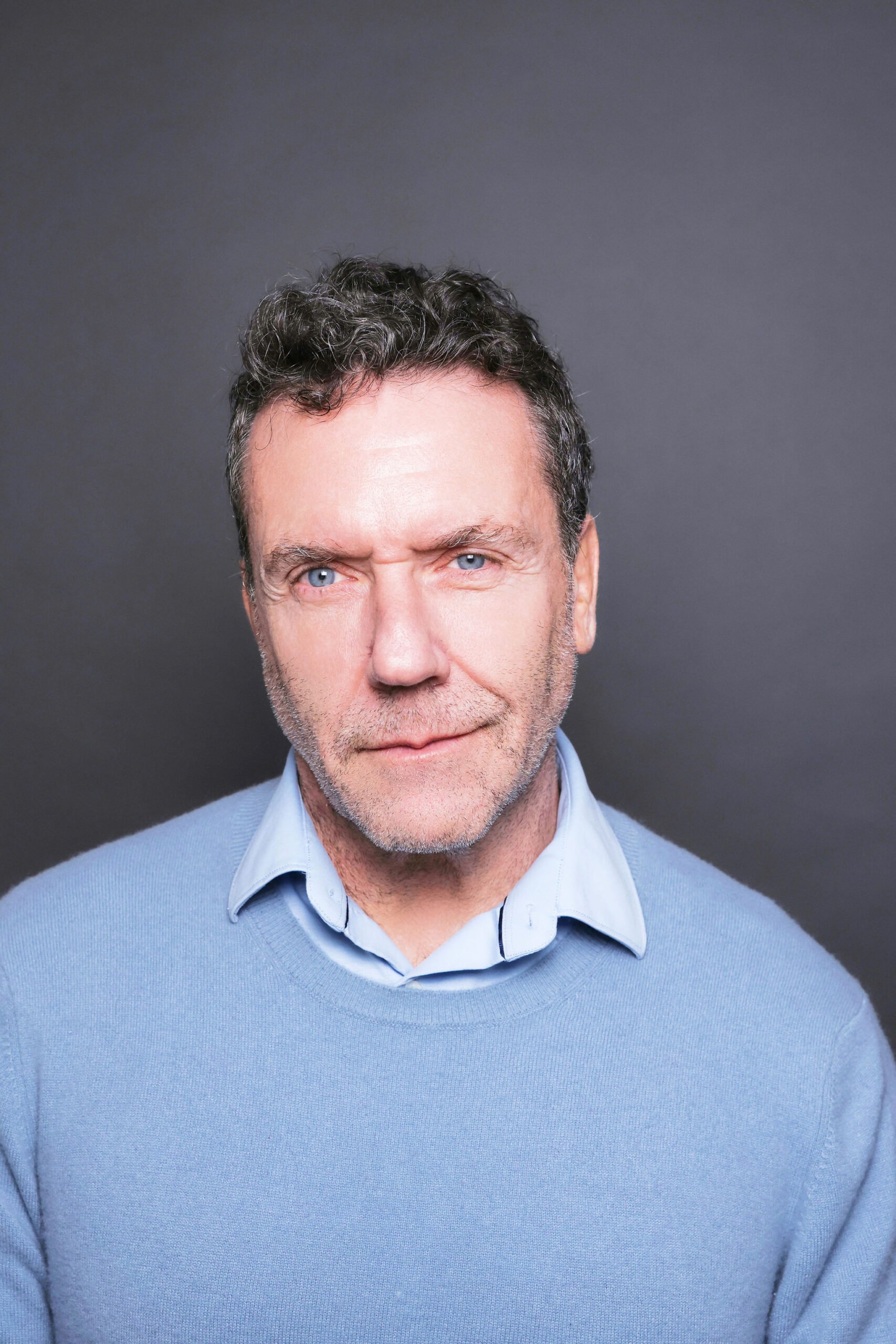
why are some people afraid to ask for help, even when their mental health is getting WORSE?! today’s guest is dr.blaise aguirre—an assistant professor in psychiatry at harvard medical school in the department of psychiatry. he is a child and adolescent psychiatrist and the founding medical director of the 3east dialectical behavior therapy continuum of care at harvard affiliated mclean hospital.
in this episode, i’m reuniting with dr. aguirre to discuss how my treatment at 3east saved my life– and why this program worked for me when nothing else did. dr. aguirre also draws his clinical expertise to unpack all things teen mental health, breaking down topics including self-hatred, agency, family dynamics, & more!
whether you’re struggling with your mental health or love someone who is, this episode is your guide to what makes treatment actually work.
we talk about:
what makes teenagers more likely to accept help for their depression
finding agency as a teen in inpatient treatment
why mental health challenges aren’t an intelligence issue
the role of self-hatred in depression
how depression can impact our relationships
what really motivates us to change our worst habits
mentioned:
About She Persisted
She Persisted is THE Gen Z mental health podcast. In each episode, Sadie brings you authentic, accessible, relatable conversations about every aspect of mental wellness. Expect evidence-based, Gen Z-approved resources, coping skills (lots of DBT), insights, and education in each piece of content you consume. She Persisted offers you a safe space to feel validated and understood in your struggle while encouraging you to take ownership of your journey and build your life worth living.
a note: this is an automated transcription so please ignore any accidental misspellings!
Many people feel that treatment is being done to them. If there's any hope of finding joy in your life, having a life worth living, it has to be your own life, and it has to be based on the goals that you want for yourself. What was so validating about DBT and restoring that agency and autonomy was even if you're 14, it is your life and you can do whatever you want to.
The experiences you have are not a roadmap. They're not a blueprint. The path is of your choosing. Every single moment is a moment of seeing the possibility of life or being stuck
Sadie: Welcome to She Persisted, the Gen Z Mental Health Podcast. I'm your host, Sadie Sutton. Let's get into it.
Six years ago, Dr. Blaise aguirre came on She Persisted for the first time. Eight years ago, he was one of the clinicians who treated me at Three East McLean Hospital which both saved my life and completely changed the trajectory of it. So getting to sit down with him again felt incredibly full circle.
If you aren't familiar with my story, when I first arrived at 3 East, an intensive residential DBT program, I was 14 years old, and I had already tried therapy, done multiple rounds of DBT, and exhausted my local mental health resources after four inpatient hospitalization stays. but despite all those resources, I was still suicidally depressed and truly did not believe that anything could make my life different when I got to 3 East and started my first intake meeting, the first question that Blaise asked me was not which treatments I'd tried or what my diagnosis was.
It was, "Do you want to be here?" and when I said no, he explained that treatment could not just be done to me. if I wanted a life worth living, I had to build that myself, and it had to be my choice.
So in part one of this conversation with Dr. Aguirre, we are talking about what actually allows someone to accept help, why parents so often get stuck in power struggles with their child when they are going through a rough patch, and why curiosity and validation can create more change than trying to exert control.
we also talk about self-hatred as an identity, why suffering can look completely illogical from the outside but make perfect sense to the person who's experiencing it, and the cost of using self-criticism to fuel achievement
Because the question that I kept coming back to in this conversation that really guided this interview Is not, is this coping mechanism helping me survive right now? But what is it costing me to keep living this way?
Sadie: well, thank you so much for coming back on She Persisted. I looked at the calendar, and it's been six years since we did our first interview.
It was during COVID,
Blaise: Oh my
Sadie: it’s wild
think about. We were in lockdown, and then it's been eight years since I was at 3 East, which is crazy to think about that it was that long ago. And I was a freshman in high school. Now I've graduated high school, graduated college, studied psychology at Penn, so things have really changed since I was here in Cambridge and in Boston.
And so I'm really excited to revisit some of the amazing takeaways that I had at 3 East
and get your thoughts and advice on how things have changed over the last six years, and see what has kind of held
the test of and what's changed and evolved. And yeah, I'm just excited to have you back on the podcast.
Blaise: on the podcast.
And thank you so much. It's, In many ways it feels as if, we chatted yesterday. And, you know, it's been wonderful to bump into you at conferences and, and just seeing your evolution from, someone who was sad a lot of the time and just, like, the last few times I've seen you, just, like, glowing, happy, even with your parents.
It's just great to see.
Sadie: Yeah.
No, it's, it's really crazy. I say on the podcast all the time, and it's very true, that those 14 weeks at 3East, they saved my life. They changed my life. The trajectory before that point and after were just so dramatically different. And obviously it's a number of choice points and so many things that shifted and were adjusted over that time period, but I really can be like, okay, before this I was on this one path, and after that point my life looked really different.
And so I wanted to get your perspective because you've seen hundreds if not thousands of people go through a similar process, and I think what's really unique about your clinical experience is that you see people struggling
and suffering to such a huge degree. It's not just an outpatient therapy appointment every couple of months.
It's people who have exhausted their resources, and this is the last thing that they're gonna try. they've really tried everything else and nothing has worked. Or parents who are like, "I don't know how to help my kid. I've tried everything and they're in so much pain." And so I wanted to kind of get your perspective because I imagine after working with so many patients and
clients that you have a feel in those intake meetings of like, "This will go this way," or, "It's gonna take a while to kind of shift attitude here," or, "They're not in a spot yet where we can help them or they'll accept the help that we're, we're giving."
And I talk about on the podcast a lot and when I talk
to other people about my mental health journey, the conversation that we had when I came in for my intake meeting, and it was in the fishbowl and everyone comes in and I'm like, "Oh my God, there's all these adults here. Everyone's here."
I had my, like, suitcase.
I came from California. And the first question that you asked was, "Do you wanna be here?" And I was like, "No, I don't wanna be here." I'd kicked my parents out of the room. I really just didn't understand what could be offered that I hadn't tried before because I'd done DBT, I'd worked with a number of therapists, I'd had therapists I'd liked before.
I felt like, okay, I'm using the skills, I'm trying this, but it really didn't feel like anything had changed emotionally. I was suicidally depressed. I was suffering a large amount of the time. I'd burnt bridges in so many of my family relationships, friends. And that conversation of, "Do you want to be here?”
You can't be here if you don't wanna be here, and you're just being dropped off at daycare, essentially," really shifted a lot of things for me. So I was curious, looking on your 20 years at McLean, what you see in
those initial meetings of like,
this person is gonna be able to accept help, they're on the right path, versus something else needs to happen, something needs to shift, those, like, active ingredients, in mental health treatment.
'Cause I think most people aren't even aware that, like, that's an important thing. You don't just show up and go through the motions and check the boxes. What you kind of bring to those sessions and to treatment and whatever it is is also a really important part of the process for teens, but also for parents as well.
Blaise: Yeah, and, and, Maybe ironically or just serendipitously, I did another admission intake this
Sadie: Really? Yeah. Oh my
Blaise: And, and I asked the same question.
Sadie: It's a good one. It's a good one. a good
Blaise: because I think that, many people feel that treatment is being done to them. You know, and that you have no agency.
I mean, how many times do I have young people come in, they don't know what medications there are.
They're just taking it because somebody prescribed them, and then they're just, taking them. And I mean, if there's
any hope of finding joy in your life, having a life worth living, it has to be your own life. It has to be your own life, and it has to be based
on the goals that you ha- have and that you want for yourself. And so yeah, being forced to do something that you don't want to do, I mean, who wants to do that, And that could be true of, you know, if you don't like cooking, being forced to do a cooking class, it wouldn't be fun.
If you don't like gardening, being forced
do gardening. But if you, you might not like therapy and you might have felt that, therapy hasn't been helpful. But A you want your life to change or do you want it to continue the way that it is? Do you want it? Maybe other people want it for you, sure, but do you want it?
And then secondly, what are your goals? 'Cause I think parents often have goals for their kids. I want them stop using
substances. I want them to do their homework more often. I want them to exercise more regularly. I want them to eat better. But that means nothing if the person themselves doesn't want it.
So, one thing is, that has continued to work, that idea saying, "This is your
responsibility to, to kind of take over with our help." , I think that the, the part that has sort of struck me in the last eight years is, the comorbidities that come with any kind of condition.
And, and, and it doesn't mean like one mental health condition, like say depression, is the, is the main one and then you've got all these comorbidities.
They all interplay with each other. So there's substance use, there's
personality disorders, there's emotional dysregulation, there's OCD, there's anxiety, and so no two people are alike.
It's interesting that a- at a time when we're thinking about neurodiversity, we're all neurodiverse. No two fingerprints are the same.
No two brains are the same What I ask you and what you ask me makes sense to the asker, but how the other person interprets it is filtered through their own experiences.
So, understanding that there might be learning disabilities, anxiety, OCD, perfectionism, people-pleasing behavior, psychosis, autism spectrum disorders, is an important part of the evaluation as well.
Sadie: You mentioned agency as being really important in treatment, and I have a lot of parents who reach out and ask, "What do I do?"
It's not even what do I-- It's, "Where do I send my child? Like, what program? We gotta do something. Have you heard of this program?" And it's, I'm sure, a question you get asked all the time as well. And I think a lot of parents who are listening and hear these, like, goals that they have for their kid of, "I want them
go to school, I want them to take their meds, I want them to show up for therapy, I want them to engage," like, things that they're like, "This is the basic expectation.
I'm not asking for straight As and college acceptance. Like, just show up to school." The idea that you have to practice non-acceptance to outcomes,
that if they don't have those goals themselves, they're not gonna happen. What's really hard about teen mental health treatment is that you don't necessarily need to preserve that agency.
Like, that's not something that's absolutely essential. It's great, it's important, it's a huge predictor of outcomes, but the way that this works, you don't need it. And so I'm curious your advice to parents who are in that position of making these decisions for their kid. A lot of the times for the better, they're able to advocate and get those resources, get those support,
Prevent things from getting worse, which sometimes happens in adulthood when you don't have people in your corner
advocating for you.
What is your advice to them when the easy choice is to not preserve that agency, and when there is such a disconnect between what the parents want for a kid and what a kid wants for themselves?
Blaise: Yeah. I think, a couple things. Firstly, no parent that I've ever met wakes up some morning and says, "I want my child to suffer.
I am going to do the worst possible things so that my kid suffers."
Parents are just gonna do the, the thing that they do. You've got, two sisters and a brother, and Your parents likely did
the same kinds of behaviors with, each of them because your parents are who your parents are. but it doesn't take into account
who the individual is on the receiving end.
And I've used this analogy before. If you've got two kids, one's allergic to peanut butter or to peanuts and the other one isn't, giving them both peanut butter may be the kind thing to do because you want them both fed. One is gonna get very sick and the other one isn't. One parent's style of interaction with one of their children is going to be different, may have a different impact on,
Their other child.
So invalidation might work for some kid by saying, "Oh, well, you're making a big deal out of it," and the kid says, "Yeah, you're right. I'm making a big deal out of it." For the other kid, it's like,
"No, I'm not a big deal out of it. This is really painful." And I think that those are the moments where, you know, your, your question comes into
play, and that is, by the way, before I answer this question, from the child's point of view, they don't want to make their parents' lives miserable either. It's just that the behaviors that
they're doing is inconsistent with what their parents' goals are. and they may not want to do the, the kinds of therapies that, parents want or get
up and go to school and all of those sorts of things. The parent's task is to get curious, is to be really, really open to listening, because it is through curiosity and through validation that change is much more likely to happen.
What happens is that parents tend to double down. “I don't wanna go to therapy." "You have to go to therapy."
“I don't wanna go to therapy." "I'm gonna, you know, pull your allowance."
“I don't wanna go to therapy." "You're not gonna be able to use the car," et cetera. So what
happens is that we use threats. A curious stance might be like, “Why don't you want to go to therapy?" "I've been going for six months and it doesn't help." "Okay, that's kind of interesting. Why isn't it helping?" Et cetera. So, so I think that, , when you've gotten into a battle with your child, you've already lost in a sense.
And, you know, sort of being curious, being open, being compassionate in the long run is much more likely to get the desired outcome
Sadie: Mm-hmm. You mentioned getting curious about the experience of, and we say like kid, but the person who's struggling, adults, anyone. And I think what's really interesting about your most recent book is you talk a lot about what that lived experience is, because maybe there's some level of validation that people will give to others or some level of like curiosity, but I think most people don't understand the lived experience or perspective of people that are really
struggling and really suffering, And getting to
point where they need intensive treatment,
or in a position where parents are trying to get intensive mental health care for them.
It's not something that a lot of people can maybe empathize with, because
luckily a lot of us are really resilient and able to navigate these challenges and have
communities that support us or access to resources. And so with that curiosity piece, I'm wondering if you can speak a bit to that kind of experience that you see day in and day out at 3 East and how people get to that position, because I think it's really hard to be curious and validate when it seems so illogical.
And I've talked about this on the podcast before, how these things can be really adaptive or they can be survival mechanisms. You talked in your book about how you're asking people to like give up this thing that's helped them cope or helped them survive or been their
lifeline or like with self-hatred, that's the only thing they're doing right, which is so fascinating to think about.
those are never thoughts that would cross the average person's mind when they're like, "Let me get curious about this person's lived experience." So I was wondering if you could speak a bit to what it looks like and what it feels like for people who are in a position where they're really struggling with their mental health.
They have this self-hatred that is kind of
taking over every
aspect of their life, and in their best attempt to cope with that, they ended up in a spot that's really ineffective and, and maladaptive.
Blaise: Yeah.
Well, and I think, I think that this question of being illogical is a very interesting one because,
you know, I mean- When I met you, you were a brilliant student. And you came across as
a very bright person. And, you know, what you've done has underscored the fact that you're really bright. And you say, "Well, how can a bright person be so illogical?" But it, it would be like saying, "How can a bright person have asthma? How can a bright person have stomach ulcers? How
can a bright person have arthritis?" Et cetera. This is not an
intelligence problem that we're talking about. We're talking about people's innermost psychological and emotional pains.
And I've had many, many patients who said to me,
"I wish I had, like, a cancer growth in my brain so that people could see, wow, that looks really painful."
Because the pain is so powerful inside the mind, the emotional pain, it's equivalent to having that. And just because it's not visible to the outside world
doesn't mean that it's not real.
And it can be even worse if the family does have some sort of means, because you say, "Well, you know, you've got
parents who love you, and you've got resources, and you go to a good school, and you've got friends," et cetera.
Like, how can you be one of those people who is suffering so much? But it would be as, again, as if saying, it's like you've
all these resources, why do you have hypertension?
You've got all of these resources, why do you have asthma or you have diabetes? They're separate problems. and the tragedy is that the amount of suffering and pain that people experience can be life-threatening.
and there's a compounded invalidation because maybe the immediate system
is invalidating to you, says like, you know, "You shouldn't feel this way," but then society at large is saying you shouldn't feel this way.
Sadie: And then yourself, there's that narrative that you're then telling yourself as well.
Blaise: "Well, I must be wrong. I must be wrong. Everybody's telling me I shouldn't feel this way." But it would be like me saying, "Everybody's telling me I shouldn't have
hypertension. I shouldn't have it because everybody's telling me that, and it just doesn't make sense."
That's illogical. It's much more logical to say that, "Given my biology, given my genetics, given my high levels of sensitivity, given my experiences, given the invalidation that I've had, it is logical that I would feel this way. It makes sense, especially if I don't have the skill set to be able to manage these difficult things."
so I think there is a lot of validation of that experience
Sadie: With the self-hatred piece, you talked in your book about how it's not just a belief. Like, people see it as central to self.
Like, it is their identity, so it's not something that seems like it can be changed or adapted or adjusted. We were talking before about how pervasive this is. Even people that are thriving and doing really well in life and really functional in a lot of areas, this can still be a really key part of themselves.
Can you speak a little bit to
you define self-hatred and what that looks like, how that shows up? Because I think it's something that a lot of people can relate to that underlies a lot of mental health challenges. But like you talked about, it's not something that we screen for or ask about or directly target in treatment plans.
Blaise: Okay. So, the kind of self-hatred I'm talking about, Many, many people have made the statement, "I hate myself." You know, it's like, "Ugh, why did I do that thing? I hate myself."
Sadie: It's like Gen Z lingo now. Exactly. I'm like, oh my gosh.
Blaise: Exactly. And I can understand, you know, you, didn't hand in your homework, you failed a test, you know. But typically, that kind of self-hatred, that kind of statement is generally in response to something identifiable in the environment.
Now, if I were to be having a discussion with you and I say,
"So Mary, tell me, what you think about what I said," you'd say, " What?" Because that would be very dissonant for you if I said that to you, because that's not your name. Yeah. If I called you Sadie, you don't even think about it. That's identity level. Mary
makes no sense, because that's not your name. It's not something that you've grown up with your entire life, and if I kept calling you Mary, then you'd get annoyed at some point, saying, you know, "What is wrong with you? You've known me for eight years at least, you know. You know what my name is." So you
are truly identified at an identity level with your name.
You've heard it since the day that you were born. Right. People have called you that. Yeah, they may
have had some other terms of endearment and everything like that, but it's, as you've progressed throughout your life, that's the thing that you've known. That's the kind of self-hatred that I'm talking about, that a child from very, very, very early on has experiences
that get it to conclude that they are fundamentally flawed,
that there is something profoundly wrong with them,
And that things that are bad that happen must be because of who they are.
so if that's the only experience that they've had, they
wouldn't think of life in any other way. You would never go to, your therapist and say, "Everybody's calling me Sadie," because you wouldn't see it as a problem because it's the way
that it's always been.
For people with self-hatred, the kind of self-hatred I'm talking about, it has been there for as far as they can remember, and they're never gonna complain
about it because, okay, make another analogy. If you've had a headache your entire life, you're never gonna go to the doctor and say, "I have a headache," because it's the only experience you have. If you've never had a headache and suddenly you develop a very strong headache, you say, "Wow, that is different from what I experienced before. I need help for that thing.
It's called a headache." so I would try to make the distinction between these intermittent, states of self-dissatisfaction, and all the adjacent ideas
such as self-criticism, self-judgment,
Blaise: Self-blame, self-devaluation, and this core identity that develops over, the lifetime of, the person
Sadie: Mm. And
how does that show up in how people view their relationships? And you talked about kind of like attributing things that happen externally to them as a person. But I think what's also really interesting that you've mentioned is that you
can function really well and have this belief system kind of just
like be underneath the surface,
and again, not be something that you
would think to change because it's such a constant.
If, again, again, just there all the time, is there an argument to be like, "Well, why would we change it?"
Blaise: to be like, "Well, why would we change it?" It, it's a very fair question. And, because
the, first book, "I Hate Myself," , people
liked it. They said, "Okay, now what?" So then we wrote the second book, " I Hate Myself, Now What?" So that's the workbook that's just come out.
I have a book, coming out later this year, "Loving Someone Who Hates Themselves,"
so this is for caregivers of people with self-hatred. But then I met a colleague on the West Coast, who treats a lot of very
high-performing people, high-achieving people, who have had a lot of self-hatred. And, and maybe not
self-hatred so much, but a lot of negative self-evaluation, a lot of self-criticism.
And for them, those states have actually fueled their success. Now, so why would they want to change that? And, and I've often asked, "If I could take away this negative self-evaluation that got you to succeed, from this point of view today, would you change it?" And they say, "No."
"What about if I were to go back in and I would say, 'Wow, you really are treating yourself very poorly. Do you want this to
go away?" they'd say yes. So it's sort of interesting that When they get to the point of success, they say, "You
know what? It allowed me to get there."
So a couple things about that. First of all,
there's not like everybody's gonna be, The top football player or top basketball player or top actor or top business person or, or famous author.
you know?
Most people with a lot of those negative self-states
aren't going to become ultra famous. But what happens to that small group that those traits allow them to create a success? One of the questions that I ask them is, " How has that impacted the rest of your life?"
and what'll happen is they'll admit they've lost relationships. They'll admit that they're worried about the message that they're giving to their children. , They'll admit that there's this constant need to prove themselves. So even though they've succeeded, what happens if I stop succeeding now?
And so that even though to the outside world they look successful
in terms of money and fame and acclaim, they're suffering. They're still suffering. So it's the same thing as, as, you know, the young people who come to 3East who are suffering emotionally,
and it doesn't
seem that way to the outside world, or the rest of the world says it shouldn't be that way, and yet they are.
For many of these high-achieving people, they've said it cost them a tremendous amount. And, there was a cost, a, a hidden cost to achievement. Not for everybody, but, you know, but certainly it's still there. and I think that you've got to be honest with yourself in saying, "Yes, I've made it to the top, but at what cost?
Was it worth it?"
Sadie: Yeah.
Blaise: Yeah.
Sadie: I think what was so validating about DBT and kind of restoring that agency and autonomy was even if you're 14, it is your life,
And you can do whatever you want to.
We talked about those, like, maladaptive ways of coping that have been a survival mechanism.
You can keep doing that as long as you want to, at what cost?
Blaise: Exactly.
Sadie: And it is the point when it no longer becomes worth carrying that cost or carrying that baggage or whatever it is, that then you get to decide to, to make that shift. And I think going back to how can you keep agency in treatment process for young adults when parents are the ones making the
decision, I think that's why you see such different outcomes when the teen is the one that's making that choice and forced to decide, "Okay, is it worth it to still cope this way?" Or be this version of myself in relationships or talk to myself in this way. And I think
Even at 3East, it took me a long time to kind of like decide that the cost wasn't worth it for certain ways of coping with things. Like I remember doing the PHP program well over a month, if not
two months into 3East, and only at that point eventually having a therapy session where I was like, "Maybe my life worth living doesn't include suicidal ideation."
Like for so long that had been a coping skill or a way to self-regulate or if it's becomes more uncomfortable, more painful, this is always an option. And it wasn't until a lot of like showing myself, "Okay, I can cope with this. I can work through this. I have support. I'm not doing these other skills," to then have that conversation and be like, " Maybe it's not worth it."
And so I think that's also another really interesting piece of the puzzle and I think what makes DBT so effective for so many people is it's not someone that
just gonna tell you, "You have to stop that."
Blaise: Mm-hmm.
Sadie: It's like, "No, you can
whatever you want to as long as you're willing to accept the consequences."
Blaise: Exactly. And, and I will, often say to people who don't want to change and I'll say, "You know what? You have
figured out a way to struggle less. It helps
you in the short run. I don't think it's gonna help you in the long run, but if you don't want it to change, you don't have to do this." And I think it upsets parents because the parents say, "No, they have to change."
The child is not willing to do it. and then you get into this interesting struggle where we're saying, "You don't have to be here,"
and the kid is now saying, "Okay." And we've had people who've left.
Sadie: Oh, I left for the day. I thought about it. I came back. Exactly.
Blaise: 'Cause if it's not your responsibility, then you can always blame someone else. And it's not to say that you should blame yourself, but just like saying, "Okay, you know,
am gonna get this much help, this much help, this much help? How, how much I want to change? Is this the only path, for the rest of
of, life?", I mean
Blaise: The experiences
and emotional experiences you have are not a roadmap. they're not a blueprint. They're just information, information about this present moment. The path is of your choosing to the extent that you have some, some choice in your path. It's like I can go towards this
self-destructive behavior, or
I can move away from it, or I can
do something in between that's less
self-destructive.
But there's so many choices in
in any given point, when you have very strong emotions that it feels as if you have no choice. It feels as that there's only one thing that you can [00:27:00] do.
But if you were thinking about like climbing to the top of a mountain and you're on this really hard path and it's really effortful and all you see is this path, and finally you get to the top, and and you see the world
and there's so many sights, so many things around you. Every single moment is a moment of seeing the possibility of life-
Sadie: Yeah
Blaise: or being stuck.
I hope you guys enjoyed part one of this interview with Dr. Blaise aguirre. In part two, we're gonna dive into a lot of practical topics like when residential treatment is necessary, how to tell whether a program is actually offering the treatment that it's a-advertising, and how social media, phones, and AI are changing mental health and therapy.
If you guys enjoyed this episode, make sure to leave a review, subscribe, comment down below your favorite part, and share with someone who might need the reminders in this conversation
So with that, I'll see you next week.
Sadie: If you enjoyed this episode of She Persisted, make sure to leave a review, subscribe, and share with a friend or family member. Follow along at at She Persisted podcast on TikTok, Instagram, YouTube and more for bonus content. Thanks for listening and keep persisting.
© 2026 She Persisted LLC. This podcast is copyrighted subject matter owned by She Persisted LLC and She Persisted LLC reserves all rights in and to the podcast. Any use without She Persisted LLC’s express prior written consent is prohibited.
























do you want to start therapy but are worried about what your parents might think? are your parents making you try therapy but you don’t know what to expect? whether therapy is your idea or theirs, this episode breaks down why dialectical behavioral therapy (dbt) can help families navigate even the most challenging mental health issues (content warning for brief mentions of SH).
today’s guest is dr. jill rathus— a world-renowned authority on dbt. she co-developed dialectical behavior therapy for adolescents and families alongside dr. alec miller and dr. marsha linehan and is the co-author of several of the leading texts on this subject, including the widely used dbt skills manual for adolescents.
in this episode, dr. rathus shares her expertise on a number of teen mental health topics, including how to tell if a teen is dealing with mental health issues and what steps a family can take to help.