
264. why you know the coping skills but still feel stuck (feat. dr. shireen rizvi)
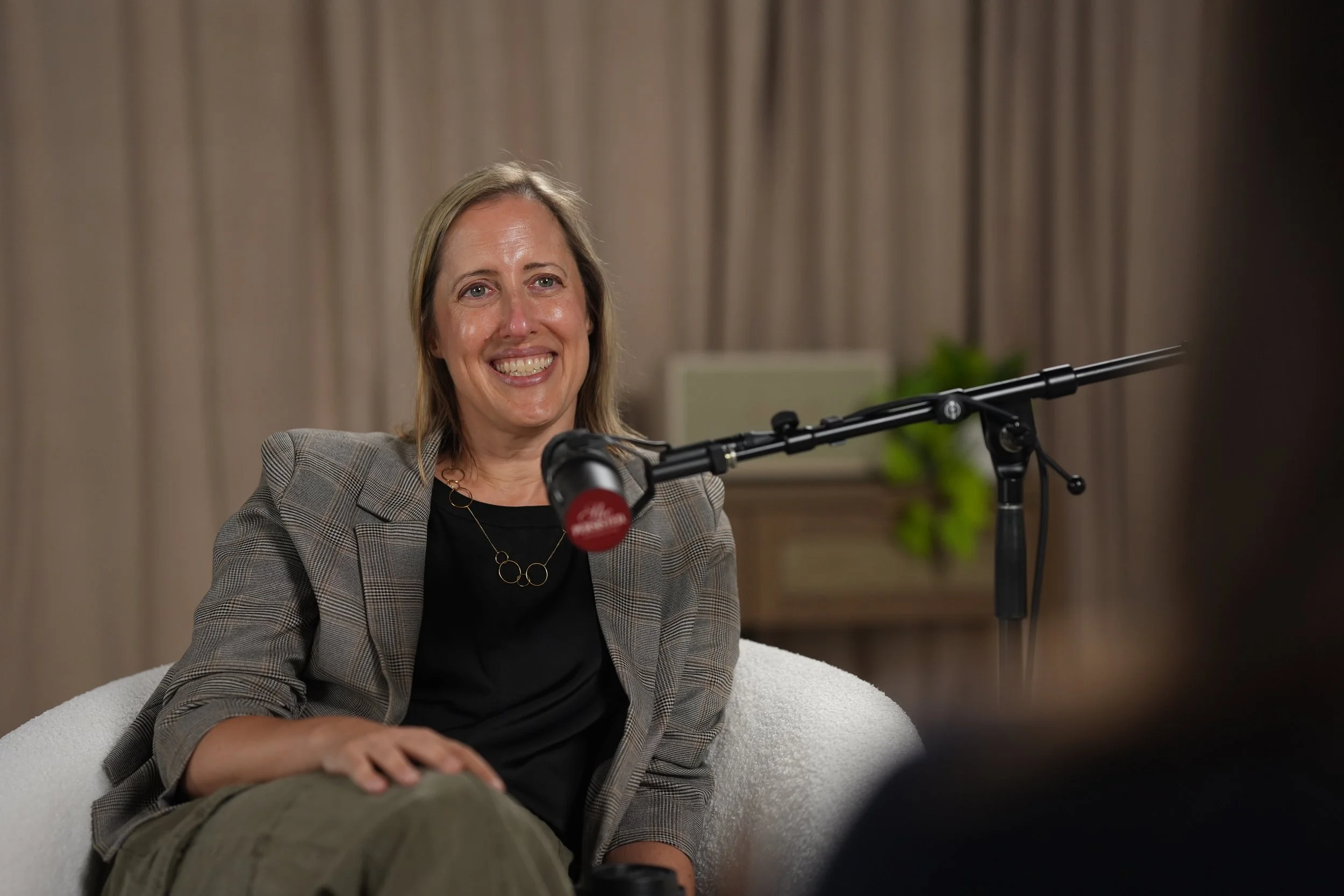
if you know what you need to do to improve your mental health, but struggle to implement these changes into your life, then this episode is for YOU.
today’s guest is shireen rizvi— a licensed clinical psychologist who has conducted research and training in dialectical behavioral therapy (dbt) for over twenty-five years. in this episode, dr. rizvi and i discuss how to implement dbt skills into your daily life.
whether you’ve never heard of dbt before, or you’re a dbt expert, this episode isn’t just about learning the skills— it’s about figuring out how to actually apply them in your life. because while awareness is a crucial step in mental health recovery, it’s not the only step that matters.
we talk about:
• what to do if you struggle to trust your emotions
• safely navigating your most intense emotions
• figuring out your “life worth living goals”
• getting motivated to make positive changes in your life
• debunking common pushbacks against using mental health skills
• why dbt gives people more grace to make mistakes
mentioned in ep #264:
[00:00:00] It takes a while to change. In six months, your life won't be entirely different, let's be realistic, but let's see what could you accomplish in that period of time. There's like a million choices in the day. What can we shift about that in concrete ways that don't feel too extreme? And what are we doing instead that increases a sense of mastery, a sense of joy, a sense of achievement?
[00:00:26] Trying to be more explicit about that, I think, is a way of helping build willingness, commitment, and motivation to be like, "That's why I'm doing this."
[00:00:33] Well, thank you so much for joining me today on She Persisted. I'm so excited to have you here. For people not familiar with your work, I am joined by Dr.
[00:00:42] Shireen Rizvi, a psychologist and one of the leading experts in DBT or dialectical behavioral therapy. If you guys have listened, you know I'm a big DBT nerd, big DBT fan, and she's also a professor of psychiatry and behavioral sciences. You trained directly under Marsha, which you're, I think maybe you're like third person on the podcast who worked with Marsha- Oh, okay
[00:01:02] which is fun. Small world. Her reach extends quite far, and you are also the co-author of Real Skills for Real Life, which I think is something that really aligns with the concepts I try to bring on the podcast. So I'm very excited to have you on the show today. And rather than doing another episode of, like, what is TIP?
[00:01:20] How do you STOP? What is DBT? I thought it would be fun to talk about the kind of harder piece of the equation, of what happens when you know the skills logically, but are struggling in the moment to actually implement them, and how we can try and close that knowing-doing gap in DBT, which can be really, really challenging.
[00:01:40] I'm very excited to have you here today, and I'm excited to dive in.
[00:01:43] Thanks so much.
[00:01:44] So I wanted to start with something that I think can be really challenging for the particular demographic that finds themselves doing DBT. Obviously, there's a lot of different reasons you could end up working with a DBT therapist, a lot of different reasons that that might be a good fit for what you're struggling with, or you could maybe just find a skill that works for you and use that in your everyday life.
[00:02:05] But a lot of the times, there's kind of this dialectical dilemma, if you will, of trusting your emotion that you're feeling and trusting the experience and your interpretation and working with the self-validation, but also understanding that sometimes our emotions don't fit the facts.
[00:02:26] Mm-hmm. That it's
[00:02:26] not effective- Mm
[00:02:27] to follow that emotion urge, and it's more effective to try and change the feeling. And so I'm curious your advice for people who are struggling with that, of, like, "I am so consumed by the emotional experience. I don't even know if I can trust at face value that, like, anger or sadness or loneliness, because it's just kind of spiraled out of control," and getting to a position of kind of understanding that differentiation between, "This is what I'm feeling," and, "This is what's happening in the situation."
[00:02:54] Because it's hard to move forward without that, but it's also very hard to establish.
[00:02:58] Completely. I totally agree with that. And another thing that makes things more complicated sometimes is that we say that all emotions are valid in some way. Okay. In other words, emotions just don't happen for no reason.
[00:03:12] And so if an emotion is coming up, the first thing you could ask is, like, "Why is this emotion coming up? Is it based on my history? You know, when things like this have happened in the past, this is what comes up for me. Is it based on biology?" You know, our hormones are changing constantly, and emotions happen as a result of that.
[00:03:34] Is it happening because of what's actually happening in this moment is creating an intense emotional reaction? And so if all emotions are valid for at least some reason- The complexity that you're speaking of as well is acting on the emotion or is allowing the emotion to just be, is that valid, right?
[00:03:56] Yeah. So we could say somebody cuts you off in traffic and you get really angry. We could say the anger is justified. It fits the facts because they almost caused harm to you. They are blocking you in some particular way. The anger makes sense. The question is, what are you going to do with that anger next?
[00:04:18] Yeah. And does the intensity of the anger make sense- Yeah ... for the moment, right?
[00:04:23] Yeah. I think this challenging experience, I feel like you can't even trust your own emotional experience or trust the emotions you're feeling, especially if you've been in an invalidating environment- Mm-hmm ... which a lot of people have when they find themselves in DBT.
[00:04:39] And regardless of what the path forward is, you have that first step of knowing, right? Like, this is the emotion I'm experiencing, this is the situation outside of that emotional response, and I think a lot of people struggle to even, like, trust that, okay, I'm angry because someone reacted to me, and that's because I'm worried they might cause harm to me, and, like, the broader situation is the traffic I'm in.
[00:05:03] But when you feel like your response is not justified or your emotions are too big or you don't trust yourself to cope through them or you've struggled in the past to ride this wave and overcome the situation, that trust in yourself of like, okay, this is what I'm feeling, it's hard to even get there.
[00:05:22] So for people who are struggling with even that initial step of knowing where they're at- Mm-hmm ... of it being overwhelming, maybe there's avoidance and not wanting to be like, "Let me sit with this," to a little bit of wise mind on, like, is this shame or blame? What is your advice to them of really trying to just get to the root of that emotional experience when they struggle to sit with that and trust it?
[00:05:44] One of the things that I find actually super helpful in my own life and talking to people about this is to actually, it's a mindfulness skill, mindfulness of your emotions, is to ask yourself, "Where am I feeling this in my body? What am I feeling in my body?" So let go of, like, what the emotion name is, let go of, you know, whether you think it's valid or not, and just say, "What am I feeling right now?
[00:06:09] How do I observe and describe the sensations? Oh, I feel a heaviness in my chest. I feel my heart rate increasing. I feel sweaty." You know, anything like that is to come more in contact with the experience of the emotion, because I think what you're highlighting is that when emotions are uncomfortable, which they often are, our immediate urge is to escape it, right?
[00:06:36] And that makes a lot of sense. We can validate that. But escaping an emotional experience, even when it's intense, is often not the most effective thing to do, depending. And so what if we just sat with it? And allowed it to be, which is so uncomfortable, but also adding in maybe some cheerleading, "I can handle this.
[00:06:58] I can stand this. I can just notice this." So the frame of saying, like, "How do I feel this in my body?" in a way is like taking a bird's-eye view. I think that that helps people, helps me get to a place where I could say, "Okay, this is what I'm feeling, and it's really uncomfortable." And then that allows me some space to say, "Okay, well, what do I wanna do next with this?"
[00:07:23] Mm-hmm. And to remember, you know, emotion science is very complicated, and there's a lot of debate about what are true emotions or not, you know. These are just constructs that we've kind of made up, right? We label this constellation of things fear, and we label this other constellation of things anger.
[00:07:41] And so there is research to say that when we get better at labeling our emotional experience, we can be more effective, but at the same time, sometimes we won't have the label that is exactly right, you know? Yeah. It's like 10% shame and 5% fear, and it's complicated. Yeah. And so the focusing on the sensations, though, is, is not.
[00:08:04] I mean, it can be hard to identify that. But less, yes. But it's not about coming up with a specific construct for it. It's just saying, "This is what I'm feeling."
[00:08:13] Mm-hmm. So I'm sure you have a lot of people that hear that, and they're like, "Well, it's too painful-
[00:08:18] Mm-hmm ...
[00:08:18] to try and sit with that emotion," or, "I'm so overwhelmed, I don't even know where to begin when it comes to the sensations I'm feeling or the thoughts I'm having."
[00:08:27] I know when I initially did DBT, and I still notice it, is, like, that aversion to the mindfulness piece of like- Mm-hmm ... I don't want to sit with what I'm going through. I know. Love avoiding.
[00:08:37] Yeah.
[00:08:37] Not always effective. So what about for people who hear that and are like, "Okay, I know that's what I should be doing," but especially in the moment, especially when you're at, like, an eight or a nine out of 10- Mm-hmm
[00:08:49] you're experiencing something really intense, the last thing that you want to do is sit with that and try and unpack it. Mm-hmm. What is your advice for clients who come to you and with that kind of response when you're like, "Sit with it. Work through it." Don't worry about the labeling, and they're like, "Even that is too much."
[00:09:06] Yeah, and this is-- it always comes back to this dialectical tension between acceptance and change and how we make those choices. When I'm working with somebody in therapy, I would say oftentimes an ultimate goal is to get to a place where you can just experience your emotions without acting on them. But as you're mentioning, that requires a lot.
[00:09:27] It requires willingness, you know, to do that, but it also requires a baseline level of skill to manage intense impulses and urges that might come up, right? Mm-hmm. And so if somebody's at an eight or a nine, and any other time they've been at an eight or a nine they're going to do something dangerous or use substances or something, then I wouldn't say, "Okay, sit with your emotion," because now I'm just setting them up for a failure experience, right?
[00:09:55] Yeah. Instead, I would be working with a person like that to say, "Okay, how do you distract? How do you get your mind off of it? How do you change your emotion in some way so that you can get it down enough- Yeah ... and learn that you have some control over it,"
[00:10:12] right?
[00:10:13] Mm-hmm. Once I feel like somebody has some control over it or I feel like they can experience emotions without acting on them in really negative ways, then we might experiment a little bit with- Yeah
[00:10:26] can you sit with it? Can you tolerate it?
[00:10:29] Yeah.
[00:10:29] So I kind of think of it as something that for some people you want to get some other skills under your belt before you delve into this.
[00:10:40] Yeah. It's interesting when you talk about being able to, like, ride the wave of an emotion or control it or experience an emotion without acting on it.
[00:10:49] I have thought a lot about- What was challenging for me in those early days of treatment and why it was difficult to have trust in, "It will get better, and if you try this, it will feel different," and I think a lot of it was that these concepts felt so far removed from my lived experience. Mm-hmm. The idea of experiencing an emotion and just doing nothing about it, at many times that felt really challenging and out of reach, but also it kind of felt like a black box of like- Yeah
[00:11:16] "I don't even know what you're talking about." Like, it's one thing to understand what your goal is and see the path to get there and know what it looks like, and maybe you've felt that way before. But I think for a lot of people when their emotional experience, and it might not be with everything, but maybe for them it's anxiety.
[00:11:33] Like, I can't feel anxious without having a panic attack- Mm-hmm ... or shame. It's hard to feel that moment of shame without following that shame spiral and getting really stuck in those feelings. So I'm curious what that kind of process looks like for people that feels so foreign and so far out of reach of experiencing that emotion in a healthy way.
[00:11:54] What does that stage four DBT experience that you're working towards but feels really abstract when you're in stage one or in crisis?
[00:12:03] Yeah, and I think you were quite young also when this- Mm-hmm ... was going on for you, and I do think there's a developmental piece- Totally ... here where telling a 15 or a 16-year-old, "This will be better in the future"- Yeah
[00:12:15] is, is- Me
[00:12:16] as a freshman in high school, I'm like-
[00:12:18] Yeah ... "
[00:12:18] No."
[00:12:19] You can't think past. Yes. You know, teenagers can't think past too far in the future. Yeah. And for an adult to say, "Oh, just give it time," it's not going to be- Yeah ... very effective. And so for that reason, I mean, I'm al- I'm always focused on this idea of like what are your life worth living goals, right?
[00:12:37] And recognizing that life worth living goals are going to change- Mm-hmm ... as people grow and as your world changes. To your point, I don't want whatever we're talking about in therapy to feel like it's too out of reach because then it's like, well, my life worth living goals are I wanna be president of the United States someday.
[00:12:57] Yeah. Right? But then I say, "Well, come on, you have to, like, work on-" Do
[00:13:01] the chain analysis.
[00:13:02] Yeah. Do the chain analysis so that- Ah ... you can be president someday. Like-
[00:13:05] Yeah ...
[00:13:05] that's gonna be a hard selling point. Mm-hmm. Because I wanna link whatever we're doing in therapy to your goal to say- Mm-hmm ... "Oh, well, the reason we're doing this thing that you don't wanna do is because it's going to help you build relationships," right?
[00:13:22] Yeah. It's going to help you have better friendships. It's going to help you get into college that you want to. So I probably don't focus a lot on goals that are really far in the future because I think that feels for many people, especially younger people, just too far out of reach. Yeah. And instead it's like, well, if this treatment were to work- In six months, how would your life look different?
[00:13:47] Mm-hmm.
[00:13:47] Let's keep that in mind.
[00:13:49] Yeah.
[00:13:49] Right?
[00:13:50] I very vividly remember my DBT intake at McLean, and it was after doing, like, two full rounds of the six months outpatient at Stanford. So I, like, knew the DBT skills, logically knew the stuff, but I wasn't at a point where I was like, "This is working, got this, taking it in stride, have seen such a difference," and trying to, like, cultivate that hope that you're talking about.
[00:14:12] And I remember at that point when I was 14, I was like, "If this treatment worked, maybe 50 years from now-" "... I could feel 1% better."
[00:14:22] Oh.
[00:14:23] But that was the level of hope at that point. Like, that would technically be better.
[00:14:27] Yeah.
[00:14:28] And that would technically be different from today. It feels so far-fetched, and it feels like nothing is gonna work, 'cause I've tried this.
[00:14:35] But- Anything that is different from the present moment, like re-articulating those goals in a way that feels achievable or possible- Mm-hmm ... even if it's maybe not what your parents are saying to you or your friends are saying to you or your partner, whoever it is that's in your corner, I think is really important.
[00:14:51] And I'm curious if there are other examples of those types of goals that to the outsider who's like living their life, doing things, not going through this, would be like, "That's the goal? Are you sure? Like, that's the metric we're setting?" But for someone who's in it, they're like, "Yes, that feels doable. I can, I can try that.
[00:15:09] If this treatment were to work, that seems like something that could happen in six months." Are there any of those that you hear from clients that come to mind as far as those more reasonable goals to set and work towards?
[00:15:20] Yeah, I think it's more reasonable and also sometimes like, I mean, maybe this is more reasonable but very small.
[00:15:26] You know, it takes a while to change- Mm-hmm ... especially something that you've experienced for years, sometimes decades with older people. And then to say, "Okay, we're gonna do this treatment in six months-
[00:15:40] Yeah ...
[00:15:41] you know, your life won't be entirely different, let's be realistic, but let's see, like what could you accomplish in that period of time?"
[00:15:49] Mm-hmm. I often like to focus on things like what are people doing on a daily basis? How do we get more structured activity in your life? This I feel like is really critical- Yeah ... for people. It's like, okay, let's get you off your phone or let's get you out of bed. Like, how are you actually spending your time?
[00:16:09] There were times, and still probably are times when I'm doing therapy where I wish that I could just follow the person around - Yeah ... in their lives and say, "Don't do that." But the reason why I have that urge is because I feel like there's a million choices in the day, right? Yeah. And like, how do we get you to eat better and sleep better and then get off your phone and go to a cafe- Mm-hmm
[00:16:30] just to be around people or go to a library just to be around people, call up somebody, you know? So that's what I really focus on actually is a lot of time spent on how are you actually spending your time-
[00:16:43] Mm-hmm ...
[00:16:43] and what can we shift about that in concrete ways that don't feel too extreme. And I will say this is something that's come out of just a lot of experience doing DBT- Yeah
[00:16:55] for so long, is that I do think there's a valid criticism of DBT which is that we spend a lot of time focused on these are the behaviors that we wanna decrease. Mm-hmm. In fact, the whole treatment is based on, you know, one of the frameworks of the treatment is we're gonna decrease life-threatening behaviors, decrease therapy-interfering behaviors, decrease quality-of-life-interfering behaviors, and then approach that from a very behavioral specific way.
[00:17:21] Let's do a chain analysis of this behavior that we're trying to not do again.
[00:17:26] Yeah.
[00:17:26] And the valid criticism I think is that it feels- Bad to only talk about all of the things that are going on that you wanna decrease.
[00:17:36] Mm.
[00:17:37] Filling out a diary card every day with all the, you know, quote-unquote, bad things that happened that day can feel over time aversive, right?
[00:17:46] And drag you down. And so I think what I have learned through my practice of it is that I want more balance in the session. So yes, we absolutely are working on decreasing these behaviors that cause lots of problems for you, and what are we doing instead that not only decreases the behavior but increases a sense of mastery, a sense of joy, a sense of achievement, you know, those sorts of things.
[00:18:14] And I think trying to be more explicit about that, the connection between- Yeah ... the two, I think is a way of helping build willingness, commitment, and motivation to be like- Yeah ... "Yeah, that's why I'm doing this."
[00:18:26] Yeah. I would love to kind of get your thoughts on this like knowing versus doing piece, and how we can improve our ability to implement these skills in a meaningful way.
[00:18:38] I feel like there's more general understanding of like what's the TIPP skill, what's the STOP skill? If I'm in crisis, I'm supposed to do this. But there's a lot of difficulties, especially beyond crisis, in shifting these behaviors long term.
[00:18:53] Mm-hmm.
[00:18:53] Being like, "I'm in a habitual way building a sense of mastery," or, "I am going through life with an attitude where positives are being accumulated," or, "When I notice that I have a request of someone, I'm going back to that DEAR MAN framework."
[00:19:10] So when people are in that stage of, "Okay, logically I've done the worksheets, I know the thing, I kind of understand from a more kind of rational perspective what I'm supposed to be doing," but they're struggling with that implementation piece, especially if they're not in crisis, they're not in stage one, more like real skills for real life- Mm
[00:19:28] and ways that they can adapt that. What is your advice for people that are in that situation and really struggling with changing any behavior, which is something which is really hard and I think we kind of overlook when it comes to our mental health?
[00:19:40] Yeah. So my first step is almost always going to be to validate, of course.
[00:19:44] Like, are you expecting yourself to be perfect? Are you expecting yourself to always behave the right way? Are you expecting, you know, to never have anything go wrong? Just to clarify- Mm-hmm ... that. Assuming no, and, you know, you've already gotten through that perfectionism piece and you just wanna improve, then I think it is this question of like, well, how do we practice this coming into your mind more regularly, in a way?
[00:20:13] It's like we talk about when we teach skills in DBT, we actually talk about them in three different ways. We say there's the skills acquisition piece, like, I'm going to teach you this skill and skills group, and you acquire it because you've learned it. You have the
[00:20:28] worksheet.
[00:20:29] Okay. You wrote down the example.
[00:20:29] Now I know what the dear man is, right? Yeah. I've acquired this skill. Then we talk about strengthening. How do we get you better at this skill across different situations? So maybe it's still the worksheets, but it's with your mom, but also with your partner, but also with your boss, that you can practice them in a multitude of different situations and feel like it works, gets stronger.
[00:20:54] And then the third piece is what we refer to as skills generalization. Does it generalize to your life, to real-life situations? And I think along the way, what we're hoping with both strengthening and generalization is that you get to a point where you don't have to think so much about it. It just sort of comes to your mind, right?
[00:21:17] Mm-hmm. So if it's not coming to your mind, then I would say, okay, well, we haven't strengthened it enough. We haven't gotten it into your repertoire well enough. And so when a novel situation comes up, it doesn't even occur to you because your old habits are taking over your new habits. Mm-hmm. So that's one thing I would say.
[00:21:37] It's like, we just gotta practice this more often. But I will also say, I just had, two days ago, a situation where I... A meeting that was upcoming that I knew that I had to give somebody some difficult feedback. I've been doing this for nearly 30 years. God help me. And I paused and I said, "Oh, I know this is going to be difficult."
[00:22:01] I don't love giving people negative feedback, believe it or not. But I really had to think, okay, wait, what's my assert here?
[00:22:07] Mm-hmm.
[00:22:08] Yeah. You know? 'Cause I knew like, oh, something has to change. But I had to really pause and say that. And so I give that as an example to just normalize that this is hard, and nobody goes through their lives acting skillful in every moment, and certainly there's a million- Yeah
[00:22:28] examples of that. And it's only because I've done it for so long probably that that thought came into my mind.
[00:22:35] Yeah.
[00:22:36] And before people get to that point, that's where therapy comes in handy, that's where coaching or reviewing the skills come in handy.
[00:22:45] Yeah. You mentioned when you were talking about different reasons people might not use a skill in the moment, the kind of internal monologue of, "I shouldn't have to."
[00:22:53] Mm-hmm.
[00:22:53] Can you elaborate on why that might show up, what that is kind of related to in that internal experience?
[00:23:01] I think sometimes it shows up because people are like, "Well, I shouldn't have to act skillful because the environment should treat me better." Mm-hmm. Right? "I shouldn't have to be skillful when I give this feedback to somebody, they should just know"-
[00:23:14] Yeah
[00:23:15] "what's right. They should just know what I want"- Yeah ... "They should just say yes right away," right? "I don't have to be skillful, they should just do what I ask them to do." Mm-hmm. So there's willfulness that, that shows up there- Mm-hmm ... about how things should go. I think that gets in the way. Yeah. But the other thing that gets in the way is just, like, I just don't want to.
[00:23:36] It takes effort, you know- Yeah ... in the same way that managing other urges, a- and why people give in to kind of old negative behaviors in the moment is because that path is easier-
[00:23:48] Yeah ...
[00:23:49] than doing something new.
[00:23:51] And what is your kind of advice, and I'm sure every parent is like, "Please tell me the unlock.
[00:23:56] Please give me the answer of that motivation piece of I just don't want to, I know I should," struggling in the moment and having difficulty accessing that wise mind or that motivation or that kind of like larger reason to do something differently in the moment. When you have a client call for phone coaching who's like, "I'm...
[00:24:17] know I should use this skill, I know I could be more effective," and they just don't want to.
[00:24:22] Yeah. That's tough. It's a tough situation because it's also like, "Well, you called me."
[00:24:28] Yeah. Right?
[00:24:28] You
[00:24:28] called me. There's some level of like some part of you wants to do- Maybe ...
[00:24:31] something differently. Yeah.
[00:24:33] Yeah.
[00:24:33] And I say that because actually what comes to my mind as you're describing the situation and with parents- Mm-hmm
[00:24:39] like what to do, it's... there is this way in which I actually think, "Can I use humor here?" Mm-hmm. "Can I use irreverence? Can I get people out of this groove that they're in?" Mm-hmm. Like, "I don't want to. I don't want to." And I have found, as a therapist and as a parent, the more I fight that- But you should.
[00:24:59] Yeah.
[00:25:00] Right? That's bad for you, don't do that. Do this other thing instead. Now we're getting more and more polarized. Yeah. This is why, you know, DBT is DBT. The polarization becomes part of the problem. Every- Mm ... you know, you're engaged in a tug of war. I don't want to, but you should, right?
[00:25:18] Yeah.
[00:25:18] So what DBT would say to the therapist is, "If you're in a tug of war, drop the rope."
[00:25:24] Right?
[00:25:25] Yeah.
[00:25:26] Let go of that fight. But I also think, like, one way to do that is to use some irreverent strategies, to use humor, to use something to get people to kind of think about things differently.
[00:25:40] Yeah.
[00:25:41] You know?
[00:25:41] Yeah.
[00:25:41] Well, of course, you could just keep doing that thing that you wanna do.
[00:25:45] Mm-hmm. Yeah.
[00:25:46] It's not gonna work out really well for you.
[00:25:48] Yes.
[00:25:48] But that's your choice.
[00:25:50] Yeah.
[00:25:50] You know?
[00:25:50] Yeah. When you said that, I thought you were gonna s- go in a different direction, which is what I know is coming up for me, of like, "I shouldn't have to do this. It should just come naturally."
[00:25:58] Mm. Mm-hmm. "
[00:25:58] I shouldn't have to use the skill, or accept the help, or put the scaffolding in place because other people are doing it and it's fine.
[00:26:05] Like, I should just be able to give the feedback and not have to, like, reverse engineer the best way to do it." What do you say to clients when that's the kind of pushback and reason that they're not being skillful or implementing skills of, like,, "I just feel like I should be able to do it. It should come naturally."
[00:26:21] Without effort. Yeah. Yeah. I often use the metaphor or analogy of a foreign language and learning a foreign language. And if you substitute that in, you realize, I think, pretty quickly that that mentality kind of falls apart. The saying to yourself, "I should just be able to have a fluent conversation in Spanish-"
[00:26:41] Yeah, yeah
[00:26:41] you know, when I've taken six months of Spanish lessons. Mm-hmm. Like, no. I mean, you might like it. Yeah. I would love it- Mm-hmm ... if we could do that. In actuality, it takes a lot of work to get to that stage. Mm-hmm. Right? And I think about skills as the same way, because due to learning history, to family, to biology, to you name it, we're not fluent in skills.
[00:27:06] Yeah. And the only way to get fluent in skills is to practice.
[00:27:11] Mm-hmm. Yeah. It's wild how many, like, double standards we have for mental health, and therapy, and treatment, and whether it's the physical health metaphor, learning a language, or achieving a goal, or anything, whenever we can put the mental health situation in that context, it's really like, "Oh, I'm attaching a lot of expectations that are not realistic," or- Yeah
[00:27:34] "That person in my life is really not being as understanding as maybe they should be." It's really wild how differently we can look at these situations when it comes to a mental health challenge.
[00:27:46] Well, I think we also get that message from other people, too. It's like-
[00:27:49] Yeah ...
[00:27:50] just be happier, you know? Yeah.
[00:27:52] That... There's really invalidation, but also the oversimplification.
[00:27:57] Yeah.
[00:27:57] Right? You did it once before, so why can't you do it all the time now?
[00:28:01] Mm-hmm. Yeah. Or this other person has done it, so why can't you do it, too?
[00:28:04] Yeah.
[00:28:04] That is one thing I really think I took from DBT, is there is just so much grace built into it.
[00:28:09] Like it is expected and understood that things are gonna go wrong, and it's not gonna work, and you're not gonna use this skill in that situation, and that's okay
[00:28:16] Mm-hmm.
[00:28:16] And there are, here are the 50 other things that we'll try instead, and here's the chain analysis we'll do because we've planned for the situation where things don't go how we want them to.
[00:28:25] And I think that's another really important value to adopt throughout that process of continuing to try and giving yourself grace and a lot of validation.
[00:28:33] Yeah.
[00:28:34] Speaking of DBT-obsessed people and the world of DBT, you're part of a really fun event that's coming up that if there are other DBT nerds listening, which I'm sure there will be, they're gonna be very excited to hear about.
[00:28:46] Can you tell me a little bit about that?
[00:28:47] So before Marsha Linehan retired, she brought together a group of DBT researchers and experts and encouraged us all to form a World DBT Association. And so, you know, there's a lot of countries in which DBT is quite prominent and popular, but everybody was kind of doing their own thing.
[00:29:09] Yeah. You know, putting on their own conferences and so on. And so a couple years ago, we established the World DBT Association, so that's WDBTA, and this year we're doing our first ever event, which is actually really fun because it's going to be a 24-hour DBT conference online, and the reason it's 24 hours in a row, it's to really embrace this international world global feel- Yeah
[00:29:38] because we have people in all different time zones in New Zealand, in Taiwan, in the US, in India, you know, and we want this to be interesting and accessible to everybody throughout the globe. So on the 28th of October, 2026 at 1:00 PM Eastern daylight time, we are starting this 24-hour conference. It will have leading experts giving workshops.
[00:30:05] There will be panels, and there are some people who have committed to staying up for that full 24 hours. I'm not one of
[00:30:11] them. They're not doing their PLEASE skills,
[00:30:12] is what I'm hearing. Yeah, I am not one of them.
[00:30:14] Like, sleep
[00:30:15] is important. If I don't get my sleep, I'm in trouble.
[00:30:17] Yes.
[00:30:18] So you can find out more by going to the wdbta.org website, registering and seeing which talks you wanna go to.
[00:30:27] Amazing. Well, I'll put that in the show notes. If people want to follow along with your work specifically, get your book, where can people connect with you?
[00:30:35] So I have a website, it's shireenerizvi.com, and I have links to the books, but also links to the YouTube videos that we have out on DBT skills, as well as handouts and materials that we have developed over the years that we think put a lot of more complicated DBT principles into more user-friendly forms.
[00:30:55] Yes. If you're pre-generalizing, you're like, "I'm still learning, still practicing, still understanding," very helpful to put in those reps because you're like, "I understand face value," but hearing it in different formats and contexts is so helpful.
[00:31:09] Yes, exactly. Okay,
[00:31:10] awesome. Well, thank you so much for joining me today.
[00:31:11] I'm so glad we got to do this.
[00:31:13] Thank you very much.
[00:31:14] If you enjoyed this episode of She Persisted, make sure to leave a review, subscribe, and share with a friend or family member. Follow along at @shepersistedpodcast on TikTok, Instagram, YouTube, and more for bonus content. Thanks for listening and keep persisting.




























if you know what you need to do to improve your mental health, but struggle to implement these changes into your life, then this episode is for YOU. today’s guest is shireen rizvi— a licensed clinical psychologist who has conducted research and training in dialectical behavioral therapy (dbt) for over twenty-five years. in this episode, dr. rizvi and i discuss how to implement dbt skills into your daily life. whether you’ve never heard of dbt before, or you’re a dbt expert, this episode isn’t just about learning the skills— it’s about figuring out how to actually apply them in your life. because while awareness is a crucial step in mental health recovery, it’s not the only step that matters.